Day December 19, 2025

JIB vs NICEIC vs NAPIT Pay: What Electricians Really Earn (And Why the Comparison Is Wrong) 
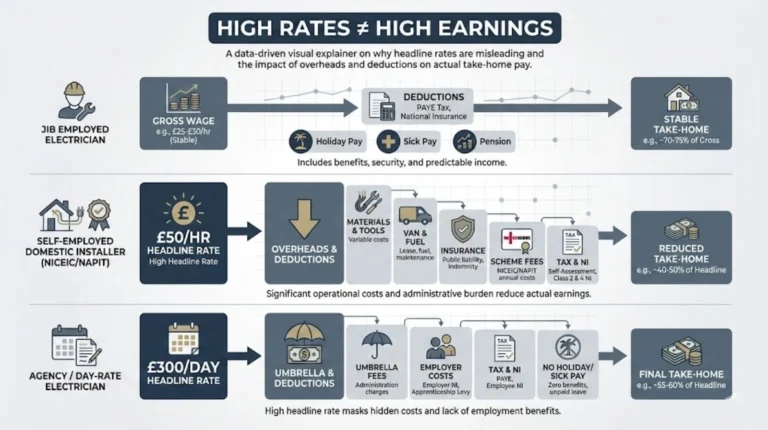
Infographic comparing electrician pay routes, showing how high advertised rates are reduced by taxes, overheads, and fees to lower real take-home pay.

Electricians researching career paths, comparing employment options, or evaluating qualification investment payback frequently search "JIB vs NICEIC vs NAPIT pay" or variations asking "which pays more" between these three acronyms that dominate UK electrical industry discussions. This question appears reasonable on surface - after all, JIB Gold Cards, NICEIC registration, and NAPIT membership all feature prominently in electrician job adverts, contractor websites, and training course marketing materials. The persistence of this comparison in forums, Facebook groups, and apprentice WhatsApp chats suggests genuine confusion about how electrical work is structured and remunerated in the UK, particularly among career changers, school leavers, and newly qualified electricians navigating their first job decisions.
Becoming an Electrician at 50: Is It Too Late and What Changes?

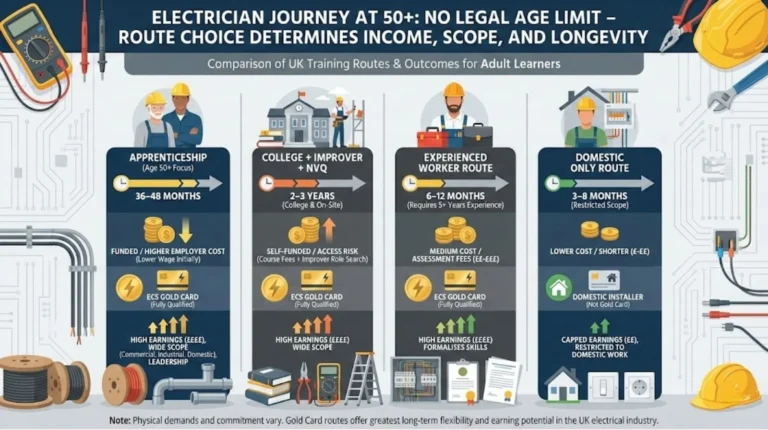
Infographic comparing UK electrician training routes for adult learners over 50, showing timelines, costs, scope, and outcomes including ECS Gold Card options.

"Is it too late to become an electrician at 50?" ranks among the most searched questions from older career changers in UK construction trades. The short answer creates false hope. The complete answer requires honesty about what changes at 50 compared to younger entrants. Legally, there is no upper age limit. You can start apprenticeships, enrol in NVQ Level 3 qualifications, sit AM2 assessments, and apply for ECS Gold Cards regardless of age. GOV.UK apprenticeship guidance confirms eligibility for anyone 16 and over without upper restrictions.

Becoming an Electrician at 30: Your Complete Adult Retraining Guide

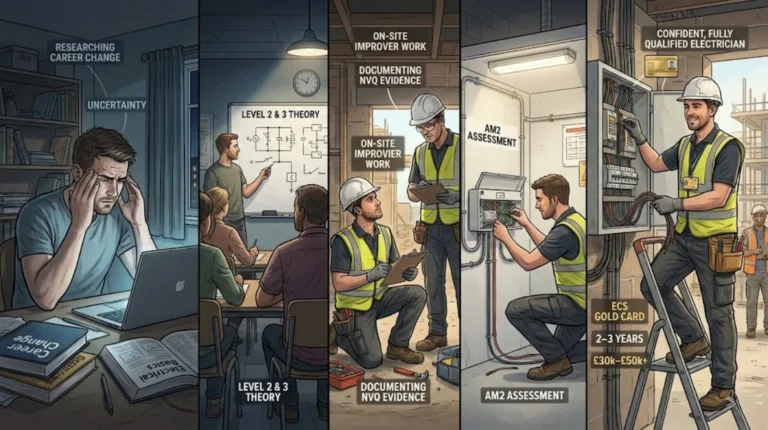
Illustrated timeline showing an adult retraining journey into electrical work, from career uncertainty and classroom theory to site experience, AM2 assessment, and becoming a fully qualified electrician.

The question lands in search bars thousands of times per month: "Can I become an electrician at 30?" The short answer is yes. The longer answer is that age isn't the barrier. Misunderstanding what "qualified" actually means, how long different routes take, and what evidence you need to work on commercial sites is the barrier. Here's the thing. The electrical training market is full of conflicting claims.

Are JIB Rates Keeping Up With Inflation? A 10-Year Index (2016-2026) 

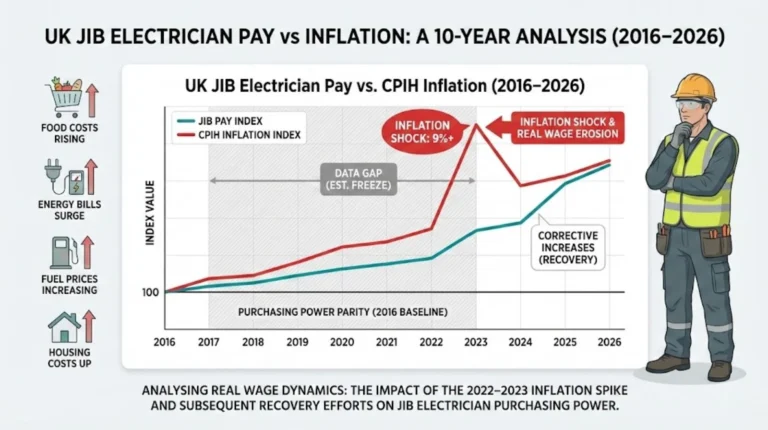
UK JIB electrician pay index and CPIH inflation from 2016 to 2026

The conversation about whether JIB rates keep pace with inflation intensified sharply after 2021 when electricians experienced a volatile three-year period combining a COVID-19 wage freeze, the steepest inflation spike in 30 years (peaking above 9% in 2022-2023), followed by headline pay rises of 7% (January 2024) and 5% (January 2025) marketed as corrective adjustments. Electricians working through this period report conflicting financial experiences: nominal pay increased year-on-year, yet weekly food shops cost £15-20 more, energy bills doubled, mortgage interest rates jumped from 2% to 6%+, and fuel prices surged from £1.20 to £1.85 per litre.

JIB Pay Bands Explained: 2025-2027 Comparison Charts (What the Numbers Actually Mean)

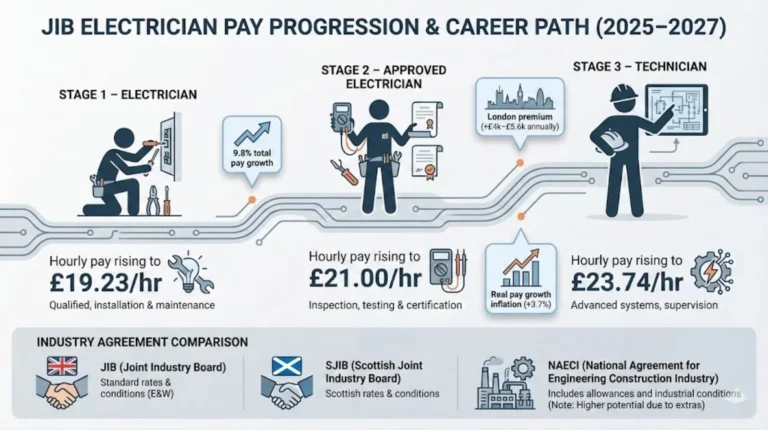
Infographic showing JIB electrician pay progression and career path from Stage 1 Electrician to Stage 3 Technician, with hourly rates rising from £19.23 to £23.74 between 2025–2027.

JIB pay bands are the most widely used wage framework for PAYE electricians working in England, Wales, and Northern Ireland, but headline hourly rates tell only part of the story. The difference between an Electrician earning £19.23 per hour and a Technician earning £23.74 per hour in 2027 represents not just a 23.4% pay gap but distinct levels of qualification, competence, and responsibility. Add regional variations (National versus London Zone), transport arrangements (Transport Provided versus Own Transport), and the impact of inflation on purchasing power, and the apparently simple question of "What do electricians actually earn?" becomes significantly more complex. The 2025 to 2027 period offers unusual clarity because the JIB agreement confirmed multi-year increases rather than single-year settlements: 5.0% in January 2025, 3.95% in January 2026, and 4.6% in January 2027, with January 2028 already agreed at 4.85%.

Learners are Studying level 2 Electrician Course

Guaranteed Work Placement for Your NVQ

No experience needed. Get started Now.

Prefer to call? Tap here

Learners are Studying level 2 Electrician Course

Guaranteed Work Placement for Your NVQ

No experience needed. Get started Now.

Prefer to call? Tap here

Learners are Studying level 2 Electrician Course

Guaranteed Work Placement for Your NVQ

No experience needed. Get started Now.

Prefer to call? Tap here

Learners are Studying level 2 Electrician Course

Guaranteed Work Placement for Your NVQ

No experience needed. Get started Now.

Prefer to call? Tap here

Enquire Now for Course Information