Day January 3, 2026

Electrical Training Courses in Birmingham: Classroom vs Practical Learning 
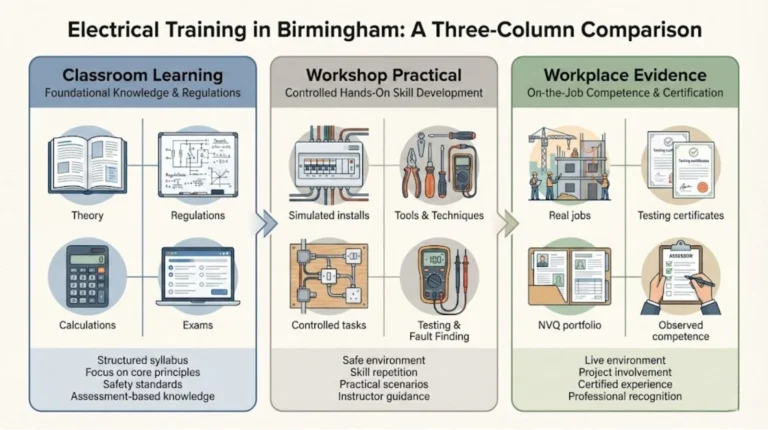
Infographic comparing classroom learning, workshop practical training, and workplace evidence in Birmingham electrician training pathways.

Birmingham training providers advertise "90% Practical Electrical Course" alongside photographs of learners wiring consumer units in workshop booths. You enrol, expecting hands-on site experience. Week one arrives. You're in a classroom learning Ohm's law. Week two puts you in a plywood booth wiring practice boards. Week twelve finishes with a certificate and zero actual construction site experience.
How to Become an EV Charge Point Installer (UK 2025-2026 Regulatory Update) 

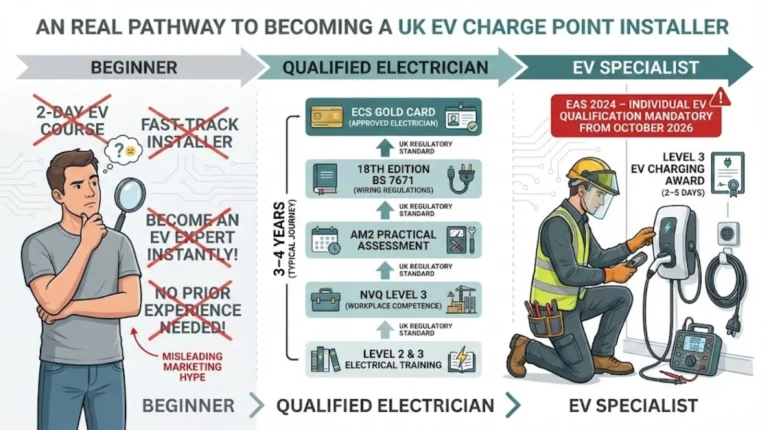
Infographic showing the realistic pathway to becoming a UK EV charge point installer, from beginner through qualified electrician to EV specialist, highlighting required qualifications.

You cannot legally or safely become an Electric Vehicle (EV) charge point installer without first qualifying as an electrician. There is no shortcut "EV-only installer" pathway in the UK. EV charging equipment connects to 230V single-phase or 400V three-phase electrical supplies requiring circuit design, protective device selection, earthing system verification, safe isolation procedures, and comprehensive testing protocols identical to any electrical installation. The physical charger unit represents the final component of a complete electrical circuit subject to BS 7671 Wiring Regulations, Building Regulations Part P notification requirements, and Distribution Network Operator (DNO) approval processes. 

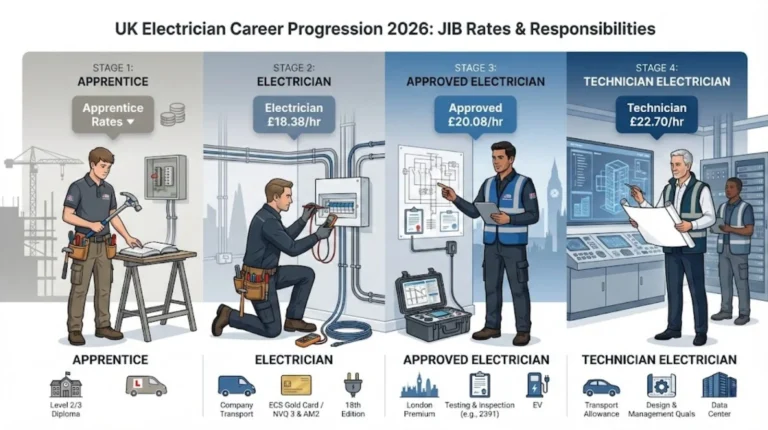
JIB Rates 2026 for Electricians: Simple Breakdown by Grade 

Infographic showing UK electrician career progression in 2026, from apprentice to technician electrician, with JIB hourly rates and typical responsibilities at each stage.

The jib rates 2026 effective Monday 5 January 2026 establish minimum hourly wages for qualified electrical operatives working under Joint Industry Board collective agreements across England, Wales, and Northern Ireland, with three core graded rates defining compensation structure: Electrician at £18.38/hour (£35,841 annual at standard 37.5-hour weeks) representing newly qualified operatives holding NVQ Level 3 and AM2 assessment, Approved Electrician at £20.08/hour (£39,156 annual, +£1.70/hour premium) requiring minimum two years' experience plus inspection and testing qualifications enabling certification responsibilities, and Technician Electrician at £22.70/hour (£44,265 annual, +£2.62 over Approved) demanding five years as Approved plus Level 4 technical qualifications for senior supervisory and complex system integration roles.

Evening & Weekend Electrical Courses – Realistic Options for Working Adults 

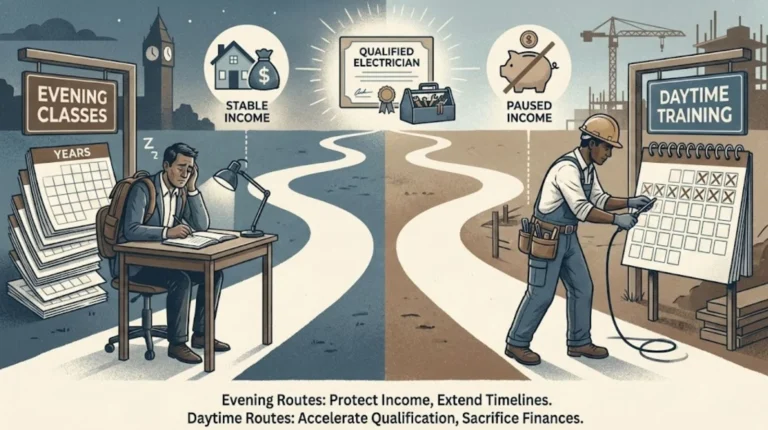
comparing evening classes and daytime training routes for electricians, showing income stability versus faster qualification with paused earnings.

Evening and weekend electrical courses attract working adults seeking electrician qualifications whilst maintaining day jobs, with part-time study appearing to offer compatibility between career change ambitions and financial stability requirements that full-time training pathways cannot provide for learners with mortgages, family responsibilities, or established careers generating substantial income they cannot abandon for 18-24 months of full-time study at reduced or zero earnings.

Electrician Wage Growth Predictions: 2026-2030 | What the Data Actually Suggests 

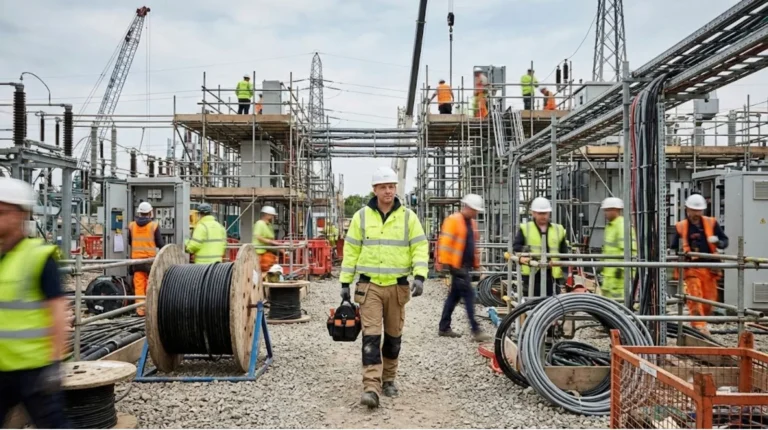
Electricians working on a large industrial construction site with cable reels, scaffolding, and electrical infrastructure in progress.

Predicting how much do electricians make over the 2026-2030 period requires examining historical wage trends (ONS ASHE showing 3-4% nominal annual growth 2016-2024), macroeconomic forecasts (OBR projecting 3% UK average earnings growth with 2% inflation baseline), sector-specific demand drivers (grid upgrades, data centres, electrification creating acute shortages), and supply constraints (training pipeline producing 7,500 newly qualified annually versus projected need for 10,000-12,000). The most defensible projection suggests nominal wage growth of 3-6% annually leading to cumulative increases of 16-34% by 2030, with real wage growth (inflation-adjusted purchasing power) of 1-4% annually representing 5-22% cumulative improvement.

Learners are Studying level 2 Electrician Course

Guaranteed Work Placement for Your NVQ

No experience needed. Get started Now.

Prefer to call? Tap here

Learners are Studying level 2 Electrician Course

Guaranteed Work Placement for Your NVQ

No experience needed. Get started Now.

Prefer to call? Tap here

Learners are Studying level 2 Electrician Course

Guaranteed Work Placement for Your NVQ

No experience needed. Get started Now.

Prefer to call? Tap here

Learners are Studying level 2 Electrician Course

Guaranteed Work Placement for Your NVQ

No experience needed. Get started Now.

Prefer to call? Tap here

Enquire Now for Course Information