Day February 18, 2026

Strategic Engineering Planning and the Future of the UK Rail Workforce: Lessons From the Rail Technical Strategy
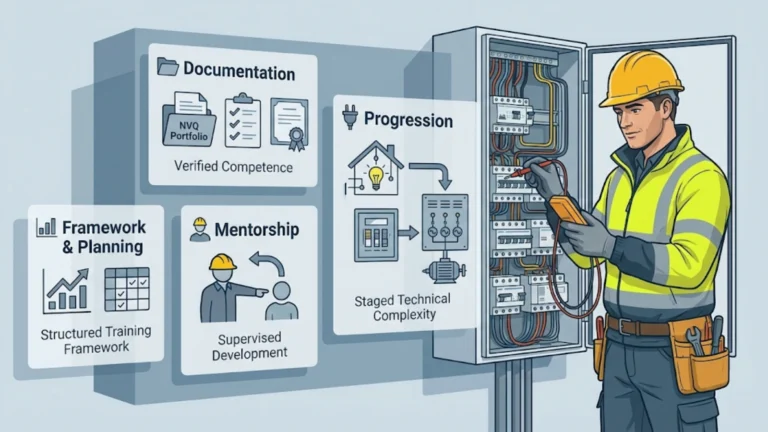
Illustrated featured image showing an onsite electrician working at a distribution board, with layered shadow panels behind representing verified competence documentation

The UK rail industry faces a substantial workforce challenge. National Skills Academy for Rail (NSAR) data from 2025 shows the rail workforce stands at approximately 221,788 people, with an average age of 43.5 years. More significantly, 30% of workers are over 50, creating retirement forecasts predicting 68,000 to 70,000 exits by 2030. Skills shortages persist in critical areas: electrification (requiring 1,000 to 2,000 workers annually), signalling and systems engineering. Additionally, 40% of trainers are nearing retirement, compounding the challenge of building replacement capacity. 
Robotics and the Rise of Modern Engineering Skills: What Today’s Learners Can Take From Automation’s Next Leap

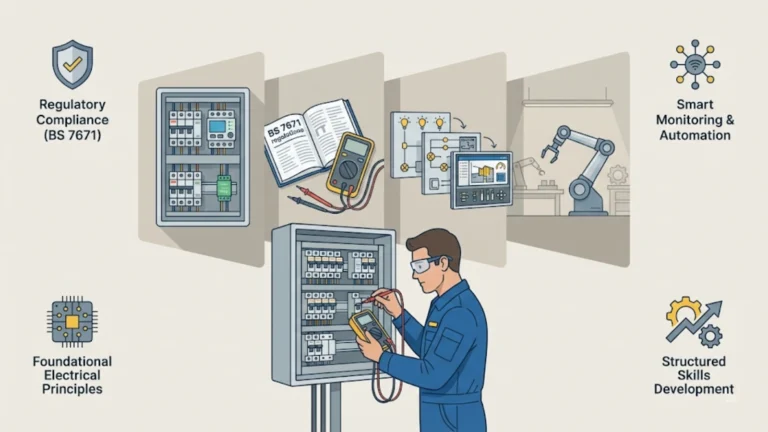
Illustrated featured image showing an electrician working onsite testing a distribution board, with layered shadow visuals of smart panels, BS 7671 compliance, training progression, and automation

UK automation adoption sits at an interesting crossroads. ONS data from January 2026 shows industrial robot density has grown from 71 per 10,000 manufacturing employees in 2016 to 111 in 2022, though this remains below the global average of 151 and significantly trails Germany (397) and Japan (399). The government has committed £2.8 billion to manufacturing research and development over the next five years, with £40 million specifically allocated for a new network of Robotics Adoption Hubs. Headlines about robots replacing workers generate attention, but the reality for people entering electrical trades looks different. 

Learning From the Underground: What the NYC Subway Teaches Us About Engineering Learning Pathways

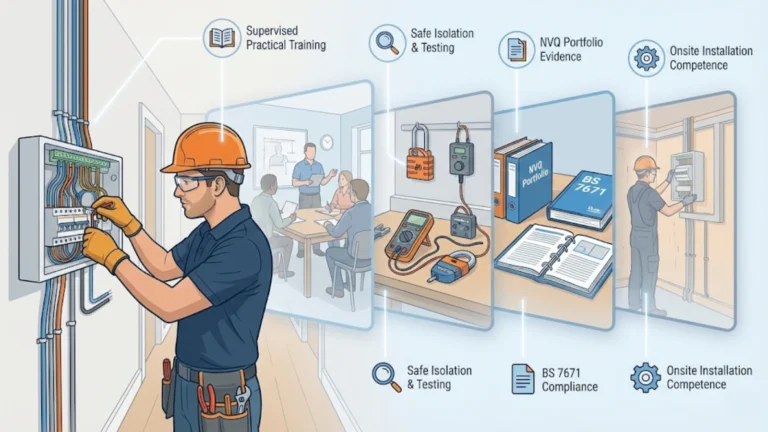
Illustrated featured image showing electrician working onsite with shadow panels representing electrical testing, documentation study, classroom training, and supervised installation

Engineering history offers unexpected lessons about how people actually learn technical skills. The New York City Subway, opened in 1904, demonstrates something surprisingly relevant to anyone considering electrical qualifications today. When engineers designed and built the early subway, they weren't just laying track. They were developing standards, managing conflicting constraints, making safety decisions and coordinating teams across civil, mechanical and electrical domains. None of those tasks could be completed with isolated knowledge. Success depended on a shared baseline of understanding. 

Learners are Studying level 2 Electrician Course

Guaranteed Work Placement for Your NVQ

No experience needed. Get started Now.

Prefer to call? Tap here

Learners are Studying level 2 Electrician Course

Guaranteed Work Placement for Your NVQ

No experience needed. Get started Now.

Prefer to call? Tap here

Learners are Studying level 2 Electrician Course

Guaranteed Work Placement for Your NVQ

No experience needed. Get started Now.

Prefer to call? Tap here

Learners are Studying level 2 Electrician Course

Guaranteed Work Placement for Your NVQ

No experience needed. Get started Now.

Prefer to call? Tap here

Enquire Now for Course Information