
Ratings Trustpilot Google

Electrician Courses & Training Programmes: Beginner to Qualified Electrician (UK 2026)

Electrician Training Pathway Explained

Elec Training offers a full pathway of electrician courses for adults across the United Kingdom, from beginner Level 2 training through to Level 3, NVQ, and AM2 qualification (ESC JIB Gold Card). Our programmes are designed for career changers, adult learners and working electricians looking to become fully qualified. Explore all of our electrician courses below, including practical training, flexible study options, and work placement support with finance options available on certain courses.

Electrician Training Pathway Explained

Elec Training offers a full pathway of electrician courses for adults across the United Kingdom, from beginner Level 2 training through to Level 3, NVQ, and AM2 qualification (ESC JIB Gold Card). Our programmes are designed for career changers, adult learners and working electricians looking to become fully qualified. Explore all of our electrician courses below, including practical training, flexible study options, and work placement support with finance options available on certain courses.

Most Popular Training Courses

£2707.50 (£3249.00 Inc VAT)

Level 2 Diploma - C&G 2365-02

This qualification is the first step on the ladder to becoming a fully qualified electrician.

£2707.50 (£3249.00 Inc VAT)

Level 3 Diploma - C&G 2365-03

This level 3 course is the natural progression from your level 2 and advances your knowledge and skills in electrical installation.

£415.00 (£499.00 inc VAT)

18th Edition Course-C&G 2382-22

The five day BS:7671 course is essential for anyone looking to do electrical installation.

Call Us Today Or Enquire Now For More Course Information
£1874.17 (£2249.00 Inc VAT)

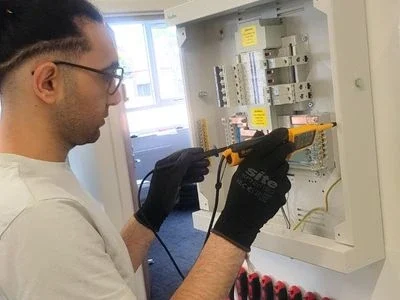
NVQ Level 3 Electrical Installation/Maintenance - C&G 2357

The 2357 is designed for you to transfer the skills you have learnt at the centre into practical solutions when working on the tools or for a company.
£1079.16 (£1295.00 Inc VAT)

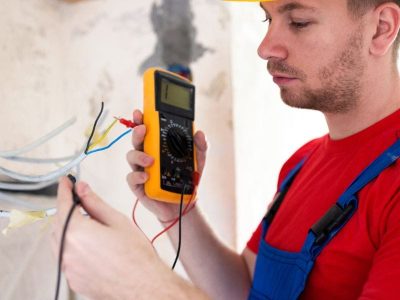
C&G 2391-52 Inspection & Testing Course

This five-day course primarily focuses on practical training, instructing participants in the examination and evaluation of single-phase and three phase installations.
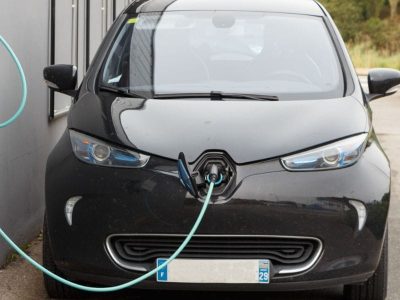
£329.17 (£395.00 Inc VAT)

Domestic & Commercial EV Charging Installation - C&G 2921-34

This course will give you a fundamental understanding of how to design and install Domestic and commercial ev chargers.

Why choose us for your electrical training

State Of The Art Facility

  • Technical review: Thomas Jevons (Head of Training, 20+ years)
  • Employability review: Joshua Jarvis (Placement Manager)
  • Editorial review: Jessica Gilbert (Marketing Editorial Team)

Becoming a qualified electrician in the UK requires more than attending a course. It requires completing a structured qualification pathway that proves both technical knowledge and occupational competence, combined with securing employment that allows you to gather the work-based evidence needed for full qualification. 

This guide explains every stage of electrician training in the UK, from complete beginner to fully qualified professional. It covers the six core qualifications that form the foundation of electrical careers, the regulatory requirements that govern the industry, and the employment barriers that prevent most learners from progressing beyond classroom training. 

Electrical training courses in the UK follow a strict progression: Level 2 Diploma (foundation knowledge), 18th Edition Wiring Regulations (legal compliance, required before employment), Level 3 Diploma (advanced theory and design), employment as electrician’s mate (critical for work experience), NVQ Level 3 (work-based competence), AM2 practical exam (final assessment), and optional specialist qualifications in Inspection & Testing and EV Charging Installation. Only by completing the full pathway do you achieve the ECS Gold Card that employers, insurance companies, and Competent Person Schemes require. 

The UK currently faces a shortage of over 100,000 qualified electricians by 2032, driven by Net Zero targets, EV charging infrastructure rollout, heat pump installation, and mandatory electrical safety inspections for rental properties. Qualified electricians earn median salaries of £39,000, with experienced professionals commanding £50,000-£60,000+ and specialists in testing or EV installation earning premiums of 20-30% above standard rates. 

However, the pathway from classroom to employment is not automatic. The most critical barrier is securing work after completing Level 2 and 18th Edition, or after Level 3, because the NVQ Level 3 qualification (which makes you a qualified electrician) can only be completed on real construction sites with employer supervision. One forum user captured the frustration:

"There are plenty of people who want to be electricians, our class literally has a huge wait list. The problem is that no companies want to ****** train anyone!!!"

Electrical training classroom with trainees learning wiring systems and electrical installation techniques in UK training centre
Hands-on electrical installation training in our fully equipped UK training centre.

How Electrical Training Works in the UK: The Three-Layer System

The UK electrical training system operates across three distinct layers, each serving a different purpose in building professional competence. 

Layer 1: Technical Knowledge (Level 2 Diploma, 18th Edition, Level 3 Diploma) 

These qualifications teach electrical theory, science, regulations, and design principles. They cover circuit calculations, protection devices, fault diagnosis, system design, and BS 7671 Wiring Regulations compliance. Level 2 establishes basic electrical understanding, the 18th Edition teaches current regulatory requirements, and Level 3 advances into three-phase systems, motor control, lighting design, and complex fault-finding. 

These courses are delivered in classrooms, training workshops, and online learning environments. They involve written exams, practical workshop assessments, and design tasks. Completion of Level 2, 18th Edition, and Level 3 demonstrates that you understand how electrical systems work, know the regulations, and can design installations that comply with BS 7671. 

Critical limitation: These qualifications do not prove you can install, test, or certify electrical work in real-world conditions. They qualify you as an “Electrical Improver” or “Trainee,” not as a qualified electrician. You cannot sign off electrical work, join a Competent Person Scheme (NICEIC, NAPIT), or obtain an ECS Gold Card with diplomas and 18th Edition alone. 

Layer 2: Occupational Competence (NVQ Level 3 and AM2) 

This layer proves you can perform electrical work safely and competently on real construction sites. The NVQ Level 3 is a work-based portfolio qualification where an assessor visits you on actual job sites and evaluates your ability to install wiring systems, terminate equipment, test circuits, diagnose faults, and produce certification. 

The AM2 (Achievement Measurement 2) is a three-day practical exam conducted in an independent assessment centre. You are given installation tasks, testing requirements, and fault-finding scenarios, all of which must be completed to time and to BS 7671 standards. The AM2 replicates real-world site conditions and exposes any gaps in practical competence. 

This layer is what makes you a qualified electrician. Without NVQ Level 3 and AM2, you cannot work unsupervised, cannot sign off electrical installations, and cannot obtain insurance or join schemes that allow you to certify your own work. 

Layer 3: Regulatory Compliance and Specialisation (Inspection & Testing, EV Charging) 

Once fully qualified, electricians can pursue specialist qualifications that open higher-paying work: 

Inspection & Testing (C&G 2391-52) is a specialist qualification for electricians who want to conduct Electrical Installation Condition Reports (EICRs) for landlords, insurers, and commercial clients. It focuses on initial verification of new work and periodic inspection of existing installations. 

EV Charging Installation (C&G 2921-34) is a specialist qualification for installing domestic and small commercial electric vehicle charge points. It covers design requirements, earthing arrangements, DNO notification, and compliance with Section 722 of BS 7671. 

Critical limitation: These qualifications assume you are already a qualified electrician with NVQ Level 3, AM2, and Gold Card. You cannot use specialist courses as substitutes for the foundation qualifications. They are additional certifications that build on full qualification, not alternatives to it. 

The Gold Card Route : The only Fast Track Pathway That’s Leads to Full Qualification

The ECS (Electrotechnical Certification Scheme) Gold Card is the industry standard proof of qualification. Major construction sites, insurance companies, and Competent Person Schemes require it. The pathway to a Gold Card is rigid: 

  1. C&G 2365-02 (Level 2 Diploma in Electrical Installations) – 8 weeks 

  1. C&G 2382-22 (18th Edition Wiring Regulations) – 3-5 days 

  1. Apply for CSCS Labourer Card (required for site access) 

  1. Secure employment as electrician’s mate (CRITICAL BARRIER) 

  1. C&G 2365-03 (Level 3 Diploma, completed before or during mate work) 

  1. C&G 2357 (NVQ Level 3, requires 12-18 months site access) 

  1. AM2 practical exam (final competence assessment) 

  1. ECS Gold Card application (proof of full qualification) 

The critical barriers in this pathway are employment-related. After completing Level 2 and 18th Edition, learners must find electrician’s mate work to gain experience. Without this, they cannot progress to or complete the NVQ. After Level 3, they need continued employment with access to varied site work to gather NVQ portfolio evidence. Most training providers deliver classroom courses but provide no employment support, leaving learners to navigate the job market alone. 

Thomas Jevons, Head of Training at Elec Training, explains the most common mistake: 

"The most common mistake we see is learners completing Level 2 and Level 3 Diplomas and believing they're qualified electricians. They're not. The diplomas teach you electrical theory and workshop skills, but they don't prove occupational competence. You cannot sign off work, join a Competent Person Scheme, or get an ECS Gold Card with diplomas alone. You must complete the NVQ Level 3 portfolio on real job sites and pass the AM2 practical exam. Without those, you've got certificates but no licence to practice." 

Understanding this three-layer structure is essential before choosing any electrician course. The following sections break down each qualification in detail, explaining what it covers, who it suits, what it enables, and where it fits in the overall pathway. 

C&G 2365-02: Level 2 Diploma in Electrical Installations

What the Qualification Covers 

The Level 2 Diploma in Electrical Installations (Buildings and Structures) is the foundation electrician course for complete beginners. Awarded by City & Guilds (qualification number 600/5498/0), it introduces the core principles of electrical work across domestic, commercial, and industrial settings. 

Key subjects and units: 

  • Health and Safety in building services engineering (risk assessment, PPE, safe working practices, HASAWA 1974) 

  • Principles of Electrical Science (Ohm’s Law, series and parallel circuits, power calculations, resistance) 

  • Electrical Installations Technology (tools, materials, cable types, containment systems, protection devices) 

  • Installation of Wiring Systems and Enclosures (practical wiring, conduit, trunking, tray systems) 

  • Understanding how to communicate with others within building services engineering (documentation, instructions, teamwork) 

  • Wiring circuits (radial, ring final, lighting circuits) 

  • Building electrical installations (installation methods, cable routes, fixing methods) 

  • Maintenance (planned preventative maintenance, reactive maintenance) 

  • Fault finding (systematic diagnosis, testing, rectification) 

  • Inspection & Testing (basic dead testing, visual inspection) 

The Level 2 Diploma is classified as a Vocationally Related Qualification (VRQ) and Technical Certificate. It is credit-based, regulated by Ofqual, and accredited by City & Guilds. 

Duration and delivery format: 

At Elec Training, Level 2 is delivered over 8 weeks total: 

  • 4 weeks in-centre (practical hands-on training in our Wolverhampton facilities) 

  • 4 weeks hybrid (home learning with online support and assessment) 

Other training providers offer full-time classroom delivery (8-10 weeks) or part-time options delivered over evenings or weekends for career changers who are working. 

Entry requirements: 

No prior electrical knowledge or experience is required. The course is designed for absolute beginners. However, basic literacy and numeracy are essential, and most training providers assess these informally during enrolment. GCSE Maths and English at Grade C/4 or above are recommended but not mandatory. 

Who the Level 2 Electrician Course Is Suitable For 

Complete beginners and new entrants: 

School leavers aged 16-19 looking to start a vocational career in the electrical industry. Adults with no electrical background who want to retrain into a skilled trade. 

Career changers: 

People leaving office jobs, retail, hospitality, logistics, or other sectors who want stable, well-paid work in construction. The Level 2 Diploma offers flexible entry with part-time and hybrid options that allow learners to train while still employed elsewhere. 

Allied trades seeking foundational electrical knowledge: 

Plumbers, heating engineers, builders, and HVAC operatives who encounter electrical systems in their work and want to understand basic wiring principles. However, the Level 2 Diploma alone does not provide legal competence to certify electrical work, it is purely educational at this stage. 

Site workers and labourers wanting to upskill: 

Construction site labourers, porters, and general operatives who want to move from unskilled to skilled work. Completing Level 2 allows progression to trainee electrician roles with higher pay and better long-term prospects. 

What the Level 2 Electrician Qualification Enables 

Professional status: 

Completion of Level 2 qualifies you as an “Electrician’s Mate” or “Improver.” You are not a qualified electrician and cannot work unsupervised or sign off electrical installations. 

Job roles: 

  • Trainee electrician (assisting qualified electricians on site) 

  • Electrical improver (performing tasks under supervision) 

  • Site assistant in domestic rewires, commercial installations, or industrial maintenance 

  • Pulling cables, installing containment (conduit, trunking, tray), terminating accessories under supervision 

CRITICAL: Level 2 alone is insufficient for employment 

In Elec Training’s experience working with over 120 plus UK contractors, employers universally require electrician’s mates to hold both a CSCS card and 18th Edition certificate before offering employment. This is because of insurance requirements, site safety regulations, and H&S compliance under the Electricity at Work Regulations 1989. Employers need assurance that even trainee electricians understand BS 7671 and can work safely on site. 

One forum user explained the Gold Card requirement from an employer perspective: “To get a ‘gold card’ from the JIB, you need to also have your AM2 or NVQ3. Lots of sites are now asking for this because it’s partly a health and safety check and it’s also laziness where companies don’t want to look at your experience on your CV” (Reddit r/electricians, September 2016). 

Pathway progression: 

Level 2 is step one of the Gold Card route. Upon completion, learners progress immediately to the 18th Edition Wiring Regulations course (mandatory before seeking employment), then either complete Level 3 before looking for work or secure electrician’s mate positions and complete Level 3 part-time while working. 

Industry and Regulatory Relevance 

The Level 2 Diploma introduces BS 7671:2018+A2:2022 (the IET Wiring Regulations), which is the UK national standard for low-voltage electrical installations. It establishes the legal and safety framework that all subsequent training builds upon. 

It also covers the Electricity at Work Regulations 1989 (EAWR), the statutory law governing electrical safety in the UK. The Health and Safety at Work Act 1974 (HASAWA) underpins all health and safety training, ensuring learners understand their responsibilities and the employer’s duty of care. 

The course teaches the scientific and technical principles required to understand circuit design, protection devices (MCBs, RCDs, RCBOs), and fault diagnosis. Without this foundation, learners cannot progress to the more complex calculations and design tasks required at Level 3. 

Gaps, Limitations, and When Level 2 Alone Is Not Enough 

You cannot sign off work: 

Level 2 does not qualify you to certify electrical installations. You cannot complete Electrical Installation Certificates (EICs), Minor Electrical Installation Works Certificates (MEIWCs), or Electrical Installation Condition Reports (EICRs). You cannot join a Competent Person Scheme such as NICEIC or NAPIT. 

You cannot obtain employment without 18th Edition: 

The Level 2 Diploma must be immediately followed by the 18th Edition course. Employers will not take on electrician’s mates without proof of BS 7671 knowledge, as this creates insurance and liability risks. 

It is largely classroom and workshop-based: 

Level 2 does not involve real construction site work. All practical assessments are conducted in training workshops, which do not replicate the complexity, time pressure, or environmental conditions of actual job sites. 

Elec Training pricing for Level 2 Diploma: Contact Elec Training on 0330 822 5337 for current Level 2 course pricing and available start dates across our UK training centres. Flexible payment plans are available for self-funding learners. 

C&G 2382-22: 18th Edition Wiring Regulations Course

What the Qualification Covers 

The Level 3 Award in the Requirements for Electrical Installations (BS 7671:2018) is the regulatory compliance course that teaches the current UK Wiring Regulations. It is universally known as the “18th Edition” course, referring to the 18th Edition of BS 7671 published by the Institution of Engineering and Technology (IET). 

Key subjects and units: 

  • Scope, object, and fundamental principles of BS 7671 (what the regulations cover, legal status, relationship with statutory law) 

  • Definitions (technical terms, abbreviations, regulatory language) 

  • Assessment of general characteristics (purpose of installation, supply characteristics, external influences, compatibility) 

  • Protection for safety (shock protection, thermal protection, overcurrent protection, fault protection, RCDs, AFDDs) 

  • Selection and erection of equipment (cables, containment, protection devices, consumer units, earthing and bonding) 

  • Inspection and testing requirements (initial verification, periodic inspection, testing sequences, acceptable results) 

  • Special installations or locations (Part 7: bathrooms, swimming pools, agricultural installations, construction sites, caravans, marinas) 

  • Appendices (current-carrying capacity, voltage drop, cable sizing, earth fault loop impedance) 

The 18th Edition course is a single-unit Level 3 Award. The exam is open book, meaning candidates can use a copy of BS 7671 during the test. The exam assesses your ability to navigate the regulations quickly and interpret requirements correctly, not your ability to memorize them. 

Duration and delivery format: 

Typical duration is 3-5 days full-time, though some providers offer intensive 2-day courses or extended part-time formats over evenings. Online and e-learning options are widely available, particularly for learners who are already familiar with previous editions of BS 7671 and need to update to the current version. 

Entry requirements: 

There are no formal entry requirements, but the course assumes basic electrical knowledge from Level 2. The 18th Edition should be taken immediately after completing Level 2 Diploma, before seeking employment as an electrician’s mate. 

Why the 18th Edition Is Mandatory Before Employment 

In Elec Training’s experience working with over 120 plus UK contractors, employers universally require electrician’s mates to hold the 18th Edition certificate before offering employment. This requirement exists because: 

Insurance and liability: 

Employers’ liability insurance and public liability insurance require all electrical workers, including mates and trainees, to demonstrate understanding of BS 7671. Without proof of regulatory knowledge, insurance coverage may be invalidated if an incident occurs. 

Site safety and CSCS requirements: 

Major construction sites require CSCS cards for access. While Level 2 allows application for a CSCS Labourer Card, employers also require 18th Edition certification as proof of electrical competence. Sites managed by principal contractors often have additional requirements mandating that all electrical workers, regardless of supervision level, hold current 18th Edition certificates. 

Electricity at Work Regulations 1989 (EAWR): 

The EAWR requires all electrical work to be carried out by “competent persons.” While competence is primarily demonstrated through NVQ Level 3 and AM2, employers interpret this as requiring even trainees to understand electrical safety regulations. The 18th Edition provides this evidence. 

Practical necessity: 

Electrician’s mates must understand cable sizing, protection device selection, earthing requirements, and testing procedures to perform their roles safely. Without 18th Edition knowledge, mates cannot understand instructions from qualified electricians, cannot identify non-compliances, and cannot work safely on electrical installations. 

Who the 18th Edition Course Is Suitable For 

Mandatory for all Level 2 graduates seeking employment: 

Every learner who completes Level 2 and wants to work as an electrician’s mate must take the 18th Edition immediately afterward. This is not optional, it is a universal employer requirement. 

Mandatory for all practicing electricians: 

Every electrician working in the UK must hold a current 18th Edition certificate. It is required to join Competent Person Schemes, renew ECS cards, and maintain insurance. Even fully qualified electricians with decades of experience must update their 18th Edition certificate every 3-4 years when amendments are published. 

Allied trades and professionals: 

  • Gas Safe engineers (needing electrical knowledge for boiler installations and controls) 

  • Contract managers and site supervisors (needing regulatory awareness for project compliance) 

  • Building surveyors and building control officers (enforcing Part P and electrical safety) 

  • Electrical maintenance engineers (needing regulatory updates) 

  • Facilities managers (responsible for electrical safety in buildings) 

What the 18th Edition Qualification Enables 

Employment as electrician’s mate: 

Combined with Level 2 Diploma and CSCS Labourer Card, the 18th Edition unlocks electrician’s mate roles. This is the first paid employment stage in the electrical qualification pathway. 

Professional status: 

The 18th Edition certificate proves you understand the current legal requirements for electrical installations up to 1000V AC. It does not, however, prove you can install or test electrical systems, it only proves you know the regulations. 

Competent Person Scheme eligibility (post-qualification): 

NICEIC, NAPIT, ELECSA, and other schemes require 18th Edition certification as part of their membership criteria. Without it, you cannot join these schemes, which means you cannot self-certify Part P notifiable domestic work. 

ECS card renewal: 

ECS Gold Card holders must provide proof of current 18th Edition certification when renewing their cards every five years. Failure to update results in card expiry and loss of site access. 

Industry and Regulatory Relevance 

BS 7671 is the UK national standard for electrical installations. While it is non-statutory (not a law), it is cited in court as the accepted standard of safety. The Electricity at Work Regulations 1989 (which is statutory law) requires all electrical work to be “safe,” and BS 7671 defines what “safe” means in practice. 

Part P of the Building Regulations applies to domestic electrical work in England and Wales. Certain electrical work (new circuits, work in bathrooms, work outdoors) is “notifiable” and must either be certified by a Competent Person Scheme member or notified to Building Control. The 18th Edition certificate is essential for joining Competent Person Schemes. 

BS 7671 is updated regularly. Amendment 1 was published in 2020, Amendment 2 in 2022, and Amendment 3 is expected in 2024-2025. Each amendment introduces new requirements (such as Arc Fault Detection Devices for sleeping accommodation, or updated earthing requirements for EV charging). Electricians must update their 18th Edition certificate with each amendment to remain compliant. 

Gaps, Limitations, and When 18th Edition Alone Is Not Enough 

Crucial distinction: 18th Edition teaches regulations, not practical skills 

The 18th Edition course does not teach you how to wire circuits, install consumer units, test installations, or fault-find. It teaches you what the regulations require, but not how to implement them. Many people mistakenly believe that passing the 18th Edition makes them electricians, it does not. 

It must be paired with diplomas, NVQ, and AM2: 

The 18th Edition is one component of the full qualification pathway. On its own, it qualifies you for nothing. It must sit alongside Level 2 Diploma, Level 3 Diploma, NVQ Level 3, and AM2 to form a complete qualification. 

Regulatory currency requires updates: 

The 18th Edition certificate expires when a new amendment is published. If you passed the 18th Edition exam in 2020 (Amendment 1), your certificate is now outdated because Amendment 2 was published in 2022. You must retake the course to update your knowledge and maintain your professional status. 

Elec Training pricing for 18th Edition: Contact Elec Training on 0330 822 5337 for current 18th Edition course pricing and available dates. The course is delivered intensively over 3-5 days and can be taken online or in-person at our UK training centres. 

CSCS Labourer Card: Essential for Site Access

What the CSCS Card Is 

The Construction Skills Certification Scheme (CSCS) card is the UK construction industry’s proof of health and safety competence. Major construction sites, principal contractors, and many employers require CSCS cards for site access. 

For electrician’s mates who have completed Level 2 and 18th Edition, the appropriate card is the CSCS Labourer Card (green card with white helmet). This card indicates the holder has basic construction health and safety knowledge and is working under supervision. 

When to Apply 

The CSCS Labourer Card should be applied for immediately after completing Level 2 and 18th Edition. The application process requires: 

  • Passing the CITB Health, Safety and Environment Test (HS&E test) 

  • Proof of Level 2 qualification (C&G 2365-02 certificate) 

  • Proof of 18th Edition qualification (C&G 2382-22 certificate) 

The HS&E test is a 50-question multiple-choice exam covering construction site safety, hazards, PPE, safe working practices, and legal responsibilities. It can be booked at Pearson VUE test centres nationwide and costs approximately £22.50. 

Why Employers Require CSCS Cards 

Major construction sites operate “card-only” policies, meaning no one can access the site without appropriate CSCS certification. This is driven by: 

Principal contractor responsibilities: 

Principal contractors (main contractors managing large sites) are legally responsible for ensuring all workers on site are competent in health and safety. CSCS cards provide standardized evidence of this competence. 

Insurance requirements: 

Site insurance policies often require all workers to hold CSCS cards. Without them, insurance coverage may be invalidated if an incident occurs. 

Industry standards: 

The construction industry uses CSCS cards as a universal credential system. While not legally required by statute, they have become the de facto industry standard for proving competence. 

The Employment Trio: Level 2 + 18th Edition + CSCS 

Employers require all three before offering electrician’s mate positions: 

  1. Level 2 Diploma – Proves foundation electrical knowledge 

  1. 18th Edition – Proves BS 7671 regulatory knowledge 

  1. CSCS Labourer Card – Proves construction site safety competence 

Without all three, learners cannot access employment, which means they cannot progress to NVQ portfolio work. This creates the first critical barrier in the qualification pathway. 

flowchart showing UK electrician qualification pathway with flexibility Level 2 Diploma, 18th Edition, CSCS card, employment options, Level 3 choice point, NVQ, AM2, Gold Card-1
The Gold Card Route: Complete pathway from beginner to qualified electrician with flexible timing options"

The Employment Barrier: Why Most Learners Get Stuck 

The qualification pathway appears straightforward on paper: complete Level 2, 18th Edition, Level 3, find work, complete NVQ, pass AM2, obtain Gold Card. In practice, the pathway breaks down at the employment stage. Most training providers deliver classroom courses but provide no support in securing work, leaving learners to navigate the job market alone. 

The Reality Reported on Forums and Social Media 

Forum posts and social media reveal the scale of the problem: 

Learners stuck after completing qualifications: 

"I done my level 3 electrical installation about 5-6 years ago. didn't get to do my nvq or anything like that, just did an ecs test that i passed and a cscs. I was doing experience at the time but it was hard staying consistent due to other circumstances."

"You won't be able to qualify as a sparky until you get site experience for your nvq3 portfolio. So looking for an apprenticeship would be your best bet."

Training providers abandoning students after classroom delivery: 

"Friend of mine wasted about 5k on a gas course, sailed through the training centre but couldn't get a placement to build his portfolio."

"the training and apprentice offers aren't 'become a welder' or anything btw, they're all like level 2 NVQ apprenticeships in shelf-stacking and bullshit jobcentre powerpoint courses on 'how to write a CV' that are 'accredited' by big dave's 100% genuine certificates ltd."

Employers refusing to take on mates without experience: 

"Even if you do the proper course (3 years+), you will find it very difficult to get work experience, since most firms do not want to waste their money and time training someone who will then leave and set up on their own."

"There is no way you can do a course and come out as an electrician. Although my son went as a sole trader by that point he had worked cards in with an electrical firm wiring houses so he knew what is expected, he also had family with dad, and grand dads all in the trade."

Budget constraints affecting apprentice placements: 

"My neighbour's grandson 2 years into his electrician apprenticeship let go. Company can no longer afford them after the disastrous budget."

"He's an NVQ assessor in the building trade. They're closing apprenticeship hubs down. The reason. Big firms aren't taking any apprentices on due to minimum wage rises and lowered NI thresholds. They can't afford it."

The frustration captured perfectly: 

"As somebody currently in training to be a electrician this is so funny. There are plenty of people who want to be electricians, our class literally has a huge wait list. The problem is that no companies want to ******* train anyone!!!"

Why Employers Are Reluctant to Take On Mates

Time and supervision requirements: 

Electrician’s mates require constant supervision. Qualified electricians must explain tasks, check work quality, and ensure safety compliance. This reduces the qualified electrician’s productivity, creating a short-term cost for the employer. 

Risk of trainees leaving: 

Employers invest time training mates, only for many to leave once qualified to work for competitors or become self-employed. This creates a disincentive to train new entrants. 

Economic uncertainty: 

Construction industry cycles, budget constraints, and rising employment costs (minimum wage increases, National Insurance threshold changes) make employers cautious about taking on trainees who are not immediately productive. 

Preference for apprentices or qualified electricians: 

Employers prefer apprentices (government-funded, structured training programmes) or fully qualified electricians (immediate productivity, no supervision required). The middle ground, classroom-trained improvers, is the hardest position to recruit into. 

The NVQ Barrier: Cannot Progress Without Site Access 

Even if learners secure electrician’s mate work, they face another barrier progressing to NVQ: 

NVQ requires employer cooperation and varied work: 

The NVQ portfolio requires evidence across multiple units covering domestic, commercial, and industrial installations. If an employer only provides one type of work (e.g., domestic house bashing), gathering evidence for other installation types becomes difficult or impossible. 

Employers must provide witness testimonies: 

NVQ evidence requires witness statements from qualified electricians on company letterhead confirming the learner performed specific tasks competently. Employers unwilling to complete this paperwork create delays or prevent NVQ completion entirely. 

One forum user explained the witness testimony requirement:

"The person/company will also need to be able to provide witness testimonies where required for the portfolio on company letterhead or email. Clarified via eqa. So as stated in the post, if you are self employed and doing work on uncle bobs shed with no supervision, major no no."

Some learners resort to fabricating evidence: 

Unable to access the work variety required for NVQ portfolios, some learners attempt to fake evidence. Forum posts reveal the desperation: 

"A cheers guy that's a good idea to do some in my house could put some conduit up and singles for the nvq. I think i could get some bits from college just don't want it to look fake. I can get a couple of domestic bits and bobs at work, just commercial and agricultural and indst how did you guys get that stuff????"

"Or how could I errrmmmm for want of a better word blagg it. Really only doing domestic work at the min for the company i work for would rather do it proply but struggling to get the work experience from anywhere"

Fabricating NVQ evidence is fraud and results in qualification revocation if discovered. It also undermines the entire purpose of the NVQ, which is to prove genuine occupational competence. 

How Elec Training Solves the Employment Barrier

Joshua Jarvis, Placement Manager at Elec Training, explains: 

"The pathway from classroom to qualified electrician depends entirely on securing employment or a work placement after Level 3. Without site access, learners cannot complete their NVQ portfolio. That's where many get stuck, they've spent £10,000-£12,000 on diplomas but can't find an employer willing to take them on for the 12-18 months needed to gather NVQ evidence. Our in-house recruitment team exists specifically to solve this problem. We make over 100 calls per learner to our network of 120+ contractors across the UK to secure placements. Without that support, many learners never complete the qualification pathway."

Elec Training’s recruitment support includes: 

Comprehensive employability training: 

  • CV writing workshops tailored to electrical industry expectations 

  • Interview preparation sessions covering common employer questions 

  • Mock interviews with detailed feedback from industry professionals 

  • Ongoing coaching throughout the job search process 

Active placement with 120+ UK contractors: 

Our in-house recruitment team makes over 100 calls per learner to our network of contractors across domestic, commercial, and industrial sectors. We don’t just post learners’ CVs on job boards, we actively advocate for them with employers we’ve built relationships with over years. 

Flexible timing: 

We engage with learners before they even complete Level 2 in some cases, particularly those with prior experience in allied trades or international qualifications. For most learners, recruitment support begins after Level 2 + 18th Edition (for mate work) and continues through Level 3 and NVQ placement. 

Realistic timelines: 

Securing electrician’s mate work after Level 2 + 18th Edition can take anywhere from 1 week to 12 weeks + depending on the learner’s location, availability, attitude, and market conditions. Our recruitment team works with learners throughout this period to maximise their chances of securing suitable positions. 

C&G 2365-03: Level 3 Diploma in Electrical Installations

What the Qualification Covers 

The Level 3 Diploma in Electrical Installations (Buildings and Structures) is the advanced electrician training course that builds on the foundation established at Level 2. It introduces complex electrical theory, system design, fault diagnosis, and inspection and testing procedures. 

Key subjects and units: 

  • Fundamental principles and environmental technologies (renewable energy systems, environmental impact, energy efficiency) 

  • Principles of electrical science (three-phase systems, AC theory, complex calculations, motors, transformers, power factor correction) 

  • Fault diagnosis and rectification (systematic fault-finding, advanced testing, interpreting test results) 

  • Inspection, testing, and commissioning (initial verification, testing sequences, certification, compliance verification) 

  • Electrical systems design (load calculations, cable sizing, protection coordination, earthing and bonding design) 

  • Career awareness in building services engineering (professionalism, business skills, continuing professional development) 

  • Advanced electrical installations (complex wiring systems, industrial installations, control systems) 

The Level 3 Diploma is a 52-credit qualification regulated by Ofqual and accredited by City & Guilds. It is classified as a Vocationally Related Qualification (VRQ) and Technical Certificate, the same structure as Level 2 but at a significantly higher academic level. 

Duration and delivery format: 

Full-time intensive delivery typically takes 3-6 weeks, depending on the training provider and cohort size. Part-time options are available, delivered over evenings or weekends for working learners. Blended formats combine online theory modules (covering electrical science and regulations) with centre-based practical sessions (covering testing, fault-finding, and commissioning). 

Entry requirements: 

Completion of C&G 2365 Level 2 Diploma and 18th Edition (C&G 2382-22). Some training providers accept learners with significant electrical experience and technical knowledge who did not complete formal Level 2 qualifications, but this is assessed on a case-by-case basis. 

When to Complete Level 3: Two Pathway Options 

Learners have flexibility in when they complete Level 3: 

Option 1: Complete Level 3 before seeking mate work 

Some learners prefer to complete the full classroom training block (Level 2 + 18th Edition + Level 3) before looking for employment. This approach provides: 

  • Complete technical foundation before starting site work 

  • Higher confidence when applying for mate positions 

  • Potentially higher starting wages (some employers pay more for Level 3 holders) 

  • No need to juggle part-time study while working 

Option 2: Secure mate work after Level 2 + 18th Edition, complete Level 3 part-time 

Other learners prefer to start earning as soon as possible. They complete Level 2 + 18th Edition, secure mate work, and complete Level 3 through evening or weekend study while employed. This approach provides: 

  • Immediate income (reducing training debt) 

  • Practical experience reinforcing Level 3 theory 

  • Continued employment while upskilling 

  • Ability to apply Level 3 knowledge directly on site 

Both pathways are valid. The choice depends on financial circumstances, learning preferences, and employer availability. However, Level 3 must be completed before starting NVQ portfolio work, as the NVQ requires proof of Level 3 qualification. 

Who the Level 3 Electrician Course Is Suitable For 

Learners progressing from Level 2: 

Anyone who has completed the Level 2 Diploma and 18th Edition. This is the standard progression route. 

Electrical improvers with informal experience: 

People who have worked as electrical assistants or improvers for several years but never obtained formal qualifications. Level 3 provides the technical knowledge required to progress to NVQ and full qualification. 

Apprentices in structured training programmes: 

Level 3 Diploma forms part of many electrical apprenticeship frameworks, typically completed in Year 2 of a 3-4 year apprenticeship. 

Electrician’s mates seeking progression: 

Mates currently employed who want to upskill to progress to NVQ training and eventually full qualification. 

What the Level 3 Electrician Qualification Enables 

Professional status: 

Completion of Level 3 qualifies you as a “Senior Electrical Improver.” You are still not a qualified electrician and cannot sign off work independently, but you have greater autonomy on site, can conduct dead testing, perform fault-finding under supervision, and design simple circuits. 

Job roles: 

  • Senior electrical improver (more responsibility, less supervision than Level 2) 

  • Conducting dead testing and initial fault diagnosis 

  • Designing radial and ring final circuits under supervision 

  • Assisting with commissioning and system handover 

  • Preparing for NVQ portfolio work 

ECS card eligibility: 

Level 3 Diploma holders can apply for an ECS Blue Card (Improver status). This is a step up from the White Card (Trainee) and indicates higher competence, but it still identifies the holder as unqualified and requiring supervision for final certification and sign-off. 

NVQ eligibility: 

Level 3 is the gateway to NVQ Level 3 training. You cannot start NVQ portfolio work without completing Level 3 (or having 3+ years documented electrical experience, which is a much less common route). 

Industry and Regulatory Relevance 

Level 3 focuses heavily on BS 7671:2018+A2:2022, teaching advanced sections of the Wiring Regulations including special installations (Part 7), earthing arrangements (TN-S, TN-C-S, TT systems), and protection for safety (shock protection, thermal protection, overcurrent protection). 

It covers Guidance Note 3 (Inspection & Testing), which is the IET publication that defines testing procedures and acceptable test results. This forms the foundation for the Inspection & Testing (2391) qualification taken later by those who specialize in EICR work. 

The course teaches electrical system design, including load calculations, cable sizing to BS 7671 Appendix 4, and protection device coordination. These are essential skills for designing installations that comply with regulations and meet client requirements. 

Level 3 also introduces environmental technologies, including solar PV systems, heat pump electrical requirements, and energy efficiency measures. This aligns with the UK’s Net Zero targets and prepares learners for the growing demand in renewable energy installations. 

Gaps, Limitations, and When Level 3 Alone Is Not Enough 

Major barrier: Level 3 does not make you a qualified electrician 

This is the most critical limitation and the source of the most common misconception in electrical training. Completing Level 2, 18th Edition, and Level 3 provides comprehensive technical knowledge and workshop skills, but it does not prove occupational competence on real construction sites. 

You still cannot: 

  • Sign off electrical work (complete EICs, MEIWCs, or EICRs) 

  • Join a Competent Person Scheme (NICEIC, NAPIT, ELECSA) 

  • Obtain an ECS Gold Card 

  • Work unsupervised on major construction sites 

  • Certify Part P notifiable work 

  • Obtain public liability insurance as a self-employed electrician 

You must complete NVQ Level 3 and AM2: 

The pathway does not end at Level 3 Diploma. You must secure employment or a work placement, complete the NVQ Level 3 portfolio (which takes 12-18 months on real job sites), and pass the AM2 practical exam. Only then do you become a qualified electrician. 

Employment dependency: 

Without employment or access to construction sites, you cannot progress beyond Level 3. Many learners complete Level 2, 18th Edition, and Level 3, spending £10,000-£12,000, but fail to find employers willing to take them on for the 12-18 months required to gather NVQ evidence. This leaves them with certificates but no pathway to full qualification. 

Regulatory currency: 

Level 3 Diploma teaches BS 7671, but the regulations are amended every few years. The current version is the 18th Edition, Amendment 2 (2022), with Amendment 3 expected in 2024-2025. Completing Level 3 does not exempt you from updating your separate 18th Edition certificate when amendments are published. 

Elec Training pricing for Level 3 Diploma: Contact Elec Training on 0330 822 5337 for current Level 3 course pricing. We offer structured progression from Level 2 through 18th Edition to Level 3, with guaranteed placement support through our in-house recruitment team to ensure you can progress to NVQ after completing classroom training. 

C&G 2357: NVQ Level 3 Diploma in Installing Electrotechnical Systems and Equipment

What the Qualification Covers 

The NVQ Level 3 Diploma in Installing Electrotechnical Systems and Equipment (Buildings, Structures and the Environment) is the qualification that makes you a qualified electrician. Unlike diplomas, which are classroom-based, the NVQ is entirely work-based. It proves occupational competence by assessing your ability to perform electrical work safely and correctly on real construction sites. 

Key subjects and units: 

The NVQ is structured around performance units that are assessed on-site: 

  • Installing wiring systems, enclosures, and equipment (radial circuits, ring finals, lighting, containment, consumer units, distribution boards) 

  • Terminating and connecting conductors, cables, and cords (proper termination techniques, torque settings, strain relief) 

  • Inspecting, testing, and commissioning electrical installations (visual inspection, dead testing, live testing, certification) 

  • Diagnosing and correcting electrical faults (systematic fault-finding, testing, rectification, documentation) 

  • Planning and organizing work activities (reading drawings, scheduling, health and safety planning, liaising with other trades) 

  • Restoring systems to working order after fault rectification (testing, re-energizing, handover documentation) 

The NVQ also includes bridge units that link classroom theory (from Level 2 and Level 3 Diplomas) to practical application. These units are assessed through written questions and portfolio evidence that demonstrates understanding of regulations, calculations, and design principles. 

The AM2 (Achievement Measurement 2) is the final practical exam. It is a three-day assessment conducted at an independent centre where you install circuits, terminate equipment, test, fault-find, and produce certification, all to time and to BS 7671 standards. Passing AM2 is mandatory to complete the NVQ. 

Qualification type: 

The NVQ is a competence-based qualification regulated by Ofqual and accredited by City & Guilds. It carries 103-107 credits depending on the chosen pathway (Installation or Maintenance). 

Duration and delivery format: 

The NVQ cannot be completed in a classroom. It is entirely workplace-based. An NVQ assessor visits you on real construction sites and observes you performing electrical work. You must gather photographic evidence, complete written tasks, and demonstrate competence across all performance units. 

Typical completion time is 12-18 months for full-time employed learners. Part-time learners or those with limited site access may take 24 months or longer. The duration depends entirely on the variety of work your employer provides. If you only work on domestic rewires, gathering evidence for industrial installations or three-phase systems becomes difficult. 

Entry requirements: 

  • Completion of C&G 2365 Level 2 and Level 3 Diplomas (or equivalent predecessor qualifications such as C&G 2330 Level 2 and Level 3) 

  • Current 18th Edition Wiring Regulations certificate (BS 7671:2018+A2:2022) 

  • Employment or access to real construction sites (this is mandatory, you cannot complete the NVQ without it) 

Who the NVQ Level 3 Electrician Course Is Suitable For 

Learners who have completed Level 2, 18th Edition, and Level 3 Diplomas: 

This is the standard progression route. After finishing classroom training and securing employment, learners begin their NVQ portfolio. The NVQ proves they can apply classroom theory in real-world conditions. 

Apprentices in Year 3-4 of structured training programmes: 

The NVQ forms the final stage of most electrical apprenticeships. Apprentices have typically completed diplomas in Years 1-2 and spend Years 3-4 gathering NVQ evidence while employed by their sponsoring company. 

Electrician’s mates seeking progression: 

Mates who have been employed for 12+ months and have completed Level 3 can begin NVQ portfolio work to progress to full qualification. 

What the NVQ Level 3 Qualification Enables 

Professional status: Fully Qualified Electrician 

Completion of NVQ Level 3 and AM2 makes you a qualified electrician. You can work unsupervised, design and install electrical systems, test and certify your own work, and sign off installations under your own name. 

ECS Gold Card eligibility: 

The Gold Card is issued by the Electrotechnical Certification Scheme (ECS) and is the industry standard proof of qualification. Major construction sites, insurance companies, and Competent Person Schemes require it. You cannot obtain a Gold Card without completing NVQ Level 3 and AM2. 

JIB grading: 

The Joint Industry Board (JIB) for the Electrical Contracting Industry recognizes NVQ Level 3 holders as “Electricians” (JIB grading). This determines pay rates on JIB-compliant sites and contracts. Median JIB Electrician rates are approximately £19.30-£19.44 per hour (2025), with higher grades available for those who complete additional qualifications like Inspection & Testing. 

Competent Person Scheme membership: 

With NVQ Level 3, AM2, and 18th Edition, you can join schemes such as NICEIC, NAPIT, ELECSA, STROMA, or NICEIC Certification. Membership allows you to self-certify Part P notifiable domestic work without involving Building Control, which is essential for self-employed electricians and small contractors. 

Insurance and legal compliance: 

You can obtain public liability insurance, which is mandatory for working as a self-employed electrician or contractor. Insurers require proof of NVQ Level 3, AM2, and current 18th Edition certification. 

Career opportunities: 

  • Qualified electrician (domestic, commercial, or industrial installations) 

  • Electrical maintenance engineer (factories, process plants, facilities) 

  • Site supervisor or team leader (overseeing improvers and trainees) 

  • Self-employed contractor or business owner 

  • Specialist roles in testing, EV charging, or renewable energy (after completing additional qualifications) 

Industry and Regulatory Relevance 

The NVQ is the qualification that satisfies the “competence” requirement of the Electricity at Work Regulations 1989. This statutory law states that all electrical work must be carried out by competent persons, and the NVQ provides the evidence of competence that employers, insurers, and enforcement authorities recognize. 

BS 7671 compliance is demonstrated through the NVQ portfolio. You must prove you can install wiring systems, select protection devices, design earthing arrangements, and test installations, all in accordance with BS 7671 requirements. 

The AM2 practical exam replicates real-world site conditions. You are assessed on speed, accuracy, compliance with regulations, and ability to produce correct certification. The pass rate for AM2 is approximately 70-75%, meaning 25-30% of candidates fail on their first attempt. Those who fail must retake the exam, which costs approximately £500-£600 per attempt. 

Gaps, Limitations, and Critical Barriers 

You cannot complete the NVQ without employment or site access 

This is the single biggest barrier in electrical training. The NVQ is work-based and can only be completed on real construction sites. You cannot simulate it in a classroom or workshop. If you finish Level 2, 18th Edition, and Level 3 but cannot find an employer willing to take you on for 12-18 months, you are stuck. 

Dependence on employer-provided work variety 

The NVQ requires evidence across multiple performance units: domestic, commercial, and industrial installations; radial and ring circuits; lighting and power; containment systems; testing and commissioning. If your employer only provides one type of work (e.g., domestic house bashing), gathering evidence for industrial installations or complex systems becomes difficult. This can delay NVQ completion by months or even years. 

AM2 failure risk 

The AM2 is a high-pressure practical exam with strict time limits. Candidates must install circuits, terminate equipment, test, fault-find, and produce certification, all within the allotted time. Common reasons for failure include: 

  • Poor time management (not finishing tasks within the time limit) 

  • Incorrect terminations (loose connections, wrong torque settings) 

  • Failed tests (continuity, insulation resistance, earth fault loop impedance outside acceptable limits) 

  • Incorrect or incomplete certification 

Retaking AM2 costs £500-£600 per attempt and requires rebooking at the assessment centre, which may have waiting lists of several weeks. 

C&G 2391-52: Initial and Periodic Inspection and Testing

What the Qualification Covers 

The Level 3 Award in Initial and Periodic Inspection and Testing of Electrical Installations (C&G 2391-52) is the specialist qualification for electricians who want to conduct Electrical Installation Condition Reports (EICRs) and verify new electrical installations. 

Key subjects and units: 

  • Initial verification (testing new installations before handover to the client) 

  • Periodic inspection (inspecting existing installations to assess their safety and condition) 

  • Testing procedures (safe isolation, continuity, insulation resistance, polarity, earth fault loop impedance, RCD operation) 

  • Certification (completing EICs, MEIWCs, and EICRs correctly and legally) 

  • Fault finding during inspection (identifying non-compliances, defects, and dangerous conditions) 

  • Compliance with BS 7671 and Guidance Note 3 (interpreting test results, coding defects as C1/C2/C3/FI) 

The 2391-52 course combines both initial verification (testing new work) and periodic inspection (testing existing installations). Previous iterations of the course split these into separate qualifications (2391-01 for initial, 2391-02 for periodic), but they are now combined into a single award. 

Qualification type: 

Level 3 Award, accredited by City & Guilds. The course includes both written exams and practical assessments. The exam tests knowledge of testing procedures, interpretation of results, and completion of certification. The practical assessment evaluates your ability to conduct tests, use testing equipment correctly, and identify defects. 

Duration and delivery format: 

Typical duration is 5 days full-time, delivered as an intensive week-long course. Some providers offer extended part-time formats over evenings or weekends. The course assumes prior practical testing experience, so it focuses on regulatory requirements and certification rather than teaching basic testing skills from scratch. 

Entry requirements: 

  • Must be a qualified electrician (NVQ Level 3 + AM2 + 18th Edition) 

  • Strong practical experience in testing is highly recommended 

  • Familiarity with testing equipment (multifunction testers, RCD testers, earth fault loop impedance testers) 

The 2391-52 qualification is not suitable for trainees or learners who have only completed Level 2 and Level 3 Diplomas. It assumes you already know how to install and test electrical systems. 

Who the Inspection & Testing Course Is Suitable For 

Qualified electricians seeking specialization in testing: 

Electricians who want to focus on inspection and testing work rather than installation. This includes EICR work for landlords, insurers, and commercial clients, as well as initial verification for new-build projects. 

Maintenance engineers and contractors: 

Industrial maintenance electricians, facilities engineers, and contractors who are responsible for periodic inspection and testing of existing installations in factories, commercial buildings, or public facilities. 

Electricians targeting the rental property market: 

The Private Rented Sector (England) Regulations 2020 require landlords to obtain an EICR every five years for all rental properties. This has created huge demand for qualified testers. Electricians with 2391-52 can specialize in EICR work, commanding premium rates and recurring revenue. 

Self-employed contractors building higher-value services: 

Inspection and testing work typically pays £200-£400 per EICR depending on property size and complexity. Electricians with 2391-52 can diversify their services beyond installation, increasing their income and reducing reliance on new-build or refurbishment work. 

Electricians seeking JIB Approved Electrician grading: 

The Joint Industry Board recognizes 2391-52 as a route to “Approved Electrician” status, which commands higher pay rates on JIB-compliant contracts (approximately £21-£22 per hour in 2025 vs £19-£20 per hour for standard Electricians). 

What the Inspection & Testing Qualification Enables 

Professional status: Qualified Inspector/Tester 

Completion of 2391-52 qualifies you to conduct initial verification of new electrical installations and periodic inspection of existing installations. You can legally complete EICs (Electrical Installation Certificates) and EICRs (Electrical Installation Condition Reports) under your own name. 

Competent Person Scheme advancement: 

NICEIC, NAPIT, and other schemes recognize 2391-52 as a specialist qualification. It supports applications for higher-level membership categories and allows you to register as a testing specialist. 

Job roles and career opportunities: 

  • Electrical inspector (conducting EICRs for landlords, insurers, and building owners) 

  • Initial verification specialist (testing new installations for handover) 

  • Periodic inspection contractor (recurring revenue from rental property testing) 

  • Site supervisor or QS (Qualified Supervisor) for testing teams 

  • Specialist in refurbishment and retrofit projects (testing existing installations before and after work) 

Higher pay rates: 

Electricians with 2391-52 command premium rates. EICR work typically pays £200-£400 per inspection depending on property size, with experienced testers completing 2-3 inspections per day. Annual earnings for full-time testing specialists can exceed £50,000-£60,000. 

Industry and Regulatory Relevance 

The 2391-52 qualification directly addresses the requirements of: 

  • BS 7671 Chapter 64 (Initial verification requirements) 

  • BS 7671 Chapter 65 (Periodic inspection requirements) 

  • IET Guidance Note 3 (Inspection & Testing procedures, acceptable test results, certification) 

The Private Rented Sector (England) Regulations 2020 require landlords to obtain an EICR every five years. Wales introduced similar regulations in 2022, and Scotland requires EICRs every five years for private rentals and every three years for Houses in Multiple Occupation (HMOs). This regulatory requirement has created sustained demand for qualified testers. 

Insurance companies, mortgage lenders, and building control officers increasingly require EICRs for property transactions, renovations, and compliance verification. This trend is driven by the Building Safety Act 2022 and increased focus on electrical safety following high-profile fires (Grenfell Tower, where electrical faults contributed to fire spread). 

Gaps, Limitations, and When 2391-52 Alone Is Not Enough 

You must already be a qualified electrician: 

The 2391-52 course assumes you hold NVQ Level 3, AM2, and 18th Edition. You cannot take this course as a shortcut to qualification. It builds on existing competence, it does not replace the foundation qualifications. 

High failure rate: 

The 2391-52 exam is historically one of the hardest in the electrical industry. Pass rates are typically 60-70%, meaning 30-40% of candidates fail on their first attempt. Common reasons for failure include: 

  • Incorrect interpretation of test results 

  • Errors in completing certification (wrong codes, missing information, incorrect entries) 

  • Poor understanding of Guidance Note 3 requirements 

  • Inability to apply BS 7671 regulations to inspection scenarios 

Retaking the exam costs approximately £300-£400 and requires rebooking with the training provider. 

Practical testing experience is essential: 

The 2391-52 course covers five days of theory and regulatory requirements, but it does not teach you how to test from scratch. You must already be competent in using multifunction testers, conducting safe isolation, and interpreting test results. Candidates who lack practical testing experience struggle significantly. 

Ongoing CPD and regulatory updates: 

BS 7671 is amended regularly, which affects testing procedures, acceptable limits, and certification requirements. Electricians with 2391-52 must maintain CPD (Continuing Professional Development) to stay current with regulatory changes. 

Elec Training pricing for 2391-52: Contact Elec Training on 0330 822 5337 for current Inspection & Testing course pricing and available dates. The course is delivered intensively over 5 days at our Wolverhampton training centres and is suitable only for qualified electricians with practical testing experience. 

C&G 2921-34: EV Charging Installation Course

What the Qualification Covers 

The Level 3 Award in the Requirements for the Design and Installation of Domestic and Small Commercial Electric Vehicle Charging Installations (C&G 2921-34) is the specialist qualification for electricians installing EV charge points at residential properties, small commercial premises, and workplaces. 

Key subjects and units: 

  • Requirements for design and installation of EV charging equipment (EVSE, Electric Vehicle Supply Equipment) 

  • Supply circuits and protection (cable sizing, MCBs, RCDs, AFDDs, dedicated circuits from consumer units) 

  • Earthing and bonding requirements for EV installations (PEN fault protection, earth electrode systems, TT configurations) 

  • Notification to DNO (Distribution Network Operators) for increased load demand 

  • Installation of charging points (wall-mounted units, freestanding posts, tethered and untethered units) 

  • Commissioning and testing EV installations (functional tests, RCD operation, earth fault loop impedance) 

  • Maintenance and periodic inspection of EV charging equipment 

  • Compliance with BS 7671 Section 722 (Electric Vehicle Charging Installations) and IET Code of Practice for EV Charging Equipment Installation 

Qualification type: 

Level 3 Award, single mandatory unit, accredited by City & Guilds. The course includes written exams and practical assessments covering installation, testing, and certification of EV charging points. 

Duration and delivery format: 

Typical duration is 2-3 days full-time, delivered as an intensive short course. Online and blended formats are available, combining e-learning modules with practical centre-based sessions. 

Entry requirements: 

  • Must be a qualified electrician (NVQ Level 3 + AM2) 

  • Current 18th Edition Wiring Regulations certificate (BS 7671:2018+A2:2022) 

  • Practical experience in domestic or commercial electrical installations 

Some training providers allow enrolment with Level 3 Diploma + 18th Edition (without NVQ), but this creates a major limitation: you cannot legally certify the new circuit supplying the EV charger unless you hold NVQ Level 3 and are a member of a Competent Person Scheme. 

Who the EV Charging Installation Course Is Suitable For 

Qualified electricians seeking specialization in EV work: 

Electricians who want to capitalize on the booming EV market and offer EV charging installation as a specialist service. This includes domestic electricians, commercial contractors, and maintenance electricians working in facilities with EV charging requirements. 

Contractors targeting OZEV grant-funded installations: 

The Office for Zero Emission Vehicles (OZEV) offers grants for EV charger installations at residential and workplace properties. To access these grants, installers must be registered with an OZEV-approved scheme, which requires C&G 2921-34 certification. 

Electricians working in new-build and retrofit projects: 

New-build homes and commercial developments increasingly include EV charging infrastructure as standard. Electricians with 2921-34 can bid for these projects and comply with Building Regulations Approved Document S (EV charging infrastructure requirements for new buildings). 

Facilities managers and maintenance engineers: 

Commercial properties, workplaces, and public facilities installing EV chargers for fleet vehicles or staff use. Maintenance electricians with 2921-34 can design, install, and maintain charging infrastructure. 

Self-employed electricians diversifying services: 

EV charging installation commands premium rates. Typical installation costs (charged to customers) range from £800-£1,500 for domestic wall-mounted units, with electricians earning £300-£600 per installation after equipment costs. Electricians with 2921-34 can add this high-margin service to their portfolio. 

What the EV Charging Qualification Enables 

Professional status: Competent EV Charger Installer 

Completion of 2921-34 qualifies you to design and install domestic and small commercial EV charging points in compliance with BS 7671 and the IET Code of Practice for EV Charging. 

OZEV grant scheme eligibility: 

Registration with OZEV-approved installer schemes (such as those run by Rolec, Andersen, Pod Point, and others) requires C&G 2921-34 certification. This allows you to offer grant-funded installations, which significantly increases customer demand. 

Job roles and career opportunities: 

  • EV charging installer (residential and small commercial) 

  • Specialist contractor for EV infrastructure projects 

  • Maintenance engineer for EV charging networks (workplaces, car parks, public facilities) 

  • Consultant for EV charging design and planning (advising property developers, housing associations, and commercial clients) 

Premium pay rates: 

EV charging installation commands 20-30% premium rates over standard electrical work. Domestic installations typically pay £300-£600 per job, with experienced installers completing 2-3 installations per day. Commercial projects (multi-unit charging hubs) can pay £2,000-£5,000+ depending on complexity. 

Industry and Regulatory Relevance 

The UK government’s 2030 ban on new petrol and diesel car sales is driving explosive growth in EV adoption. The government targets 300,000 public charge points by 2030, with millions of domestic and workplace chargers needed to support widespread EV ownership. 

BS 7671 Section 722 (Electric Vehicle Charging Installations) defines the specific requirements for EV charger installations, including: 

  • Dedicated circuits from consumer units (no sharing with other circuits) 

  • RCD protection (30mA Type A or Type B depending on charger specifications) 

  • PEN fault protection (earth electrode or monitoring devices for TN-C-S supplies) 

  • Notification to DNO for increased load demand (charging adds 7kW-22kW per vehicle) 

Building Regulations Approved Document S (Infrastructure for Charging Electric Vehicles) requires: 

  • New residential buildings with parking to have EV charging points or ducting/cabling for future installation 

  • New non-residential buildings with more than 10 parking spaces to have at least one charging point 

  • Commercial developments to provide cabling infrastructure for future expansion 

These regulatory drivers guarantee sustained demand for qualified EV installers through the 2020s and 2030s. 

Gaps, Limitations, and When 2921-34 Alone Is Not Enough 

You must already be a qualified electrician: 

The 2921-34 course teaches EV-specific design and installation requirements, but it assumes you already know how to install electrical circuits, test installations, and certify work. You cannot take this course as an entry-level qualification. 

You cannot certify the supply circuit without NVQ and Competent Person Scheme membership: 

Installing an EV charger involves running a new dedicated circuit from the consumer unit to the charging point. This circuit must be tested, certified, and notified (if Part P notifiable domestic work). If you hold 2921-34 but not NVQ Level 3 and Competent Person Scheme membership, you can physically install the charger, but you cannot legally certify the new circuit. You would need to subcontract certification to another electrician or notify Building Control, which adds cost and delays. 

Limited to domestic and small commercial installations: 

The 2921-34 course covers installations up to approximately 22kW (single-phase and small three-phase). It does not cover large-scale rapid DC charging infrastructure (50kW-350kW) such as motorway service stations, public rapid charging hubs, or fleet depot charging. These require specialist electrical engineering qualifications and high-voltage competence. 

DNO notification and grid capacity issues: 

EV chargers add significant load to domestic supplies (7kW-22kW per vehicle). In areas with constrained grid capacity, DNOs may refuse connection or require costly upgrades to local infrastructure. Installers must understand DNO notification requirements and manage customer expectations when grid constraints limit installation feasibility. 

Ongoing regulatory updates: 

EV charging standards and regulations are evolving rapidly. Amendment 3 to BS 7671 (expected 2024-2025) includes updated requirements for bidirectional charging (vehicle-to-grid, vehicle-to-home) and PEN fault protection. Electricians with 2921-34 must maintain CPD to stay current with regulatory changes. 

Elec Training pricing for EV Charging Installation: Contact Elec Training on 0330 822 5337 for current EV charging course pricing and available dates. The course is delivered over 2-3 days at our Wolverhampton training centres and is suitable only for qualified electricians holding NVQ Level 3, AM2, and current 18th Edition certification. 

Qualification Pathways: The Routes That Actually Work

Understanding the correct sequence of qualifications is essential to avoid wasting time and money on dead-end training. The UK electrical industry follows rigid pathways, and taking courses out of order often results in certificates that cannot be used professionally. 

The Gold Card Route (Standard Pathway for All New Electricians) 

This is the only pathway that leads to full qualification and the ability to work independently as a qualified electrician. 

Step 1: C&G 2365-02 Level 2 Diploma in Electrical Installations 

Duration: 8 weeks (4 weeks in-centre + 4 weeks hybrid at Elec Training) 
Outcome: Foundation electrical theory and workshop skills 
Status: Cannot work as electrician’s mate yet (need 18th Edition + CSCS) 
What you cannot do: Install or test electrical work unsupervised, sign off installations, join Competent Person Schemes 

Step 2: C&G 2382-22 18th Edition Wiring Regulations 

Duration: 3-5 days 
Outcome: Knowledge of BS 7671:2018+A2:2022 regulations 
Status: Can now apply for CSCS Labourer Card and seek electrician’s mate work 
What you cannot do: Work unsupervised, sign off installations, certify work 

Step 3: Apply for CSCS Labourer Card 

Duration: Pass HS&E test (£22.50), apply for card 
Outcome: Site access credential proving construction safety competence 
Status: Ready for electrician’s mate employment (with Level 2 + 18th Edition) 

CRITICAL TRANSITION POINT: Secure Employment as Electrician’s Mate 

At this stage, you can seek electrician’s mate work. Employers require Level 2 + 18th Edition + CSCS card. This is the first critical employment barrier. Many learners struggle to find employers willing to take them on, which is why Elec Training’s in-house recruitment team makes over 100 calls per learner to our network of 120+ UK contractors. 

Pathway flexibility: When to complete Level 3 

You now have two options: 

Option A: Complete Level 3 before seeking mate work (full classroom training block) 
Option B: Secure mate work now, complete Level 3 part-time while employed 

Both options are valid. Most learners at Elec Training complete Level 3 before seeking work (Option A), but some prefer immediate income and complete Level 3 through evening or weekend study (Option B). 

Step 4: C&G 2365-03 Level 3 Diploma in Electrical Installations 

Duration – 8-12 weeks full time (or part-time equivalent) 
Outcome: Advanced electrical theory, design, testing, and fault-finding 
Status: Senior Electrical Improver (ECS Blue Card) 
What you cannot do: Work unsupervised, sign off installations, certify work, obtain Gold Card 

CRITICAL TRANSITION POINT: Secure NVQ Placement 

After completing Level 3, you need continued employment with access to varied site work (domestic, commercial, industrial) to gather NVQ portfolio evidence. If you’re already employed as a mate, your employer must provide this variety and cooperate with NVQ assessor visits. If you’re not yet employed, you must find placement that supports NVQ training. This is the second critical employment barrier. 

Step 5: C&G 2357 NVQ Level 3 Diploma in Installing Electrotechnical Systems 

Duration: 12-18 months (work-based) 
Outcome: Portfolio of evidence proving occupational competence on real construction sites 
Status: Progressing toward qualification 
What you cannot do: Until you pass AM2, you are still not fully qualified 

Step 6: AM2 Practical Exam 

Duration: 3 days (assessment) 
Outcome: Final practical competence test 
Status: Qualified Electrician 
What you can now do: Apply for ECS Gold Card 

Step 7: ECS Gold Card Application 

Outcome: Industry-recognized proof of full qualification 
Status: Fully Qualified Electrician 
What you can now do: Work unsupervised, sign off installations, join Competent Person Schemes, obtain insurance, work on major construction sites, become self-employed contractor 

Total Pathway Timeline 

  • Fastest route: 18 months (intensive full-time study + immediate employment + efficient NVQ portfolio completion) 

  • Typical route: 2-3 years (combination of full-time/part-time study + employment search + NVQ portfolio + AM2) 

  • Slower route: 3-4 years (evening/weekend study + extended employment search + limited site access + extended NVQ completion) 

Total Pathway Cost 

  • Level 2 Diploma: £3,500-£4,500 

  • 18th Edition: £400-£600 

  • CSCS Labourer Card: £40 (card) + £22.50 (HS&E test) 

  • Level 3 Diploma: £3,000-£4,000 

  • NVQ Level 3 (including assessor visits, portfolio support, AM2 exam): £4,000-£5,000 

  • Total: £10,000-£13,000 

The Specialist Add-On Route (Post-Qualification Only) 

Once you hold a Gold Card, you can add specialist qualifications to increase earning potential and diversify your services. 

Option 1: C&G 2391-52 Inspection & Testing 

Target: Electricians wanting to specialize in EICR work for landlords, insurers, and commercial clients 
Outcome: Ability to conduct initial verification and periodic inspection 
Earning potential: £200-£400 per EICR, 2-3 inspections per day, annual earnings £50,000-£60,000+ 
Duration: 5 days 
Cost: Contact Elec Training on 0330 822 5337 

Option 2: C&G 2921-34 EV Charging Installation 

Target: Electricians wanting to capitalize on EV infrastructure boom 
Outcome: Ability to design and install domestic and small commercial EV chargers 
Earning potential: £300-£600 per installation, 2-3 installations per day, 20-30% premium over standard electrical work 
Duration: 2-3 days 
Cost: Contact Elec Training on 0330 822 5337 

Critical rule: You must be a qualified electrician (NVQ Level 3 + AM2 + Gold Card) before taking specialist qualifications. These courses assume full competence and build on existing skills, they do not replace foundation qualifications. 

Complete course comparison: Duration, requirements, and professional outcomes

Who Each Course Is Best For: Matching Learners to Pathways

Different learners have different starting points, career goals, and constraints. Choosing the right electrician training course depends on your current situation and long-term objectives. 

School Leavers (16-19 Years Old) 

Best route: Electrical apprenticeship (combining Level 2, 18th Edition, Level 3, NVQ, and employment into a structured 3-4 year programme) 

Why apprenticeships work: Apprentices are employed from day one, earning a wage while training. Employers fund most training costs, and apprentices progress through diplomas, NVQ, and AM2 in a structured pathway with guaranteed site access. 

Alternative route: Level 2 Diploma + 18th Edition + Level 3 + NVQ (if unable to secure apprenticeship) 

Age-related barriers: Apprentice minimum wage rates are lower than adult NMW (£8.00/hour in 2026 for first-year apprentices vs £12.71/hour NLW for 21+ workers). This creates financial pressure, particularly for apprentices who cannot live with parents or rely on family support. 

Career Changers (25-45 Years Old) 

Best route: Level 2 Diploma + 18th Edition + CSCS card + employment search (with recruitment support) + Level 3 (before or during mate work) + NVQ Level 3 + AM2 + Gold Card 

Why this works: Career changers typically have savings, work experience, and maturity that allow them to commit to full-time or intensive part-time training. Elec Training offers flexible delivery formats (hybrid learning for Level 2, evening/weekend options for Level 3) that allow career changers to train while managing other commitments. 

Critical success factor: Securing employment after Level 2 + 18th Edition, or after Level 3. Career changers without existing construction industry contacts often struggle to find employers willing to take them on. Elec Training’s in-house recruitment team addresses this by actively placing learners with our network of 120+ contractors. 

Financial considerations: Career changers must be prepared to invest £10,000-£12,000 in training costs and potentially accept lower wages during the 12-18 month NVQ period (£18,000-£25,000 as an improver vs £30,000-£40,000+ as a qualified electrician). However, the payback period is less than 12 months of qualified work. 

Skilled Trades Moving into Electrical Work (Plumbers, Heating Engineers, Builders, HVAC Operatives)

Best route: Level 2 Diploma + 18th Edition + CSCS card + Level 3 Diploma + NVQ Level 3 (leveraging existing site access through current employer) 

Why this works: Allied trades already work on construction sites and understand site culture, health and safety, and trade coordination. Many plumbing and heating companies encourage their operatives to gain electrical qualifications to offer combined services (heating and electrical for boiler installations, heat pumps, underfloor heating controls). 

Advantage: Allied trades often have existing employer relationships, which solves the critical barrier of securing site access for NVQ portfolio work. If your current employer supports electrical upskilling, you can complete the NVQ while employed in your existing role. 

Limitation: Allied trades must commit to the full pathway. Completing Level 2, 18th Edition, and Level 3 provides useful knowledge for understanding electrical systems encountered during plumbing or heating work, but it does not qualify them to certify electrical installations. They must complete NVQ and AM2 to work independently on electrical systems. 

Existing Electricians Seeking Upskilling or Specialization 

Best route: 18th Edition (update to current regulations) + Specialist qualifications (2391-52 Inspection & Testing, 2921-34 EV Charging) 

Why this works: Qualified electricians already hold NVQ Level 3, AM2, and Gold Cards. They can immediately access specialist courses without completing foundation qualifications. 

High-demand specialisms: 

  • Inspection & Testing (2391-52): Huge demand for EICR work driven by Private Rented Sector regulations requiring landlords to obtain EICRs every five years 

  • EV Charging (2921-34): Booming demand driven by 2030 petrol/diesel ban and government targets for 300,000 public charge points 

Earning potential: Specialist qualifications command 20-30% premium rates over standard installation work, with annual earnings for full-time specialists exceeding £50,000-£60,000+. 

Employers Training Staff 

Best route: Structured in-house training programmes combining external courses (Level 2, 18th Edition, Level 3) with internal NVQ assessment and mentoring 

Why this works: Employers have direct control over NVQ portfolio development, ensuring their staff gather evidence across the full range of work the company provides. Employers can also access government funding (Apprenticeship Levy, Skills Bootcamps) to offset training costs. 

Critical consideration: Employers must commit to providing 12-18 months of varied site work for each trainee. If the company only provides one type of work (e.g., domestic rewires), gathering evidence for industrial or commercial installations becomes difficult, delaying NVQ completion. 

Labour Market Demand and Industry Trends: Why Electrical Training Is a Secure Investment

The UK faces a critical shortage of qualified electricians, driven by multiple structural factors that guarantee sustained demand through the 2020s and 2030s. 

The 100,000 Electrician Shortage 

Government estimates suggest the UK needs over 100,000 additional qualified electricians by 2032 to meet infrastructure demands, housing targets, and Net Zero commitments. Current supply of newly qualified electricians (through apprenticeships and adult training) is insufficient to meet this demand, creating a skills gap that worsens annually. 

Drivers of demand: 

  • Housebuilding targets: Government targets for new housing construction (300,000 homes per year) require electricians for first-fix and second-fix installations 

  • Electrification of heat: Heat pump rollout to replace 23 million gas boilers by 2050 requires electricians for electrical upgrades (higher-capacity consumer units, rewiring, new circuits) 

  • EV charging infrastructure: 300,000 public charge points by 2030, plus millions of domestic and workplace chargers 

  • Grid upgrades: National Grid investment in substations, distribution networks, and smart grid technology 

  • Retrofit and maintenance: Aging UK housing stock requires rewiring, consumer unit upgrades, and electrical safety improvements 

Pay Ranges for Qualified Electricians 

ONS (Office for National Statistics) data shows electrician earnings in 2025: 

  • Median salary: £39,039 annually (full-time qualified electricians) 

  • Entry-level (newly qualified): £26,000-£33,000 

  • Experienced (5-10 years): £40,000-£50,000 

  • Specialist (testing, EV, industrial): £50,000-£65,000+ 

  • Self-employed contractors: £40,000-£80,000+ depending on client base and volume 

JIB rates for 2026 (Joint Industry Board agreed rates): 

  • Electrician (standard grade): £19.30-£19.44/hour (£37,648-£37,913 annually) 

  • Approved Electrician (with additional qualifications like 2391): £21.05-£21.19/hour (£41,047-£41,317 annually) 

CIS (Construction Industry Scheme) day rates: 

  • Domestic electricians: £200-£300/day (£44,000-£66,000 annually at 220 working days) 

  • Commercial electricians: £250-£350/day (£55,000-£77,000 annually) 

  • Industrial electricians: £280-£400/day (£61,600-£88,000 annually) 

  • Specialist roles (data centres, HV, testing): £350-£500+/day (£77,000-£110,000+ annually) 

Demand for Inspection and Testing Professionals 

The Private Rented Sector (England) Regulations 2020 require landlords to obtain an EICR every five years for all rental properties. With approximately 4.4 million privately rented properties in England, this creates recurring demand for at least 880,000 EICRs annually. 

Wales and Scotland have similar regulations, adding further demand. Commercial properties, HMOs (Houses in Multiple Occupation), and insurance-required inspections add additional volume. 

Market rates for EICR work: 

  • Small property (1-2 bedroom flat): £150-£250 per EICR 

  • Standard house (3 bedroom): £200-£350 per EICR 

  • Large property (4+ bedroom, annexes, outbuildings): £300-£500+ per EICR 

Qualified testers with 2391-52 can complete 2-3 EICRs per day, generating £400-£900 daily income. Annual earnings for full-time testing specialists exceed £50,000-£60,000, with experienced testers earning £70,000+. 

Demand for EV Charging Installers 

The UK government’s 2030 ban on new petrol and diesel car sales is driving explosive growth in EV adoption. Current EV ownership is approximately 1 million vehicles, projected to reach 10-15 million by 2030. 

Infrastructure targets: 

  • 300,000 public charge points by 2030 (current: ~50,000) 

  • Millions of domestic chargers required as EV ownership increases 

  • Workplace charging mandated by Building Regulations for new commercial developments 

Market rates for EV installation: 

  • Domestic wall-mounted charger: £800-£1,500 charged to customer (electrician earns £300-£600 after equipment costs) 

  • Commercial installation (multi-unit): £2,000-£10,000+ depending on complexity 

  • Premium for EV-qualified electricians: 20-30% above standard electrical rates 

Electricians with 2921-34 can specialize in EV work, capitalizing on the fastest-growing segment of the electrical market. 

Impact of Net Zero Drive on Electrical Demand 

The UK’s legally binding Net Zero by 2050 target requires fundamental changes to the energy system, all of which depend on electricians: 

  • Heat pump rollout: Replacing 23 million gas boilers with electric heat pumps requires electrical upgrades to handle increased load (heat pumps draw 3-7kW vs negligible load for gas boilers) 

  • Solar PV installations: Residential and commercial solar installations require electricians for AC side wiring, inverter installation, and grid connection 

  • Battery storage: Home battery systems and commercial energy storage require electrical design, installation, and commissioning 

  • Grid-scale renewable projects: Wind farms, solar farms, and grid infrastructure upgrades employ thousands of electricians on long-term contracts 

Government estimates suggest 400,000 additional jobs in clean energy by 2030, with electricians identified as a priority occupation. 

Payback Period on Training Investment 

The total cost of electrical training from complete beginner to qualified electrician is £10,000-£13,000. The median salary for qualified electricians is £39,000, with experienced electricians earning £50,000-£60,000+. 

Payback calculation: 

  • Training cost: £10,000-£12,000 

  • Qualified electrician salary: £39,000 (median) 

  • Improver salary during NVQ: £22,000 (typical) 

  • Payback period: Less than 12 months of full-time qualified work 

This compares favorably to university degrees (£27,000-£50,000 tuition fees + 3-4 years without income) and many other vocational qualifications. Electrical training offers rapid return on investment, stable employment, and strong lifetime earning potential. 

Common Barriers, Misconceptions, and Pitfalls: What Goes Wrong and How to Avoid It

Many learners start electrical training with misconceptions about what qualifications actually mean, how long the pathway takes, and what barriers they will face. Understanding these common pitfalls before starting training can prevent wasted time and money. 

Misconception 1: “Level 3 Diploma Makes You a Qualified Electrician” 

The reality: 

Level 2, 18th Edition, and Level 3 Diplomas teach electrical theory, regulations, and workshop skills. They do not prove occupational competence on real construction sites. You cannot sign off work, join Competent Person Schemes, or obtain an ECS Gold Card with diplomas and 18th Edition alone. 

Why this misconception exists: 

Training providers (particularly low-cost online providers) market Level 3 courses as “electrician courses” without clearly explaining that diplomas are only part of the pathway. Learners see “Level 3 Electrical Installation” and assume it qualifies them as electricians. 

The consequence: 

Learners complete Level 2, 18th Edition, and Level 3, spending £5,000-£6,000, and then discover they cannot work as electricians. They must still complete NVQ Level 3 and AM2, which requires finding employment or work placement, the hardest stage of the pathway. 

Real forum experience:

"I done my level 3 electrical installation about 5-6 years ago. didn't get to do my nvq or anything like that, just did an ecs test that i passed and a cscs. I was doing experience at the time but it was hard staying consistent due to other circumstances."

How to avoid this: 

Understand that diplomas and 18th Edition are steps 1, 2, and 3 of a seven-step pathway. The qualification pathway is not complete until you hold NVQ Level 3, AM2, and Gold Card. 

Misconception 2: “I Can Complete the NVQ in a Classroom or Workshop” 

The reality: 

The NVQ is entirely work-based. It can only be completed on real construction sites with employer supervision. You cannot simulate it in a training centre. 

Why this misconception exists: 

Some training providers advertise “NVQ assessment” without clearly explaining that learners must provide their own site access. Learners assume the training provider will arrange placements or provide workshop-based assessments. 

The consequence: 

Learners enroll in NVQ programmes, pay registration fees, and then discover they cannot progress without employment. They are left with an incomplete NVQ portfolio and no pathway to completion. 

Real forum experience:

How to avoid this: 

Understand that diplomas and 18th Edition are steps 1, 2, and 3 of a seven-step pathway. The qualification pathway is not complete until you hold NVQ Level 3, AM2, and Gold Card. 

Misconception 2: “I Can Complete the NVQ in a Classroom or Workshop” 

The reality: 

The NVQ is entirely work-based. It can only be completed on real construction sites with employer supervision. You cannot simulate it in a training centre. 

Why this misconception exists: 

Some training providers advertise “NVQ assessment” without clearly explaining that learners must provide their own site access. Learners assume the training provider will arrange placements or provide workshop-based assessments. 

The consequence: 

Learners enroll in NVQ programmes, pay registration fees, and then discover they cannot progress without employment. They are left with an incomplete NVQ portfolio and no pathway to completion. 

Real forum experience:

"You won't be able to qualify as a sparky until you get site experience for your nvq3 portfolio. So looking for an apprenticeship would be your best bet."

How to avoid this: 

Confirm with your training provider that they offer guaranteed placement support or employer connections before enrolling in NVQ training. Elec Training provides in-house recruitment support, making over 100 calls per learner to our network of 120+ UK contractors to secure placements. 

Misconception 3: “The 18th Edition Course Qualifies Me as an Electrician” 

The reality: 

The 18th Edition course teaches the BS 7671 Wiring Regulations. It proves you know the rules, but it does not teach you how to install, test, or certify electrical work. 

Why this misconception exists: 

The 18th Edition is mandatory for all electricians, so learners assume it is a qualification on its own. Training providers market it as a standalone course, and learners believe passing the exam makes them electricians. 

The consequence: 

Learners take the 18th Edition course (spending £300-£500) and then discover they still cannot work as electricians. They have regulatory knowledge but no practical qualification. 

How to avoid this: 

Understand that the 18th Edition is one component of the full pathway. It must be paired with Level 2, Level 3, NVQ, and AM2 to have professional value. However, the 18th Edition is essential immediately after Level 2 to unlock electrician’s mate employment. 

Misconception 4: “EV Charging or Inspection & Testing Courses Let Me Skip the NVQ” 

The reality: 

Specialist courses (C&G 2391-52 Inspection & Testing, C&G 2921-34 EV Charging) assume you are already a qualified electrician. They build on full qualification, they do not replace it. 

Why this misconception exists: 

Learners see high-demand, high-paying specialisms (EV charging, testing) and want to access those roles quickly. They believe taking the specialist course allows them to skip the lengthy NVQ pathway. 

The consequence: 

Learners take specialist courses (spending £500-£1,000) and then discover they cannot legally certify the work without holding NVQ Level 3, Gold Card, and Competent Person Scheme membership. They have specialist knowledge but no legal competence. 

How to avoid this: 

Only take specialist courses after completing the full Gold Card pathway. Specialist qualifications are add-ons for qualified electricians, not shortcuts for trainees. 

Barrier 1: “I Cannot Find Employment After Level 2 + 18th Edition” 

The problem: 

This is the first critical failure point in the electrical training pathway. Learners complete Level 2 and 18th Edition, obtain CSCS cards, but cannot find employers willing to take them on as electrician’s mates. 

Why it happens: 

Employers prefer apprentices (who they’ve trained from the start with government funding support) or fully qualified electricians (who can work unsupervised immediately). The middle ground, classroom-trained improvers, is the hardest position to recruit into. 

Real forum experience:

"Even if you do the proper course (3 years+), you will find it very difficult to get work experience, since most firms do not want to waste their money and time training someone who will then leave and set up on their own."

"As somebody currently in training to be a electrician this is so funny. There are plenty of people who want to be electricians, our class literally has a huge wait list. The problem is that no companies want to fucking train anyone!!!"

The consequence: 

Learners have spent £3,000-£4,000 on Level 2 and 18th Edition but cannot progress. They are stuck with certificates but cannot gain the work experience needed for NVQ progression. 

How to avoid this: 

Choose training providers that offer guaranteed placement support. Elec Training operates an in-house recruitment team that makes over 100 calls per learner to our network of 120+ UK contractors. We provide CV workshops, interview preparation, mock interviews, and ongoing coaching to maximize employment success. Securing mate work can take 1-12 weeks depending on circumstances, and we support learners throughout this period. 

Barrier 2: “I Cannot Find Employment After Level 3 for NVQ Work” 

The problem: 

Even learners who complete the full classroom training block (Level 2 + 18th Edition + Level 3) face barriers finding employers who will provide the 12-18 months of supervised site work required for NVQ portfolio completion. 

Why it happens: 

NVQ portfolio work requires more commitment from employers than basic mate work. Employers must provide varied installations (domestic, commercial, industrial), complete witness testimonies on company letterhead, and cooperate with NVQ assessor site visits. Many employers are unwilling to provide this level of support. Real forum experience:

"Friend of mine wasted about 5k on a gas course, sailed through the training centre but couldn't get a placement to build his portfolio."

The consequence: 

Learners have spent £5,000-£6,000 on diplomas and 18th Edition but cannot progress to NVQ. They are stuck with certificates but no licence to practice. 

How to avoid this: 

Elec Training’s in-house recruitment team secures placements specifically for NVQ portfolio work. We work with 120+ contractors who understand NVQ requirements and commit to providing the work variety and assessor cooperation needed for portfolio completion. 

Barrier 3: “AM2 Failure and Retake Costs” 

The problem: 

The AM2 practical exam has a pass rate of approximately 70-75%, meaning 25-30% of candidates fail on their first attempt. Retaking AM2 costs £500-£600 per attempt and requires rebooking at the assessment centre, which may have waiting lists of several weeks. 

Why it happens: 

Common reasons for AM2 failure include: 

  • Poor time management (not finishing tasks within the time limit) 

  • Incorrect terminations (loose connections, wrong torque settings, poor cable dressing) 

  • Failed tests (continuity, insulation resistance, earth fault loop impedance outside acceptable limits) 

  • Incorrect or incomplete certification (errors in completing EICs, wrong entries, missing signatures) 

The consequence: 

Learners who fail AM2 must retake the exam, delaying their qualification by several weeks or months and adding £500-£600 to their total training costs. 

How to avoid this: 

Ensure your NVQ training includes thorough AM2 preparation, ideally with mock exams conducted under timed conditions in a realistic assessment environment. Elec Training’s NVQ package includes AM2 preparation to maximize first-time pass rates. 

Barrier 4: “Employers Won’t Provide NVQ Evidence Variety” 

The problem: 

Even when employed, some learners struggle to complete NVQ portfolios because their employer only provides one type of work (e.g., domestic rewires). The NVQ requires evidence across domestic, commercial, and industrial installations, which single-sector employers cannot provide. 

Real forum experience:

"Or how could I errrmmmm for want of a better word blagg it. Really only doing domestic work at the min for the company i work for would rather do it proply but struggling to get the work experience from anywhere"

Why it happens: 

Small contractors and domestic-only firms don’t have access to commercial or industrial projects. Learners employed by these firms cannot gather the required evidence variety. 

How to avoid this: 

Elec Training places learners with contractors who provide varied work across multiple sectors, ensuring NVQ portfolio requirements can be met efficiently. We also maintain relationships with multiple contractors, allowing learners to supplement their primary employer’s work with additional placements if needed. 

Compliance and Regulatory Context: Why Proper Qualifications Matter

The UK electrical industry is governed by statutory law, national standards, and industry schemes. Understanding the regulatory framework explains why proper qualifications (NVQ, AM2, Gold Card) are mandatory, not optional. 

Electricity at Work Regulations 1989 (EAWR) 

The EAWR is statutory law in the UK. It applies to all electrical work, regardless of where it is performed or who performs it. The core requirement of EAWR is that all electrical work must be carried out by “competent persons.” 

What “competent” means: 

The law does not define competence in terms of specific qualifications, but enforcement authorities (HSE, local authority building control) accept the following as evidence of competence: 

  • NVQ Level 3 in Electrical Installation (C&G 2357) 

  • Successful completion of AM2 practical exam 

  • Membership of a Competent Person Scheme (NICEIC, NAPIT, ELECSA, STROMA) 

  • ECS Gold Card (proof of qualification) 

Diplomas and 18th Edition alone are not accepted as proof of competence under EAWR. 

Consequences of non-compliance: 

Unqualified persons carrying out electrical work (or employers allowing unqualified persons to carry out electrical work) can be prosecuted under EAWR. Penalties include: 

  • Unlimited fines 

  • Imprisonment (in cases of serious breaches leading to injury or death) 

  • Prohibition notices (preventing work from continuing) 

  • Improvement notices (requiring corrective action) 

BS 7671:2018+A2:2022 (The IET Wiring Regulations) 

BS 7671 is the UK national standard for low-voltage electrical installations (up to 1000V AC). While it is non-statutory (not a law), it is cited in court as the accepted standard of safety. 

Legal status: 

If electrical work causes injury, fire, or death, investigators and courts will compare the installation to BS 7671 requirements. Installations that do not comply with BS 7671 are considered unsafe, and those responsible (installers, employers, building owners) can be prosecuted or sued. 

Why electricians must know BS 7671: 

The 18th Edition course teaches BS 7671, but knowledge alone is not enough. Electricians must prove they can design, install, and test electrical systems in compliance with BS 7671. The NVQ and AM2 assess this practical application. 

Amendments and updates: 

BS 7671 is updated every 3-4 years. Electricians must stay current with amendments or risk installing systems that do not comply with the latest standards. 

Part P of the Building Regulations (Domestic Electrical Work) 

Part P applies to domestic electrical work in England and Wales. It classifies certain electrical work as “notifiable,” meaning it must either be: 

  1. Certified by a Competent Person Scheme member (electrician who self-certifies work without involving Building Control), or 

  1. Notified to Local Authority Building Control (who will inspect the work and issue a certificate) 

Notifiable work includes: 

  • New circuits (adding new circuits to a consumer unit) 

  • Consumer unit replacements 

  • Work in bathrooms or shower rooms 

  • Work outdoors (garden lighting, outbuildings) 

  • Work in locations with increased risk (swimming pools, saunas) 

How to self-certify Part P work: 

To self-certify notifiable work, you must: 

  1. Hold NVQ Level 3 (C&G 2357) + AM2 

  1. Hold current 18th Edition certificate (BS 7671:2018+A2:2022) 

  1. Be a member of a Competent Person Scheme (NICEIC, NAPIT, ELECSA, STROMA, NICEIC Certification) 

  1. Hold public liability insurance 

If you do not meet these requirements, you cannot self-certify. You must notify Building Control, pay their fees (£300-£500 per notification), and allow them to inspect the work before issuing a completion certificate. 

Why this matters: 

Self-employed electricians and small contractors cannot operate profitably without Competent Person Scheme membership. Involving Building Control on every job is too expensive and time-consuming. Proper qualifications (NVQ + AM2 + Gold Card) are essential for commercial viability. 

ECS (Electrotechnical Certification Scheme) and the Gold Card 

The ECS Gold Card is the industry standard proof of qualification. Major construction sites, insurance companies, and Competent Person Schemes require it. 

What the Gold Card proves: 

  • Holder has completed NVQ Level 3 (C&G 2357) 

  • Holder has passed AM2 practical exam 

  • Holder holds current 18th Edition certificate (BS 7671:2018+A2:2022) 

  • Holder is a qualified electrician capable of working unsupervised 

ECS card types: 

  • White Card: Trainee (Level 2 Diploma holder, requires supervision) 

  • Green Card (Labourer): Construction site access with Level 2 + 18th Edition + CSCS 

  • Blue Card: Improver (Level 3 Diploma holder, requires supervision) 

  • Gold Card: Qualified Electrician (NVQ Level 3 + AM2, can work unsupervised) 

Why Gold Cards matter: 

Major construction sites (hospitals, schools, commercial developments, infrastructure projects) will not admit electricians without Gold Cards. Site access is controlled by CSCS (Construction Skills Certification Scheme) and ECS, and only qualified electricians with Gold Cards are allowed to work unsupervised. 

Gold Card renewal: 

Gold Cards are valid for five years. Renewal requires proof of current 18th Edition certification and ongoing CPD. Failure to renew results in loss of site access and inability to work on major projects. 

Insurance and Liability 

Public liability insurance is mandatory for self-employed electricians and contractors. Insurers require proof of: 

  • NVQ Level 3 (C&G 2357) 

  • AM2 pass 

  • Current 18th Edition certificate (BS 7671:2018+A2:2022) 

  • Competent Person Scheme membership (NICEIC, NAPIT, etc.) 

Why insurers require these qualifications: 

Electrical work carries significant liability risk. Faulty installations can cause: 

  • Electric shock (injury or death) 

  • Fire (property damage, injury, or death) 

  • Equipment damage (expensive commercial or industrial systems) 

Insurers will only cover electricians who can prove they are competent (NVQ + AM2) and current with regulations (18th Edition). Without insurance, you cannot work legally as a self-employed electrician or contractor. 

How Elec Training Supports Learners: Solving the Employment Barrier

The most critical barrier in electrical training is securing employment after classroom training. Whether students complete just Level 2 + 18th Edition or the full Level 2 + 18th + Level 3 before seeking work, they face the same challenge: most training providers offer no employment support, leaving learners to navigate the job market alone. 

Elec Training operates an in-house recruitment team that exists specifically to solve this problem. We make over 100 calls per learner to our network of 120+ UK contractors, securing placements that allow learners to complete NVQ portfolios and progress to full qualification. 

What Elec Training Offers 

Structured Qualification Pathways 

We deliver the complete Gold Card pathway: 

  1. C&G 2365-02 Level 2 Diploma (4 weeks in-centre + 4 weeks hybrid) 

  1. C&G 2382-22 18th Edition (3-5 days) 

  1. CSCS Labourer Card application support 

  1. Employment placement through our in-house recruitment team (mate work) 

  1. C&G 2365-03 Level 3 Diploma (before or during mate work, student choice) 

  1. Continued employment placement for NVQ portfolio work 

  1. C&G 2357 NVQ Level 3 (work-based portfolio support) 

  1. AM2 practical exam preparation and assessment 

  1. ECS Gold Card application support 

Comprehensive Employability Training 

Our recruitment support includes much more than just making calls: 

  • CV writing workshops tailored to electrical industry expectations and employer requirements 

  • Interview preparation sessions covering common employer questions and how to present classroom qualifications effectively 

  • Mock interviews with detailed feedback from industry professionals who understand what contractors look for 

  • Ongoing coaching throughout the job search process, including follow-up support after initial placements 

Active Placement with 120+ UK Contractors 

Our in-house recruitment team makes over 100 calls per learner to our network of contractors across domestic, commercial, and industrial sectors. We don’t just post learners’ CVs on job boards, we actively advocate for them with employers we’ve built relationships with over years. 

Placement timing: 

  • After Level 2 + 18th Edition (for electrician’s mate work) 

  • After Level 3 (for NVQ portfolio placement) 

  • Flexible engagement (we’ve even secured placements for learners with prior experience before they completed Level 2) 

Realistic timelines: 

Securing electrician’s mate work after Level 2 + 18th Edition can take anywhere from 1 week to 12 weeks depending on the learner’s location, availability, attitude, and market conditions. Our recruitment team works with learners throughout this period to maximize their chances of securing suitable positions. 

Complete NVQ Package 

Elec Training offers a complete NVQ Level 3 package, which includes: 

  • NVQ tutor support and portfolio guidance 

  • Assessor visits to your workplace 

  • Placement support through our in-house recruitment team 

  • Ongoing support until qualification completion 

Specialist Qualifications (Post-Gold Card) 

Once you’re qualified, we offer specialist courses to increase your earning potential: 

  • C&G 2391-52 Initial and Periodic Inspection and Testing (5 days) 

  • C&G 2921-34 EV Charging Installation (2-3 days) 

Flexible Delivery Formats 

We understand that career changers and working learners need flexibility: 

  • Level 2: 4 weeks in-centre + 4 weeks hybrid (home learning) 

  • Level 3: Full-time intensive (8 – 12 weeks) or part-time evening/weekend options 

  • 18th Edition: Intensive 3-5 days or online options 

  • Blended learning (online theory combined with centre-based practicals) 

Training Centres 

All courses are delivered at our Wolverhampton training centres, with learners attending from across the UK. Our facilities include fully equipped electrical workshops, testing equipment, and assessment areas that replicate real construction site conditions. 

Why Placement Support Matters 

The forum quotes earlier in this article demonstrate the scale of the employment barrier problem. Training providers that deliver classroom courses without employment support create a predictable pattern: 

  1. Learners complete Level 2, 18th Edition, and/or Level 3 

  1. Learners spend £5,000-£6,000+ on qualifications 

  1. Learners cannot find employers willing to take them on 

  1. Learners are stuck with certificates but cannot progress to NVQ 

  1. Learners abandon the pathway or spend years searching for placement 

Elec Training’s guaranteed placement support breaks this pattern. Our recruitment team doesn’t just respond to learner requests for help, we proactively engage from the start of training, building relationships with learners and understanding their circumstances, location, and career goals to match them with appropriate contractors. 

High Demand for Electrical Training 

Current demand for electrical training is high across all pathways: 

  • New entrant training (Level 2 + 18th + Level 3 + NVQ): Driven by the 100,000 electrician shortage and strong earning potential 

  • Inspection & Testing (2391-52): Driven by Private Rented Sector regulations requiring EICRs every five years 

  • EV Charging Installation (2921-34): Driven by 2030 petrol/diesel ban and 300,000 charge point target 

We encourage prospective learners to contact us early to secure places on upcoming courses. 

If you’re considering electrical training, understanding the full qualification pathway is essential before starting any course. The journey from complete beginner to qualified electrician requires Level 2 Diploma, 18th Edition Wiring Regulations, CSCS Labourer Card, employment as electrician’s mate, Level 3 Diploma, continued employment for NVQ portfolio work, NVQ Level 3 completion, AM2 practical exam, and ECS Gold Card application.

Taking courses out of sequence, failing to secure employment after Level 2 + 18th Edition or after Level 3, or choosing training providers that offer no placement support results in certificates that cannot be used professionally and wasted investment of time and money.

Elec Training delivers the complete Gold Card pathway with guaranteed placement support through our in-house recruitment team. We provide comprehensive employability training (CV workshops, interview preparation, mock interviews, ongoing coaching) and make over 100 calls per learner to our network of 120+ UK contractors to ensure learners can progress from classroom training through mate work to NVQ completion and full qualification.

Call us on 0330 822 5337 to discuss which electrician course is right for your situation, your career goals, and your timeline. We’ll explain exactly what you need, how long it takes, and how we secure placements at every stage of the pathway to ensure you complete the qualification successfully and become a fully qualified electrician.

References

Note on Accuracy and Updates

Last reviewed: 5 December 2025. This page is maintained and updated regularly to reflect current course pricing, qualification requirements, regulatory changes, and industry demand. City & Guilds qualifications are subject to updates and revisions. BS 7671 is amended every 3-4 years. Always confirm current requirements with Elec Training by calling 0330 822 5337 before enrolling in any course.  

Faqs

What electrician course do I need to start with as a complete beginner?

As a complete beginner in the UK, start with the City & Guilds Level 2 Diploma in Electrical Installations (Buildings and Structures) 2365-02, which introduces fundamental electrical theory, practical wiring skills, health and safety, and installation techniques essential for entry into the trade. Key points to understand: 

  • This course requires no prior experience and focuses on basic principles like circuitry and regulations. 
  • It typically involves classroom theory and hands-on workshop practice. 
  • Completion prepares you for Level 3 progression. 
  • Offered in full-time or part-time formats to suit adult learners. 

This entry-level qualification aligns with City & Guilds standards for foundational electrotechnical training. 

What is the full qualification pathway to become a fully qualified electrician in the UK?

The full UK pathway starts with City & Guilds Level 2 Diploma (2365-02), followed by Level 3 Diploma (2365-03), NVQ Level 3 Diploma in Installing Electrotechnical Systems (2357), BS 7671 (18th Edition) course, and culminates in the AM2/AM2E end-point assessment for qualified status. Key points to understand: 

  • Level 2 builds basic skills; Level 3 advances to complex systems. 
  • NVQ 2357 requires on-site portfolio evidence of competence. 
  • 18th Edition ensures knowledge of current wiring regulations. 
  • AM2/AM2E tests practical abilities in a controlled environment. 
  • Adult pathways allow flexible completion without apprenticeship. 

This structured route complies with City & Guilds, BS 7671, and Electrotechnical Certification Scheme frameworks for professional competence. 

What is the difference between Level 2, Level 3 and the NVQ for electricians?

Level 2 Diploma provides introductory knowledge in basic electrical installations and safety; Level 3 Diploma develops advanced technical skills like design and fault diagnosis; the NVQ Level 3 (2357) is a vocational qualification assessing real-world workplace competence through evidence portfolios. 

Key points to understand: 

  • Level 2 focuses on recall and simple calculations for beginners. 
  • Level 3 emphasizes application, supervision, and complex problem-solving. 
  • NVQ requires on-site performance logs, unlike knowledge-based diplomas. 
  • All are City & Guilds; NVQ bridges theory to practice for full qualification. 

These distinctions follow City & Guilds and BS 7671 standards for progressive electrotechnical development. 

How long does it take to become a qualified electrician from start to finish?

Depending on the route, becoming fully qualified typically takes 2-4 years: apprenticeships span 4 years with paid work and college, while adult private training accelerates to 2-3 years through intensive diplomas, NVQ, and assessments. 

Key points to understand: 

  • Apprenticeships integrate theory and on-job experience over 4 years. 
  • Private paths complete Level 2/3 in 6-12 months, NVQ/AM2 in 1-2 years. 
  • Time varies with study mode, prior skills, and work placement availability. 
  • Includes mandatory 18th Edition and practical assessments. 

This timeline adheres to ECS/CSCS and City & Guilds apprenticeship standards for comprehensive training. 

How much do electrician courses cost in the UK?

Electrician courses cost £1,000-£4,000 for Level 2 diplomas, £2,000-£5,000 for Level 3, £3,000-£6,000 for NVQ 2357/AM2, with full pathways totaling £5,000-£15,000; apprenticeships are often free or funded with earnings. 

Key points to understand: 

  • Prices include tuition, materials, and exams; vary by provider and region. 
  • Funding like loans or grants available for eligible adult learners. 
  • Additional costs for 18th Edition (£200-£500) and resits. 
  • Our training packages offer bundled discounts for efficiency. 

These costs reflect offerings from City & Guilds approved providers and align with ECS requirements. 

Do I need an apprenticeship, or can I qualify through private training?

You do not need an apprenticeship to qualify as an electrician in the UK; private training allows completion of City & Guilds diplomas, NVQ Level 3, 18th Edition, and AM2/AM2E independently, often faster for career changers. 

Key points to understand: 

  • Apprenticeships provide paid, structured on-job training over 4 years. 
  • Private routes offer flexibility with intensive courses and self-sourced experience. 
  • Both achieve the same industry-recognised qualifications. 
  • Ideal for adults balancing commitments without wage reductions. 

Both pathways meet Electrotechnical Certification Scheme and City & Guilds standards for competence. 

What is the NVQ 2357 and when do I need to complete it?

The NVQ 2357 is the City & Guilds Level 3 Diploma in Installing Electrotechnical Systems and Equipment, a competence-based qualification with workplace assessments; complete it after Level 2/3 diplomas to demonstrate practical skills for full qualification. 

Key points to understand: 

  • Involves compiling an on-site evidence portfolio of installations and maintenance. 
  • Covers advanced topics like fault-finding and compliance. 
  • Required before AM2/AM2E for Gold Card eligibility. 
  • Suited for those with less than 5 years’ experience. 

This NVQ is integral to the City & Guilds electrotechnical framework and BS 7671 compliance. 

What is the AM2/AM2E assessment and when is it taken?

The AM2/AM2E is a 2.5-day practical assessment testing skills in safe isolation, installation, inspection, and fault-finding; AM2 for apprentices, AM2E for experienced workers, taken at the end of NVQ Level 3 training. 

Key points to understand: 

  • Includes timed tasks simulating real scenarios. 
  • AM2E applies to those with 3-5+ years’ industry experience. 
  • Mandatory for proving occupational competence. 
  • Prepares candidates via our revision courses. 

This assessment is governed by NET standards and aligns with BS 7671 and ECS requirements. 

Can adult learners or career changers train to become electricians?

Adult learners and career changers can train as electricians in the UK through flexible private pathways, completing City & Guilds diplomas and NVQ assessments with no age limits or prior qualifications required for entry. 

Key points to understand: 

  • Accelerated courses fit around existing jobs and life commitments. 
  • Start as an electrician’s mate for hands-on experience. 
  • Many succeed in mid-career transitions with dedication. 
  • Our adult-focused programs include support for portfolio building. 

This inclusive approach is endorsed by City & Guilds and Electrotechnical Certification Scheme frameworks. 

What qualifications do I need to apply for an ECS Gold Card?

To apply for an ECS Gold Card, you need the NVQ Level 3 in Electrotechnical Services (e.g., 2357 or equivalent), successful AM2/AM2E assessment, BS 7671 (18th Edition) qualification, and a health and safety test. 

Key points to understand: 

  • Demonstrates full competence for site access and professional roles. 
  • Routes include apprenticeship completion or experienced worker assessment. 
  • Valid for 3 years with renewal options. 
  • Essential for JIB grading and career advancement. 

The ECS Gold Card is awarded under Electrotechnical Certification Scheme standards for industry recognition. 

Learners are Studying level 2 Electrician Course

Guaranteed Work Placement for Your NVQ

No experience needed. Get started Now.

Prefer to call? Tap here

Learners are Studying level 2 Electrician Course

Guaranteed Work Placement for Your NVQ

No experience needed. Get started Now.

Prefer to call? Tap here

Learners are Studying level 2 Electrician Course

Guaranteed Work Placement for Your NVQ

No experience needed. Get started Now.

Prefer to call? Tap here

Learners are Studying level 2 Electrician Course

Guaranteed Work Placement for Your NVQ

No experience needed. Get started Now.

Prefer to call? Tap here

Enquire Now for Course Information