

Christmas Gift Ideas for Sparkies: What Electricians Actually Want (and What They Don’t)

- Technical review: Thomas Jevons (Head of Training, 20+ years)
- Employability review: Joshua Jarvis (Placement Manager)
- Editorial review: Jessica Gilbert (Marketing Editorial Team)
- Last reviewed:
- Changes: Complete rewrite of electrician gift guide focusing on practical comfort items, physical toll recognition, and avoiding common tool gift mistakes
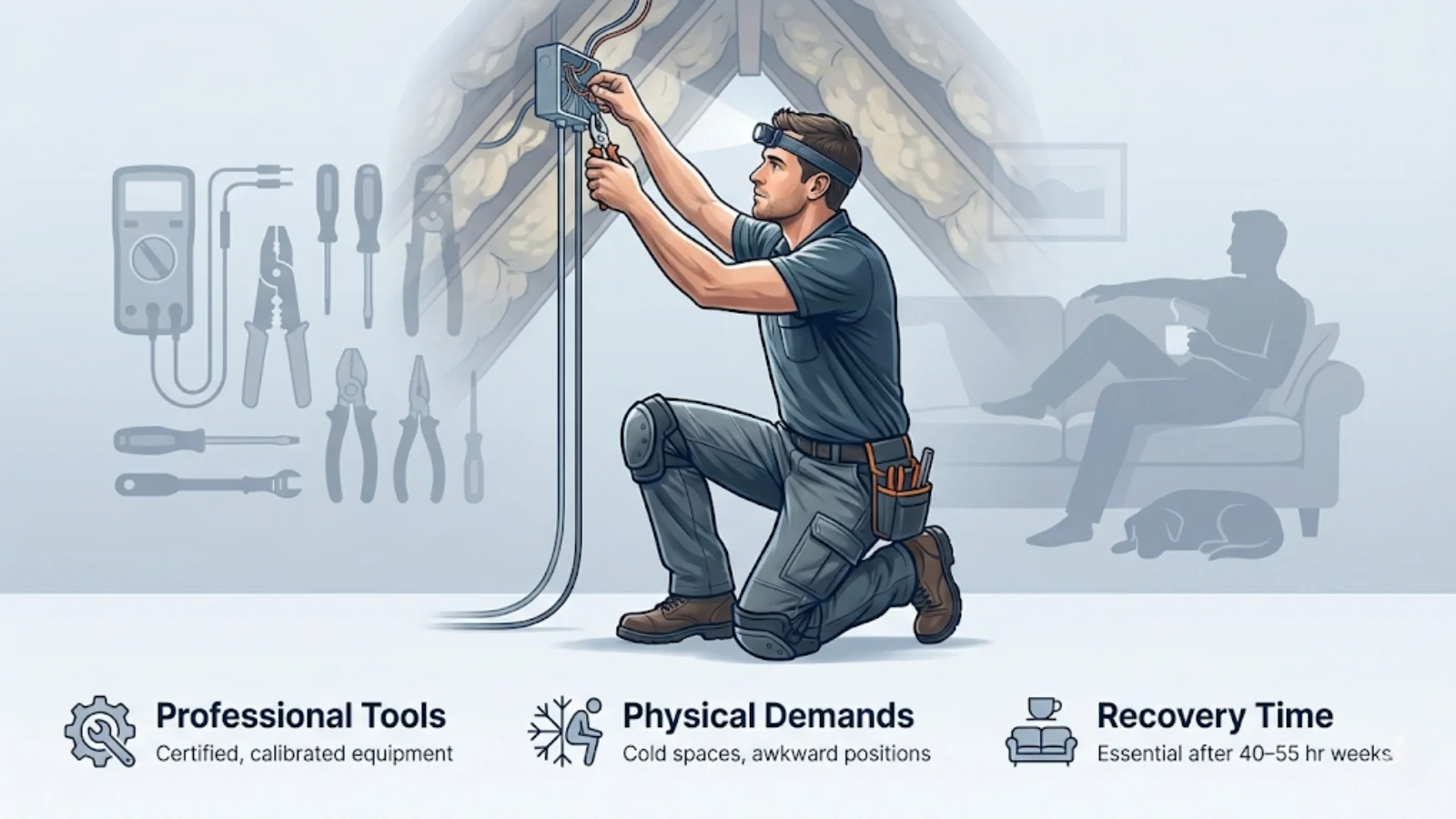
Buying Christmas gifts for electricians feels deceptively straightforward until you realize their work involves highly specialized equipment, strong brand loyalties, and physical demands most people don’t see. The worst gift is the £25 novelty voltage tester gathering dust because it lacks proper safety certifications. The best gift is the £20 pair of thermal socks they actually wear inside steel-toe boots during January loft work.
This isn’t about being ungrateful. It’s about understanding what electricians actually need versus what non-trades assume they want. Most sparkies have refined tool preferences built over years, making uninvited equipment gifts risky. However, they often neglect comfort items, recovery aids, and quality-of-life purchases that would genuinely improve their daily experience but feel too indulgent to buy for themselves.
The gift-giving challenge: electricians spend 40-55 hours weekly in cold spaces, cramped positions, and physically demanding work, but they’re particular about professional equipment and safety-critical items. The solution isn’t avoiding gifts entirely but redirecting effort toward categories that enhance comfort, support recovery, and respect their autonomy over technical choices.
This guide examines: what makes gifts land well with electricians, categories that consistently get appreciated versus items that gather dust, the battery platform loyalty problem making tool gifts risky, budget considerations across price ranges, and why stereotypical “tool gifts” often miss the mark entirely.
Whether buying for a newly qualified electrician, experienced spark, apprentice, or family member working in the trades, understanding these distinctions prevents well-intentioned gifts becoming awkward donations to the van’s “miscellaneous junk” compartment.
What Makes Gifts Land Well with Electricians
Successful gifts address genuine daily challenges rather than imagined ones.
Friction reduction in daily routine:
Electricians perform repetitive tasks requiring small tools and materials constantly: marking cable runs, drilling pilot holes, finding the right size cable gland. Gifts reducing friction in these routines get used:
- Quality marking pencils that actually work on dusty surfaces (standard HB pencils smudge)
- Small magnetic LED lights for dark consumer unit cupboards (better than phone torches)
- Decent cable strippers that don’t require constant blade adjustments
- Proper cable ties that don’t snap in cold weather
These aren’t glamorous but they solve genuine irritations occurring dozens of times daily.
Physical comfort during long shifts:
The UK electrical work reality: cold lofts in winter, kneeling on concrete floors, reaching into ceiling voids, carrying heavy equipment up stairs. Most electricians work 45-55 hour weeks during busy periods, much of it physically uncomfortable.
Gifts addressing this reality show understanding:
- Thermal layers for winter work: Quality merino wool base layers or heated vests (USB-powered) for unheated spaces. Not outdoor recreation gear but actual workwear-compatible thermals.
- Footwear support: Premium insoles for steel-toe boots (electricians spend 8-10 hours daily in safety boots). Compression socks reducing leg fatigue.
- Knee protection: High-quality knee pads for floor-level work. Not DIY shop versions but professional-grade with proper straps.
- Hand care: Industrial barrier creams and heavy-duty moisturizers for hands constantly exposed to cable insulation, dust, and drywall compound.
Durability in harsh environments:
Electrical work environments destroy consumer-grade items quickly. Transit vans, building sites, and tool bags are brutal on anything not built for abuse:
- Items must survive being dropped on concrete
- Must handle dust, moisture, temperature extremes
- Must withstand being tossed in vans or site bags
- Must not break when accidentally stood on or sat upon
Consumer electronics marketed as “rugged” often fail within weeks on actual sites. True durability comes from professional or industrial-grade products designed for trade environments specifically.
Autonomy preservation over tool choices:
This is the critical factor most gift-givers miss. Electricians develop strong preferences for specific brands, models, and configurations based on years of experience. These aren’t arbitrary brand loyalties but carefully considered choices involving:
- Tool ergonomics fitting their hand size and grip strength
- Battery platform compatibility across their entire kit
- Specific features needed for their work type (domestic vs commercial vs industrial)
- Warranty and service support in their area
- Replacement part availability
Gifting tools without explicit requests risks buying something incompatible with their existing setup or inferior to what they already use.
Quality of life improvements they won’t buy themselves:
Many electricians prioritize tool purchases and neglect comfort or recovery items. They’ll spend £500 on a new impact driver but won’t buy £30 compression socks or £50 massage devices. Gifts filling this gap get appreciated because they address genuine needs the recipient deprioritizes.
The successful gift formula:
Best gifts meet at least two criteria:
- Addresses daily discomfort or repetitive frustration
- Built for actual trade environments (not consumer-grade)
- Doesn’t interfere with existing tool ecosystem or preferences
- Improves life outside work hours (recovery, hobbies, family time)
- High enough quality to justify their cost but not in regulated/safety-critical categories
For people considering career changes, understanding these daily realities helps assess whether electrical work suits them. Challenges like cold conditions, physical strain, and equipment investment appear in residential kitchen extension projects and commercial installations alike.

Categories That Consistently Get Appreciated
Understanding categories that resonate with electricians focuses gift-buying on proven winners.
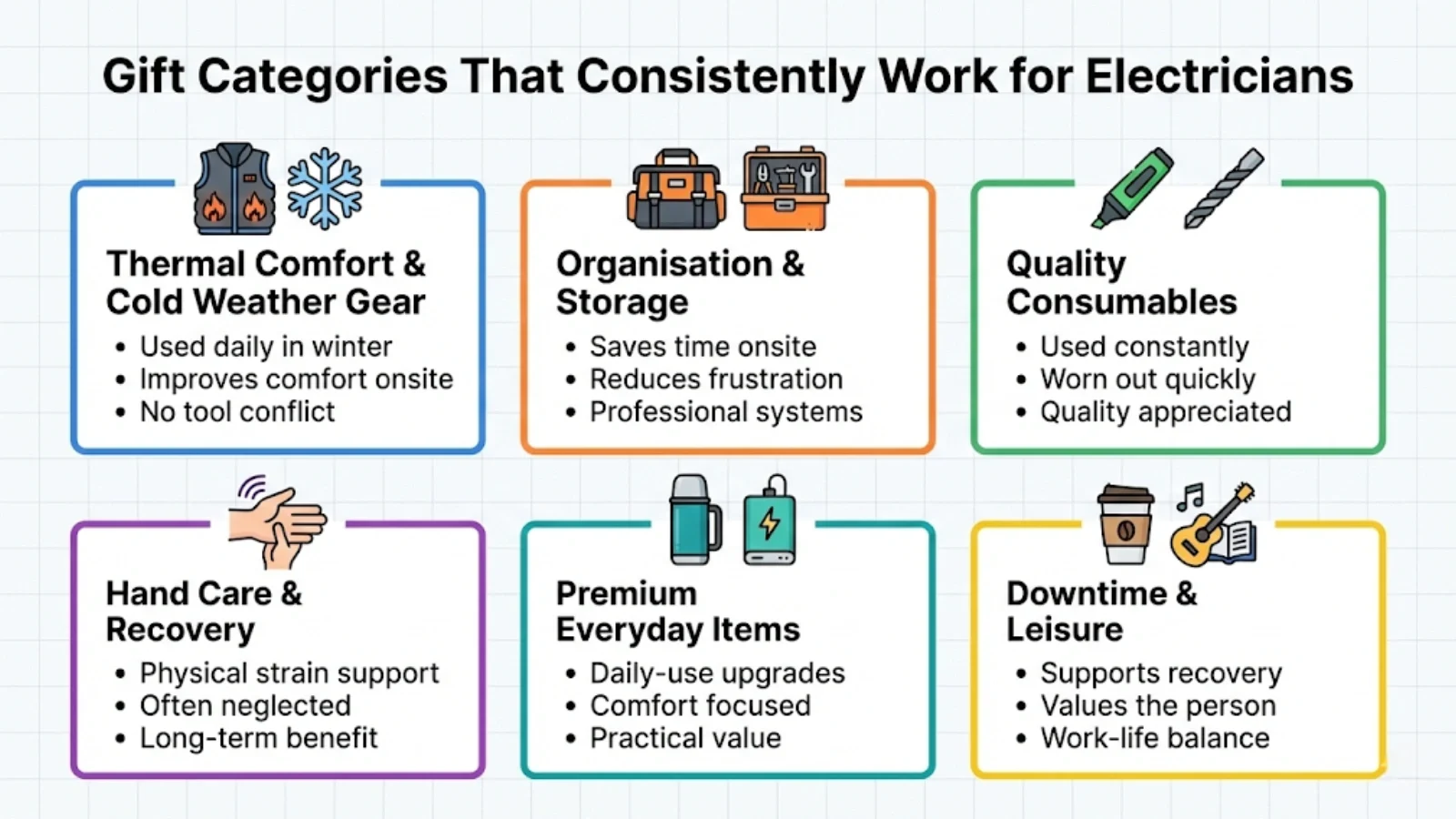
Thermal Comfort and Cold Weather Gear
UK winter electrical work means unheated spaces, outdoor installations, and early morning starts. Quality cold weather gear gets used constantly November through March.
What works:
- Heated vests (USB-powered): Rechargeable heated gilets worn under workwear. Look for professional brands (Dewalt, Milwaukee, Makita offer heated gear matching their tool aesthetics). Battery-powered versions compatible with tool batteries particularly valued if matching their ecosystem.
- Merino wool base layers: Technical thermal underwear, not fashion thermals. Merino naturally wicks moisture, doesn’t retain odors like synthetics, and maintains warmth when damp.
- High-quality work socks: Specifically designed for steel-toe boots with reinforced heels and toes. Brands: 1000 Mile, Darn Tough, Bridgedale. Not general hiking socks but work boot specific with cushioning where boots create pressure points.
- Thermal neck gaiters: Worn under high-vis to protect neck and lower face during outdoor work. Must be breathable enough for physical work, not ski/winter sports versions causing overheating.
- Insulated work gloves: Challenge here is balancing warmth with dexterity. Electricians need finger movement for small screws and cable manipulation. Look for gloves with grip on palms and fingers, touchscreen-compatible fingertips for checking phones.
Price range: £15-£80 depending on item
Why these work: Address genuine daily discomfort during coldest months. Get used repeatedly rather than sitting unused. Don’t interfere with tool choices or safety requirements.
Organisation and Storage (Non-Tool)
Professional electricians maintain organized systems but often use improvised solutions. Purpose-built organization items upgrade their systems without dictating tool choices.
What works:
- Professional tech bags: Heavy-duty bags for tablets, documentation, or personal items separate from tool bags. Look for Veto Pro Pac, CLC, or similar professional brands. Not consumer backpacks but purpose-built trade bags.
- Small parts organizers: Not cheap plastic hobby organizers but professional-grade modular systems for cable glands, connectors, small fixings. Brands: Milwaukee Packout accessories, Stanley FatMax organizers.
- Van organization systems: Shelving or drawer units for van storage. This is higher-budget (£100+) but transforms working efficiency for mobile electricians.
- Cable tie and consumables organizers: Specific holders for different cable tie sizes, tape rolls, or other frequently accessed consumables.
- Waterproof document folders: For test certificates, job sheets, Building Regulations compliance certificates. Must be A4 size, durable, and protect documents from site conditions.
Price range: £20-£150 depending on sophistication
Why these work: Improve daily efficiency without touching tool preferences. Address genuine frustration (wasting time finding items). Professional-grade versions survive harsh treatment.
Quality Consumables They Hate Buying
Items electricians use constantly but resent purchasing because money could go toward tools.
What works:
- Premium marking tools: Pica deep-hole markers, carpenter pencils, chalk lines. Not standard pencils but specialist marking tools for electrical work.
- Quality work gloves: Electricians go through gloves quickly (cuts, wear, contamination). Premium brands with proper grip and durability appreciated: Mechanix, Milwaukee, Maxiflex.
- High-grade drill bits: Quality HSS or cobalt drill bits in commonly used sizes. Brands: Bosch, Dewalt, Milwaukee. These wear out or break regularly.
- Cable strippers and preparation tools: Consumable blades for cable strippers, replacement parts for frequently used hand tools.
- LED inspection lights: Small rechargeable pocket lights or headlamps for dark spaces. Not cheap hardware store versions but professional brands (Milwaukee, Petzl, Black Diamond).
Price range: £10-£50 per item
Why these work: Save electricians money on daily necessities. Get used immediately rather than stored. Appreciate quality versions they wouldn’t justify buying themselves.
Hand Care and Recovery
Physical toll of electrical work shows most in hands, knees, and back. Recovery aids address this without medical equipment implications.
What works:
- Industrial hand care products: O’Keeffe’s Working Hands, Flexitol, or similar heavy-duty hand creams. Standard moisturizers inadequate for trade work.
- Barrier creams: Applied before work to reduce skin irritation from cable insulation, dust, chemicals. Travacare, Swarfega, or similar professional barrier products.
- Massage devices: Handheld massage guns, foam rollers, or similar recovery tools for sore muscles. After 40+ hours weekly physical work, these get serious use.
- Compression supports: Knee sleeves, elbow supports, or back supports for chronic strain. Not medical-grade (which requires fitting) but athletic compression wear.
- Heat/cold packs: Reusable therapeutic packs for sore joints and muscles. Particularly relevant for older electricians with cumulative strain injuries.
Price range: £15-£80
Why these work: Address genuine physical toll of the job. Often neglected by electricians who see them as “soft” purchases. Show you understand work involves physical hardship beyond technical challenges.
Premium Everyday Items
High-quality versions of items electricians use daily but usually buy budget versions.
What works:
- Insulated flasks: Professional-grade vacuum flasks keeping tea or coffee hot for full shifts. Stanley, Thermos, or similar brands. Minimum 1 liter capacity.
- Quality lunch containers: Proper insulated lunch boxes maintaining food temperature. Not consumer lunch bags but professional food containers.
- Portable power banks: High-capacity (20,000mAh+) power banks for charging phones and tablets on sites without power. Anker, RAVPower, or similar reliable brands.
- Bluetooth speakers: Ruggedized, waterproof, dust-proof speakers for site use. JBL, Ultimate Ears, or similar professional-grade portable speakers.
- Head torches: Professional head lamps (200+ lumens) with red light modes, rechargeable batteries. Petzl, Black Diamond, Ledlenser.
- Multi-device charging cables: Heavy-duty braided charging cables in multiple lengths for van and site charging.
Price range: £25-£80
Why these work: Upgrade daily-use items from budget to quality versions. Make workdays more comfortable without tool purchase risks. Show attention to quality-of-life details.
Downtime and Leisure
Acknowledging electricians have lives outside work often overlooked in trade gift guides.
What works:
- Hobby equipment: If you know their hobbies (fishing, cycling, gaming, woodworking, etc.), supporting these interests shows you value their downtime.
- Experience vouchers: Cinema, restaurant, activity days with family. Acknowledges need for work-life separation.
- Leisure clothing: Quality casual wear, not workwear. Comfortable clothing for evenings and weekends.
- Fitness or wellness items: Gym memberships, yoga mats, activity trackers if they’re interested in fitness.
- Books or entertainment: If they read or have specific interests, supporting these shows you see them beyond “electrician” identity.
Price range: £20-£100+
Why these work: Most trade gift guides ignore this category entirely. Acknowledges mental health importance and need to decompress. Shows you value the person, not just their profession.
For electricians considering career diversification, emerging specializations like solar PV installer pathways offer opportunities to expand beyond traditional electrical work, potentially requiring new specialized equipment and training.
"Most electricians settle on a battery platform early in their career and build their entire kit around it - Milwaukee M18, DeWalt XR, Makita LXT. It's not snobbery, it's economics. You can't use Milwaukee batteries in DeWalt tools. Buying someone a drill from the wrong ecosystem means they need to buy chargers, batteries, and compatible tools. Unless you know their exact platform, tool gifts are risky."
Thomas Jevons, Head of Training
Categories That Rarely Get Used (and Why)
Understanding what doesn’t work prevents wasted money and awkward gift moments.
Cheap Multi-Tools and Generic Tool Sets
The £15-£30 “100-piece tool set” from supermarkets or DIY stores represents everything wrong with gifting to tradespeople.
Why these fail:
- Inadequate torque: Screwdriver bits strip under load, pliers lack proper leverage, spanners round off bolt heads
- Poor materials: Tool steel too soft, wearing quickly or breaking under normal use conditions
- Missing safety ratings: No insulation ratings for electrical work, no load ratings for proper use
- Already-owned duplicates: Professional electricians already have these tools in quality versions
- Ergonomics: Uncomfortable handles, awkward balance, poorly designed for extended use
What happens: These sit unused in vans or get donated to family members for occasional DIY. The electrician continues using their existing quality tools.
Price comparison issue: A single quality screwdriver (Wera, Wiha, CK Tools) costs £8-£15. An entire “100-piece set” for £20 immediately signals poor quality per item.
Novelty Test Equipment and “Gadgets”
Generic voltage testers, cheap multimeters, and “innovative” tool gadgets marketed to consumers rather than professionals.
Why these fail:
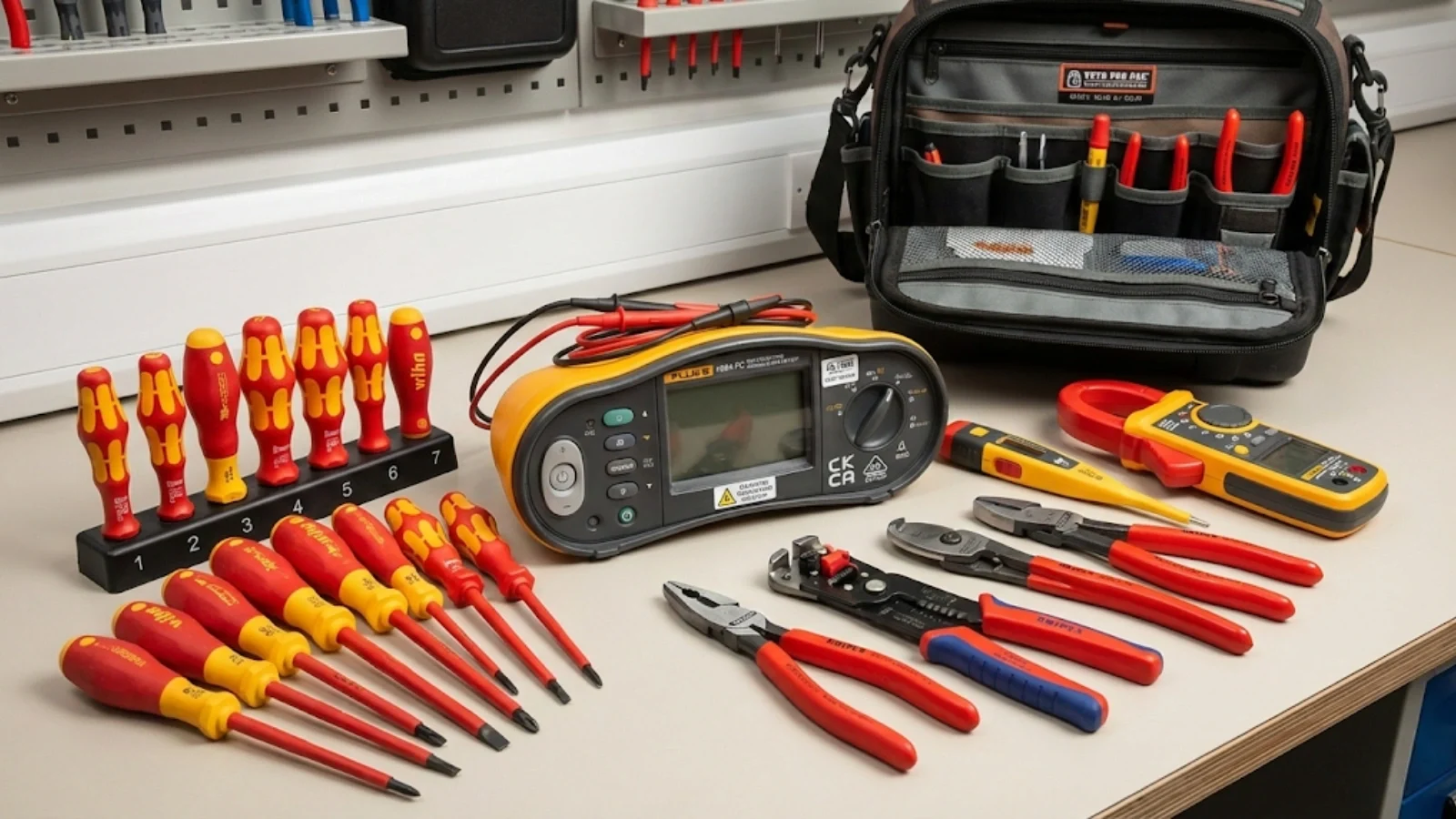
- Safety standards: Test equipment for electrical work requires CAT III or CAT IV safety ratings. Consumer versions lack proper certifications.
- Calibration requirements: Professional test equipment needs regular calibration certificates for insurance and Building Regulations compliance. Generic testers can’t be calibrated.
- Reliability concerns: When testing for live voltage, electricians need absolute confidence in results. Cheap testers give false readings, creating dangerous situations.
- Professional standards: Using non-certified test equipment could void professional insurance or result in failed inspections.
- Existing ownership: Professional electricians already own proper test equipment (Fluke, Megger, Kewtech) costing £200-£800. They won’t use generic £20 alternatives.
The “innovation” trap: Marketing pushes “revolutionary” gadgets solving problems professionals have already solved with standard equipment. Magnetic wristbands, LED-lit tape measures, multi-bit ratcheting systems – these often complicate simple tasks or break quickly.
Novelty Workwear and Merchandise
“World’s Best Electrician” mugs, joke t-shirts, comedy tool belts, and novelty PPE.
Why these fail:
- Professional image: Most UK electricians maintain professional appearance with customers. Comedy workwear undermines this.
- Practicality: Joke items rarely as functional as proper workwear. Comedy tool belts lack proper weight distribution. Funny hi-vis lacks proper certification.
- Personal taste: Humor is subjective. What seems funny to gift-giver might not match recipient’s sense of humor.
- One-use items: Novelty mugs get used once for photo, then relegated to back of cupboard.
UK trade culture: British tradespeople generally prefer understated, quality branded workwear (Snickers, Dickies, DeWalt workwear) over logo-heavy comedy merchandise.
Gimmick Organizers and Storage
Small plastic bit-holders, magnetic wristbands, “revolutionary” cable organizers, and similar gadgets marketed heavily to gift-buyers.
Why these fail:
- Fragility: Cheap plastic organizers break quickly in harsh site environments
- Impracticality: Magnetic wristbands interfere with movement and become uncomfortable during extended wear
- Size limitations: Small organizers inadequate for quantities electricians actually carry
- Incompatibility: Often designed for DIY hobbyist tool quantities, not professional requirements
- Movement restriction: Wrist-mounted or body-mounted organizers interfere with crawling, reaching, and bending
What professionals use instead: Modular systems from Milwaukee Packout, DeWalt ToughSystem, or similar professional storage matching their tool ecosystem. These cost £30-£150+ per unit but actually work long-term.
Safety-Critical PPE Without Fitting
Respirators, safety glasses, gloves, or other protective equipment where fit and certification matter.
Why these fail:
- Fitting requirements: Respirators require proper face seal testing. Wrong size ineffective and dangerous.
- Certification standards: PPE must meet specific British or European standards. Generic versions often lack proper markings.
- Personal preference: Electricians develop strong preferences for PPE brands based on comfort during extended wear.
- Legal implications: Using improperly fitted or non-certified PPE could affect insurance claims if accidents occur.
- Existing provision: Most employers provide required PPE, making gifts redundant.
Exception: Non-safety-critical comfort items like premium work socks, thermal layers worn under PPE, or hand care products are safe territory.
Regulated Test Equipment
Multimeters, insulation resistance testers, RCD testers, voltage indicators, or similar electrical testing equipment.
Why these categorically fail:
- Calibration requirements: Professional test equipment requires annual calibration certificates costing £50-£150 per device. Without calibration, test results invalid for Building Regulations compliance.
- Safety ratings: Equipment must have appropriate CAT ratings (CAT III for distribution, CAT IV for origin). Consumer versions lack proper ratings.
- Insurance requirements: Professional insurance often specifies approved test equipment manufacturers. Generic brands not covered.
- Traceability: Test certificates require equipment serial numbers traceable to calibration records. Cheap testers can’t provide this.
- Professional reputation: Using non-certified equipment could result in failing inspections, insurance claims being denied, or professional liability.
The only exception: If someone explicitly requests specific model number after researching exact requirements, and understands ongoing calibration costs.
Budget Tool Sets and Power Tools
£30 drill sets, £50 grinder kits, or similar budget power tool packages.
Why these fail:
- Battery platform incompatibility: As discussed in pull quote, electricians invest in specific battery ecosystems. Tools from wrong platform require entirely new charger and battery investment.
- Quality standards: Professional electricians use tools meeting minimum quality thresholds for reliability, warranty, and serviceability. Budget brands often don’t meet these.
- Existing ownership: Professional sparkies already own quality versions of essential tools. Budget alternatives become redundant.
- Safety concerns: Cheap power tools may lack proper electrical safety features, double insulation, or adequate overload protection.
Alternative: If you absolutely know someone needs specific tool and their exact battery platform, buying tool-only (no battery, no charger) from their ecosystem can work. But this requires very specific knowledge.
The Battery Platform Problem: Why Tool Gifts Are So Risky
Battery-powered tool ecosystems create major gifting challenge most non-trades don’t understand.
How battery platforms work:
Modern cordless tool manufacturers (Milwaukee, DeWalt, Makita, Bosch, Ryobi, etc.) create proprietary battery systems incompatible with competitors:
- Each brand has unique battery design, voltage, and connection system
- Batteries only work within same brand’s ecosystem
- Professional electricians typically own 4-8 batteries and 2-4 chargers for their platform
- Total battery and charger investment: £400-£800+ per electrician
The economic lock-in:
Once electricians invest in platform, switching becomes prohibitively expensive:
- Milwaukee M18 electrician with 6 batteries and 3 chargers invested £600+
- To use DeWalt tool, they need entire DeWalt battery setup
- This makes “wrong ecosystem” power tools essentially useless gifts
- The tool itself might be £100, but batteries/chargers add £200-£400+
The brand loyalty isn’t snobbery:
Electricians choose platforms based on:
- Tool availability: Some platforms offer more specialized electrical tools
- Battery runtime: Different battery technologies affect working time between charges
- Warranty and service: Local service centers and warranty reputation matter
- Employer provision: Many learn on employer’s platform and continue using it
- Second-hand market: Easier to buy/sell tools within popular platforms
- Job type: Some brands dominate domestic work, others industrial
What this means for gift-buyers:
Safe approach: Ask explicitly what battery platform they use. If they say “Milwaukee M18,” you can safely buy Milwaukee M18 tools (tool-only, without batteries).
Safer approach: Avoid power tools entirely unless specifically requested with model numbers.
Safest approach: Focus on non-battery consumables, comfort items, or accessories that don’t require platform compatibility.
The apprentice exception:
First-year apprentices often haven’t chosen platform yet (many use employer’s tools initially). Even here, buying power tools risky because they’ll develop preferences through work experience. Better to give gift vouchers for tool retailers and let them choose when ready.
Platform examples and approximate market share:
Milwaukee (M18/M12): Popular with professional electricians, particularly those doing commercial work. Red tools/batteries. Known for power and durability. Premium pricing.
DeWalt (XR 18V/54V): Very common across trades. Yellow tools/batteries. Good availability and service network. Mid-premium pricing.
Makita (LXT 18V/XGT 40V): Popular particularly with older electricians. Teal tools/batteries. Extensive tool range. Mid-premium pricing.
Bosch Professional (18V): Strong in Europe, growing in UK. Blue tools/batteries. German engineering reputation. Premium pricing.
Ryobi (ONE+ 18V): Budget-conscious option. Green tools/batteries. Very extensive tool range but lower professional acceptance. Budget pricing.
For professionals, Milwaukee/DeWalt/Makita dominate. Apprentices sometimes start with Ryobi and upgrade later.
The “I’ll just buy two tools from different brands” problem:
Some gift-buyers think: “They have Milwaukee drill, I’ll buy DeWalt sander – now they have more options!”
This creates two problems:
- They now need batteries/chargers for both platforms (expensive, bulky)
- On job sites, they might bring wrong batteries for needed tool
- Charging logistics become complicated (multiple chargers to transport)
Professional electricians deliberately standardize on single platform to avoid this exact problem.
Hand tool exception:
Non-powered hand tools (screwdrivers, pliers, cutters, strippers) don’t have battery compatibility issues. However, electricians still have strong brand preferences (Knipex, Wera, Wiha, CK Tools) and often already own quality versions.
Better hand tool gift: replacement consumables (driver bits, blade sets, etc.) rather than complete new tools.
Budget Considerations: What Works at Different Price Points
Thoughtfulness matters more than price, but strategic spending varies by budget.
£10-£25: Elite Consumables
Best approach: Focus on single high-quality consumable rather than multiple cheap items.
Strong options:
- Premium work socks (single pair of 1000 Mile or Darn Tough): £15-£20
- Quality marking tools (Pica deep-hole marker set): £12-£18
- Industrial hand cream and barrier cream set: £15-£20
- High-quality work gloves (Mechanix or Maxiflex): £15-£22
- LED pocket inspection light (professional brand): £18-£25
- Thermal neck gaiter (technical fabric): £12-£18
Why this works: One genuinely useful quality item beats five mediocre ones. Shows restraint and understanding over quantity.
What to avoid: “Value packs” of multiple cheap items, novelty gifts, generic tool sets.
£25-£50: Comfort and Organisation
Best approach: Items improving daily comfort or efficiency without touching tool preferences.
Strong options:
- Quality thermal base layers (merino wool top or bottom): £30-£45
- Professional small parts organizers: £25-£40
- Premium insulated flask (1L+ capacity): £30-£45
- High-capacity power bank (20,000mAh+): £35-£50
- Compression socks and recovery aids bundle: £30-£45
- Professional head torch (200+ lumens): £35-£50
- Heavy-duty tech bag for documents/tablets: £40-£50
Why this works: Addresses genuine daily challenges at price point showing thought without overreach.
What to avoid: Budget power tools, cheap test equipment, novelty items.
£50-£100: Quality of Life Upgrades
Best approach: Premium versions of items they use daily or recovery aids they wouldn’t buy themselves.
Strong options:
- Heated vest (professional brand, USB or tool battery powered): £60-£90
- Massage gun for muscle recovery: £70-£95
- Premium insulated lunch system with multiple containers: £50-£70
- High-end ruggedized Bluetooth speaker: £60-£85
- Professional-grade knee pads: £55-£75
- Multiple premium consumables bundle (socks, gloves, hand care, marking tools): £60-£80
- Quality casual wear or hobby equipment (if you know their interests): £50-£100
Why this works: Price point allows genuine quality that makes noticeable difference without entering professional equipment territory.
What to avoid: Tools unless explicitly requested, any safety-critical equipment, cheap versions of expensive items.
£100+: Personal and Lifestyle Focus
Best approach: Avoid professional equipment entirely. Focus on personal wellbeing, hobbies, or experiences.
Strong options:
- Premium workwear trousers or jacket (Snickers, professional brand): £100-£150
- Van organization system (modular storage): £120-£200
- Experience days or family activity vouchers: £100-£300
- High-end hobby equipment (if you know their interests): £100+
- Quality leisure clothing bundle: £100-£150
- Wellness items (gym membership, massage sessions, fitness equipment): £100+
- Multiple complementary items from lower price brackets: £100-£150
Why this works: Acknowledges they have sophisticated professional equipment already. Shows you value them as person beyond profession.
What to avoid: Power tools (wrong ecosystem risk enormous at this price), test equipment (calibration costs ongoing), anything they’d need to “check with work” about.
Budget-Specific Pitfalls
Low budget mistake: Buying multiple cheap items instead of single quality one. Five £5 novelty items all become clutter. One £25 quality item gets used.
Mid budget mistake: Trying to buy “proper” tools at budget price. £50 doesn’t buy professional-grade power tools. Better to buy quality non-tool items.
High budget mistake: Assuming expensive tool gifts impress more. Unless explicitly requested, expensive wrong-ecosystem tools create obligation to use incompatible equipment or awkwardness about returning/regifting.
The price-to-thought ratio:
£15 thermal socks showing understanding of cold loft work > £40 novelty tool organizer showing no understanding of actual needs.
Price matters less than demonstrating you understand their work reality and respect their professional autonomy.
"Most electricians work 45-55 hours weekly during busy periods. The gift that actually makes their evening or weekend better has more impact than another tool. Things that help them switch off - whether that's hobby equipment, leisure clothing, or family activity vouchers - acknowledge they have lives outside work. This matters more than people realize for mental health in the trades."
Joshua Jarvis, Placement Manager
Why Stereotypical "Tool Gifts" Miss the Mark
The disconnect between how non-trades perceive electricians and actual daily reality drives gift-buying mistakes.
The “tool-obsessed tradesperson” stereotype:
Popular culture portrays tradespeople as obsessed with tools, leading gift-buyers toward tool gifts as “obvious” choices. Reality is more nuanced:
- Electricians are selective about tools, not indiscriminately excited by any new equipment
- Professional tool purchases involve research, comparison, and specific requirements
- Many electricians view tools as necessary expense rather than exciting purchase
- Tool purchases often delayed due to cost, but that doesn’t mean they want any tool gifted
The hobbyist versus professional distinction:
Marketing often targets DIY enthusiasts who:
- Buy tools occasionally for specific projects
- Prioritize features and “innovation” over reliability
- Don’t depend on tools for income
- Can tolerate tool failures without professional consequences
Professional electricians have completely different priorities:
- Need absolute reliability (tool failure costs money and reputation)
- Value proven track record over innovative features
- Build tool systems strategically over years
- Face professional liability if tools fail
Gifts working for DIY hobbyists often inappropriate for professionals.
The “gadget” fallacy:
Non-trades see tools as similar to consumer electronics: newer and more features equals better. Professional perspective:
- Simpler often better (fewer failure points)
- Proven reliability beats innovation
- Established brands with service networks preferred over startups
- “Traditional” tools often superior to “innovative” alternatives
Marketing targeting wrong audience:
Many “gift guides for electricians” are actually advertorials promoting specific products to gift-buyers, not based on what electricians actually want:
- Lists feature paid placement from brands
- Prioritize items with high margins for retailers
- Focus on “gift-able” products (impressive packaging) over utility
- Written by non-trades guessing what electricians want
This creates perception that novelty tools, gadgets, and cheap sets make good gifts when professional electricians actively avoid these.
Environmental context ignorance:
Many gifts ignore that electrical work happens in:
- Unheated spaces (lofts, garages, outdoor installations)
- Dusty, dirty environments (renovation sites, construction)
- Cramped positions (under floors, in ceiling voids)
- Varied weather (outdoor installations year-round)
Consumer products marketed as “rugged” often designed for weekend outdoor recreation, not daily trade abuse. They fail quickly in actual work conditions.
The professional standards gap:
Electricians work under significant regulatory burden:
- Building Regulations compliance requirements
- Insurance specifications for equipment
- Professional certification standards
- Health and Safety Executive (HSE) guidelines
Many gift items (particularly test equipment, safety gear, or tools) have compliance implications gift-buyers don’t understand, making them inappropriate or dangerous suggestions.
What electricians actually get excited about:
When electricians discuss purchases enthusiastically, it’s often:
- Van upgrades (organization, comfort)
- Workwear that actually performs (specific brands after years of testing alternatives)
- Rare tools for specific applications (not general-purpose items)
- Tools from their chosen ecosystem (because they integrate with existing kit)
- Quality-of-life improvements (heated gear, good footwear, recovery aids)
These don’t fit stereotypical “tool-obsessed” image but reflect actual priorities.
The assumption problem:
Gift-buyers assume electricians:
- Want more tools (often have complete kit already)
- Prioritize work over personal life (40-55 hour weeks mean they value downtime)
- Don’t care about comfort (physical toll makes comfort very important)
- All have same preferences (strong individual variation in brand loyalty, work type, personal interests)
Better approach: Assume they’re particular professionals who value quality and have refined preferences, then gift accordingly in non-professional categories.
For electricians developing professionally, building capabilities beyond pure technical work matters increasingly. Skills covered in career development resources like communication, customer relations, and business management become as important as tool expertise for long-term career success.
Gift-Buying Strategy: The Decision Framework
Systematic approach to choosing gifts prevents common mistakes.
Step 1: Determine relationship and knowledge level
If you’re:
- Family member with limited trade knowledge: Avoid all tool gifts. Focus on comfort, recovery, and personal items.
- Fellow electrician or trade person: Can consider consumables or accessories within known ecosystem. Still avoid surprise tool purchases.
- Employer or colleague: Professional comfort items, quality workwear, or team experiences appropriate.
- Partner with daily conversations about work: May know battery platform and specific needs. Can consider tool accessories if explicitly mentioned.
Step 2: Assess their career stage
First-year apprentice:
- Still developing preferences and often using employer’s tools
- Best gifts: comfort items, quality consumables, organizational aids
- Avoid: power tools (preferences not established), expensive items (may change careers)
Second/third-year apprentice:
- Likely chosen battery platform and building kit
- Best gifts: consumables for their platform, comfort and recovery items, organizational systems
- Avoid: tools from wrong platform, test equipment (employer typically provides)
Newly qualified electrician (improver stage):
- Establishing themselves professionally, potential financial pressure
- Best gifts: practical money-savers (quality lunch gear, fuel vouchers), comfort items, recovery aids
- Avoid: expensive tool gifts (they know exactly what they need and will buy it)
Experienced electrician (5+ years):
- Complete tool kit, refined preferences, physical wear accumulating
- Best gifts: recovery and wellness items, quality-of-life upgrades, personal/hobby items
- Avoid: any tools (they have exactly what they want), work-related items (sufficient already)
Self-employed electrician:
- All business costs personal expense, values efficiency
- Best gifts: van organization, business-quality items, time-saving consumables, personal downtime items
- Avoid: budget versions of anything (they know quality matters for business reputation)
Step 3: Consider seasonal relevance
Winter gifts (November-February):
- Thermal gear gets immediate use
- Hot drink flasks particularly valued
- Indoor comfort items for cold homes
Summer gifts (May-August):
- Cooling items (insulated water bottles, cooling towels)
- Outdoor leisure gear
- Less immediate need for thermal items (though always appreciated for following winter)
Step 4: Apply safety filters
Never buy without explicit request:
- Test equipment (multimeters, voltage testers, RCD testers)
- Safety-critical PPE (respirators, safety glasses where fit matters)
- Regulated items requiring certification
Proceed with caution:
- Power tools (need battery platform knowledge)
- Hand tools (strong brand preferences exist)
- Workwear (sizing and preference variations)
Generally safe:
- Thermal comfort layers
- Recovery and wellness items
- Quality consumables (socks, gloves, marking tools)
- Non-work personal items
- Organizational aids
Step 5: Research if buying branded items
If buying anything with brand names:
- Check reviews from actual tradespeople (not consumer reviews)
- Verify it’s professional grade not consumer grade
- Confirm it matches their tool ecosystem if relevant
- Look for UK trade body endorsements or professional recommendations
Step 6: Consider gift presentation
Tradespeople generally prefer practical presentation over elaborate gift wrapping:
- Simple, robust packaging
- Clear explanation if item unfamiliar
- Gift receipt included (no shame in exchanges for size/preference)
- Avoid excessive packaging they’ll need to dispose of
The final check questions:
Before purchasing, ask yourself:
- Does this address actual daily challenge or just seem “tradesperson-appropriate”?
- Could this interfere with their professional preferences or safety?
- Would they buy this for themselves but deprioritize it?
- Does this show understanding of their work reality?
- Is this professional-grade or consumer-grade?
If uncertain on any question, err toward comfort/personal categories rather than professional/tool categories.

Gift-buying for electricians requires balancing thoughtfulness with respect for professional autonomy.
The core insight:
Electricians have sophisticated professional preferences developed through years of experience, making uninvited tool gifts high-risk. However, they often neglect comfort, recovery, and quality-of-life items that would genuinely improve daily experience but feel too indulgent to purchase themselves. Successful gifts focus on this neglected second category rather than attempting to supplement professional equipment.
What works consistently:
Thermal comfort items address genuine daily discomfort during UK winter work in unheated spaces: quality thermal layers, heated vests, premium work socks, insulated flasks maintaining heat during long shifts.
Recovery and wellness aids acknowledge physical toll of 40-55 hour weeks involving kneeling, reaching, lifting, and crawling: massage devices, foam rollers, compression supports, industrial hand care products.
Quality consumables they use constantly but resent buying: premium marking tools, quality work gloves, high-grade drill bits, LED inspection lights from professional brands.
Organizational systems improving daily efficiency without dictating tool choices: professional tech bags, modular small parts organizers, van storage solutions, waterproof document folders.
Personal and lifestyle items acknowledging life outside work: hobby equipment, leisure clothing, experience vouchers, family activities, downtime aids.
What consistently fails:
Budget tool sets and cheap power tools representing opposite of quality standards professionals require, creating clutter rather than value.
Novelty test equipment lacking safety certifications and calibration capability, creating liability risks and remaining unused.
Generic gadgets and organizers designed for consumer DIY rather than professional trade environments, breaking quickly or interfering with established systems.
Safety-critical PPE requiring proper fitting and certification where well-intentioned gifts could create legal and safety issues.
Wrong-ecosystem power tools incompatible with existing battery platforms, requiring hundreds of pounds additional investment in chargers and batteries to make usable.
The battery platform problem:
Modern cordless tool ecosystems create significant gift-buying challenge. Milwaukee M18, DeWalt XR, and Makita LXT batteries are mutually incompatible. Electricians invest £400-£800+ in batteries and chargers for chosen platform. Power tools from different platform effectively useless without matching ecosystem investment. This isn’t snobbery but economics. Unless you explicitly know someone’s battery platform and they’ve requested specific tool model, avoid power tools entirely.
Budget strategy:
Price matters less than understanding. £15 thermal socks showing awareness of cold loft work beat £40 novelty organizer showing no understanding of actual needs. At every price point, single quality item beats multiple cheap alternatives.
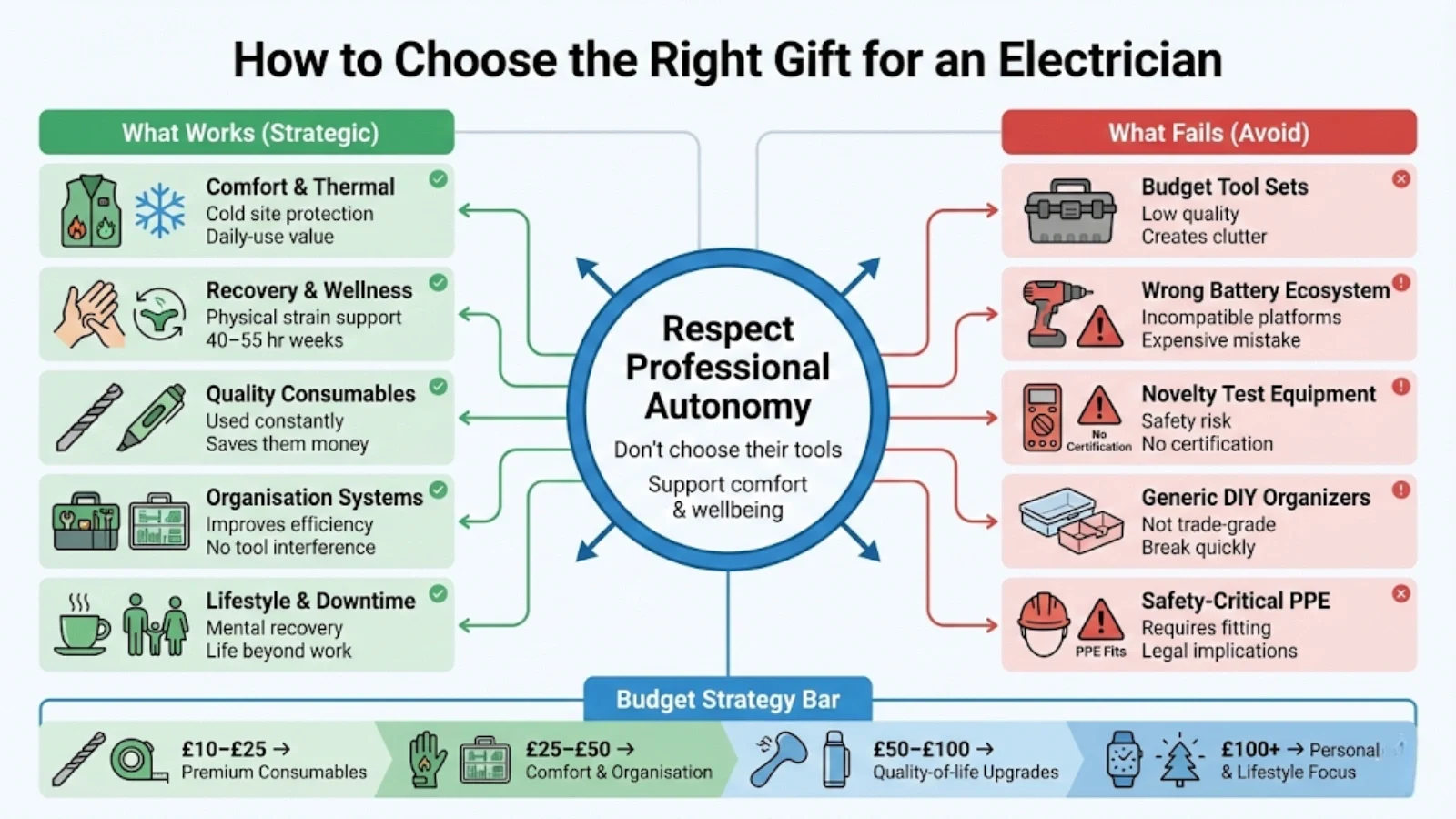
£10-£25: Elite consumables – one premium item rather than several budget ones £25-£50: Comfort and organization – daily-use items improving efficiency or comfort £50-£100: Quality of life upgrades – premium versions they wouldn’t buy themselves £100+: Personal and lifestyle focus – acknowledge sophisticated professional equipment already exists
The professional-personal distinction:
Most electricians prefer selecting their own professional equipment due to specific requirements, brand preferences, and regulatory compliance needs. Personal items respecting this autonomy while acknowledging physical demands land better than impressive-looking tools interfering with refined professional systems.
Gifts supporting recovery, comfort, and life outside work show you value the person beyond their professional identity. Gifts attempting to supplement their professional equipment often suggest you don’t trust their judgment or understand their work reality.
Career stage considerations:
Apprentices developing preferences benefit from quality consumables and comfort items rather than tools locking them into ecosystems. Newly qualified electricians appreciate practical money-savers and organizational aids. Experienced electricians with complete tool kits value recovery aids and personal items most.
The stereotype problem:
Popular perception of “tool-obsessed tradespeople” drives gift-buyers toward tool gifts that often fail. Actual electricians value reliability over innovation, proven track records over features, and refined systems over random additions. Marketing targets hobbyists rather than professionals, creating disconnect between gift guides and actual preferences.
Better approach: Assume electricians are particular professionals who value quality, have refined preferences, and experience significant physical demands. Gift accordingly in categories addressing daily challenges without interfering with professional choices.
Final principle:
When uncertain, prioritize comfort and personal categories over professional and tool categories. Showing you understand physical toll of the work matters more than attempting to supplement their equipment. Respect their professional autonomy while supporting their overall wellbeing.
The thoughtful gift acknowledges both their professional expertise (by not presuming to choose their tools) and their physical reality (by addressing comfort, recovery, and quality of life). This balance demonstrates genuine understanding rather than stereotypical assumptions about what tradespeople want.
FAQs
What are the best Christmas gifts for electricians they’ll use day to day?
The safest bets are tools and kit that solve real on-site problems:
- Reliable hand tools
Insulated screwdrivers, voltage testers, and quality cable strippers are used daily. A good digital multimeter with non-contact voltage detection is especially valuable for fault-finding.
- Cordless radios with chargers
Radios that double as battery chargers keep tools powered while providing background noise on long site days.
- High-quality cable strippers
Proper SWA and standard cable strippers speed up work and reduce mistakes, especially on repetitive jobs.
These gifts work because they save time, reduce frustration, and improve safety, rather than just looking “trade-themed”.
What gifts do electricians usually hate (and why do they end up in the van junk drawer)?
Common misses include:
- Novelty items
Joke mugs, slogan t-shirts, LED gloves and gimmicks don’t help on site and quickly get ignored.
- Cheap, unbranded multi-tools
These often break, feel unsafe, or fail under daily use. Most electricians stick to brands they trust.
- Clothing with electrician jokes
These rarely get worn on site and don’t improve comfort or organisation.
If it doesn’t do a job better, it usually becomes clutter.
Are tools a good gift, or is that a common mistake?
Tools can be a great gift if you know what you’re doing.
- ✅ Good idea if you know:
- Their preferred brand
- What they already own
- What needs upgrading
- ❌ Risky if you don’t:
- Duplicates
- Wrong brand
- Poor-quality kit that won’t get used
Tip:
For apprentices, tools are usually welcome.
For qualified electricians, vouchers or upgrades are safer.
What is the “battery platform problem” and why does it matter?
Most electricians commit to one cordless tool ecosystem (e.g. DeWalt, Milwaukee, Makita).
Battery platforms:
- Are not cross-compatible
- Lock users into one system
- Make mismatched gifts useless
A cordless tool on the wrong platform often ends up unused.
Always check which batteries they already use before buying.
What are good non-tool gifts for electricians who already have everything?
If their van is already full:
- Insulated lunch boxes – keep food warm without relying on takeaways
- Workwear layers – fleece gilets or vests for variable site temperatures
- Learning and development – exam prep, wiring guides, or specialist books
These add value without duplicating tools.
What comfort gifts help with cold lofts, winter call-outs, and long days?
Cold and fatigue are constant issues. Useful options include:
- Heated jackets – ideal for lofts and unheated spaces
- Thermal base layers – moisture-wicking and warm without bulk
- Insulated work gloves – warmth without losing dexterity
Comfort gifts are often more appreciated than novelty items.
What are good stocking-filler gifts under £25 that don’t feel cheap?
Small but genuinely useful ideas:
- Magnetic wristbands – hold screws and bits when working at height
- Marking tools – chalk or non-permanent markers for drilling accuracy
- Compact pliers – ideal for tight spaces and everyday fixes
They work because they’re small upgrades to daily tasks.
What gifts suit apprentice electricians vs fully qualified sparkies?
- Starter insulated tool kits
- Basic testers
- Practical everyday hand tools
Qualified electricians:
- Upgraded or specialist tools
- Interchangeable screwdriver systems
- Diagnostic tools like borescopes
Experience level matters more than price.
What PPE or workwear gifts are safe to buy, and what should you avoid?
Safe choices:
- Hi-vis vests
- Fleece layers
- Arc-rated outerwear (if sizing is flexible)
Avoid without fitting:
- Boots
- Helmets
- Harnesses
- Tight-fit gloves
Poorly fitted PPE isn’t just annoying, it can be unsafe.
What higher-budget gifts (£50–£150) improve life outside work?
Electricians are physical workers; recovery and downtime matter:
- Massage guns – help with muscle recovery
- Fitness trackers – monitor sleep and activity
- Hobby gear – fishing kits, BBQs, or outdoor equipment
These gifts recognise that life exists beyond the job.
References
- Electrical Trade Magazine – Work-Life Balance in the Electrical Industry – https://www.electricaltrademagazine.co.uk
- HSE – Managing Work-Related Stress and Fatigue – https://www.hse.gov.uk/stress
- The IET – Electrical Safety Standards and Professional Equipment – https://electrical.theiet.org
- Mintel – UK Consumer Gifting Trends and Seasonal Purchasing – https://www.mintel.com
- YouGov – Consumer Preferences in Gift-Giving Survey – https://yougov.co.uk
- Science News – Psychology of Gift-Giving Research – https://www.sciencenews.org
- Screwfix Community – Trade Professional Tool Discussions – https://community.screwfix.com
- Electricians Forum UK – Professional Equipment Preferences – https://www.electricianforum.co.uk
- Reddit r/Electricians – Trade Discussion and Recommendations – https://www.reddit.com/r/electricians
- Elec Training – Kitchen Extension Projects Guide – https://elec.training/news/kitchen-extension-ideas-space-value-and-electrical-smarts/
- Elec Training – Solar PV Installer Career Pathway – https://elec.training/news/how-to-become-a-solar-pv-installer-uk-solar-installation-pathway-2026/
- Elec Training – Professional Development and Soft Skills – https://elec.training/news/how-volunteering-shapes-engineering-soft-skills-development-lessons-from-jayas-journey/
Note on Accuracy and Updates
Last reviewed: 14 February 2026. This page is maintained; we correct errors and refresh recommendations as tool technology, safety standards, and professional practices evolve. Battery platform information (Milwaukee M18, DeWalt XR, Makita LXT) accurate as of February 2026 but manufacturers regularly update systems. Price ranges reflect UK market conditions in early 2026 and may vary regionally or seasonally. Gift recommendations based on professional electrician feedback, trade forum discussions, and occupational health research rather than product marketing materials. Safety standards referenced (CAT III/IV ratings, PPE certifications) current as of publication but subject to regulatory updates. Career stage descriptions reflect typical UK electrical training pathways but individual experiences vary. Tool brand market share estimates approximate based on trade surveys and forum analysis. Work hour estimates (40-55 weekly) represent typical ranges but vary by employment type and seasonal demand. Next review scheduled following significant changes to professional tool platforms or working conditions in electrical trade.
