


Technically Reviewed By Thomas Jevons
Electrical Training, Assessing & Quality Assurance Expert

Employability Review By Joshua Jarvis
Careers, Employment & Learner Placement Expert
- Last reviewed:
- Changes: Initial publication covering EICR requirements, costs, validity periods, and qualification pathways for England, Wales, Scotland, and Northern Ireland
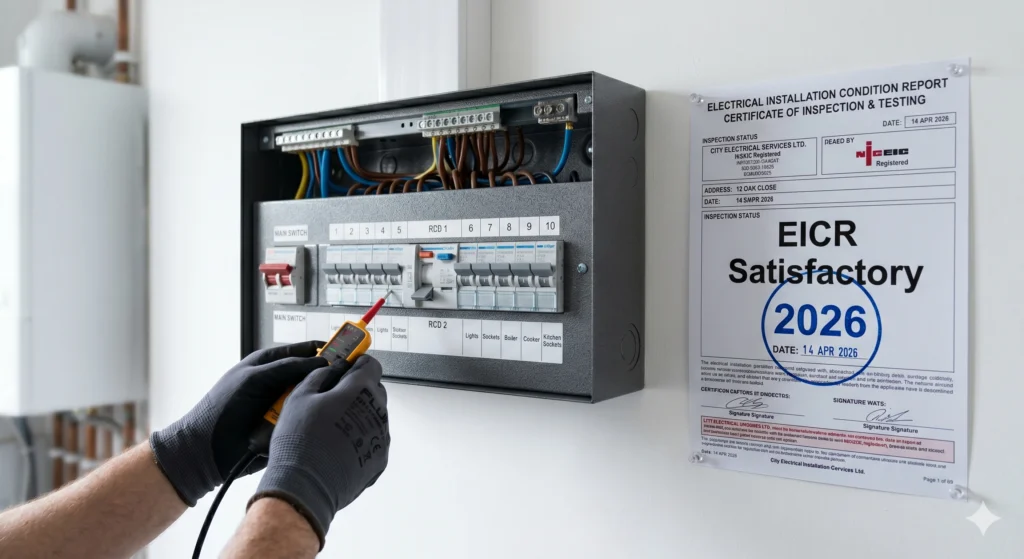
Table of Contents
What is an EICR?
So Why is it so Important Now?
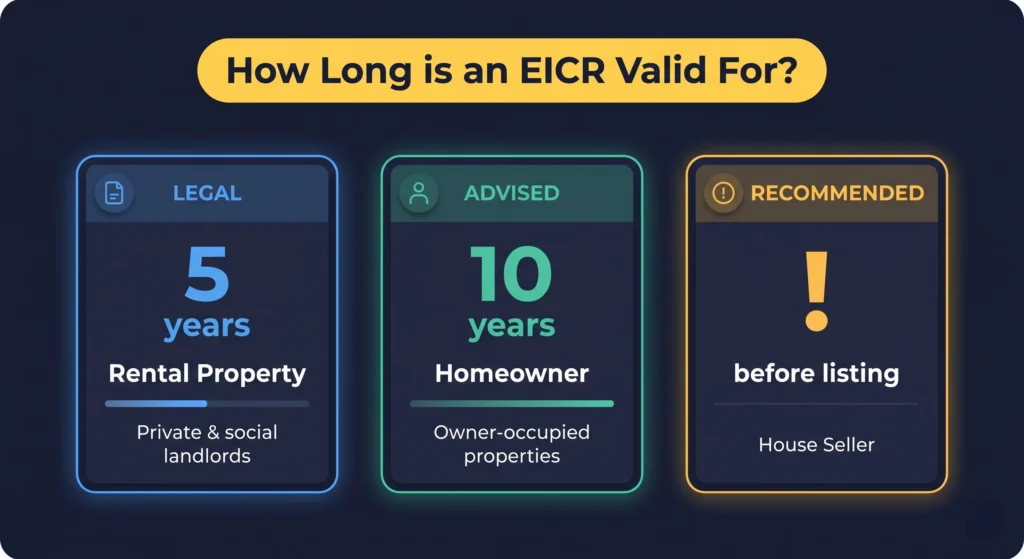
How Long is an EICR Valid For?
EICR Due Date Calculator
Find out when your next EICR is due, and whether you're currently compliant
What Does an EICR Provide and What Does It Tell Me?
What Will Be Checked, Inspected and Tested?

The four pillars, this is what most electricians will focus on during an EICR inspection:
- The Consumer Unit (Fuse Board)
- The Wiring (Insulation)
- Damage/Wear and Tear
- Earthing and Bonding
What Standard Should an Electrical Installation Meet?
What is the Purpose of an EICR? (Electrical Installation Condition Report)
How Do EICRs Differ From Visual Inspection Reports?
- Any kind of testing
- Fault Finding
Do I Have to Get an EICR?
Is an EICR a Legal Requirement in Wales?
| Country | Started | Full Compliance | Legislation |
|---|---|---|---|
Scotland First in the UK to legislate | Dec 2015 | Dec 2016 | Housing (Scotland) Act 2006 |
England Triggered by Grenfell-era safety reforms | Jul 2020 | Apr 2021 | Electrical Safety Standards Regs 2020 |
Wales Broadest tenancy reform in devolved history | Dec 2022 | Dec 2023 | Renting Homes (Wales) Act 2016 |
Northern Ireland Most recent — rolling out now | Apr 2025 | Dec 2025 | Private Tenancies Act (NI) 2022 |
What Happens During an EICR?
What Will Happen in the Check?
- Visual inspection
- Testing of circuits
- Recording the results
- Issuing the report
- Cracked sockets
- Overheating Marks
- Discoloured Sockets
- Buzzing or cracking sounds
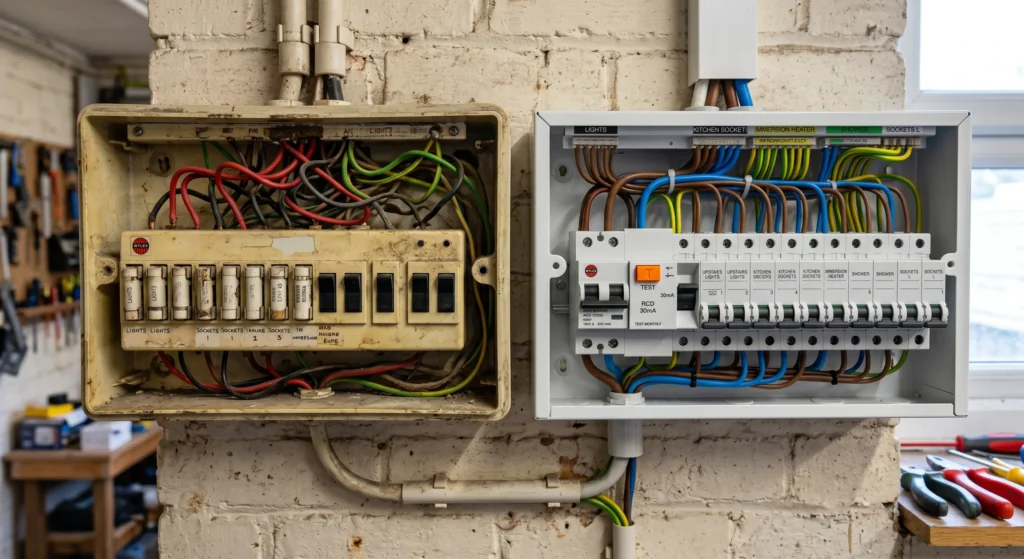
- Fuse Board layout and material (general rule of thumb it should have a button on it saying test.)
Testing of circuits
Recording the results
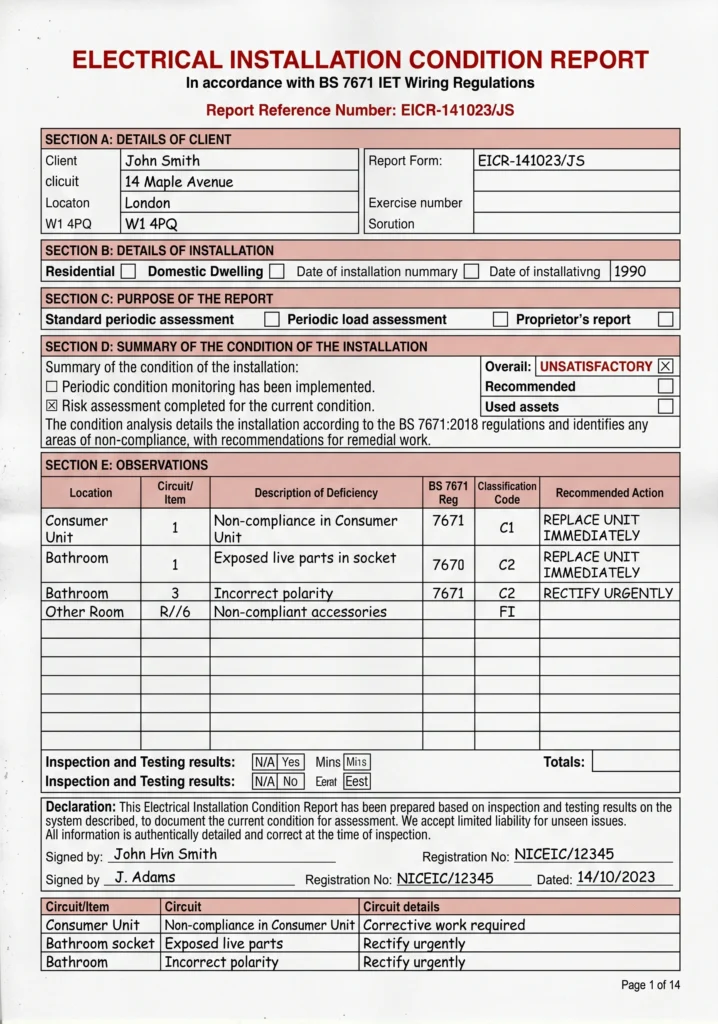
What Does a Report Include?
Every circuit needs to be documented, this could include but not limited to:
- lighting circuits
- cooker circuits
- shower circuits
- socket circuits
- Outbuildings
- Hard wired smoke/fire alarms
Remedial Work for Electrical Installations or Equipment

What if remedial works to an electrical installation cannot be completed within 28 days?
Which Homes Do the Regulations Apply To?
| Property Type | Is it Legal? | Frequency |
|---|---|---|
| Private Rental | Yes (Mandatory) | Every 5 Years |
| Social Housing | Yes (Mandatory from 1 May 2026) | Every 5 Years |
| HMOs (Shared Houses) | Yes (Mandatory) | Every 5 Years |
| Owner-Occupied | Recommended | Every 10 Years |
Are Specialist Checks Needed for Solar PV or Battery Storage Systems?
Does Inspection and Testing Need to Be Undertaken if It Is a New Build Home or There Are New Electrical Installations?
| Feature | EIC (New Work) | EICR (Existing Work) |
|---|---|---|
| Purpose | To certify brand-new wiring. | To check the “health” of old wiring. |
| When you get it | Immediately after the job is done. | Every 5 years (for rentals). |
| Landlord Legal? | Yes, a copy satisfies the 2020 Regulations for the first 5 years after issue. | Yes, it is the standard pass. |
Do the Regulations Apply to Communal Areas in Blocks of Flats or Communal Areas Within the Premises?
| Area | Frequency | Why? |
|---|---|---|
| Corridors & Stairs | 5 Years | To ensure safe exit routes and lighting. |
| Lifts & Risers | 5 Years | To prevent entrapment and electrical fires. |
| External Lighting | 5 Years | To prevent shocks in wet outdoor conditions. |
Simple answer is yes if you’re the owner of the block/managing agent.
Please note: emergency lighting follows BS 5266.
What Does It Mean for Landlords?
Does an EICR Need to Be Undertaken Before Each New Tenancy if a Valid Report or Record Already Exists?
Will a Tenant Be Entitled to Compensation if They Have Been Living in a Home With Faulty Electrics?
What if the Landlord Is the Local Council?
Enquire Now
Do You Need a Professional to Install an EICR Test?
Yes, you do. The person needs to belong to a government-approved competence scheme such as NICEIC, NAPIT, or SELECT.
The current competent person scheme requirements are also relevant for electricians planning to carry out and certify domestic electrical work.
These schemes are governed by the Electrotechnical Assessment Specification (EAS). From 1 October 2026, the EAS will require electricians who carry out EICRs to have passed the C&G 2391-52 Electrical Inspection & Testing Course or equivalent, have at least two years documented practical experience (the same kind of hands-on evidence you build while completing our NVQ Level 3 course), and maintain ongoing CPD records.
Building a portfolio of real workplace evidence is an important part of demonstrating occupational competence; see how to build an NVQ Level 3 electrical portfolio.
Failure to comply may result in periodic inspection and testing being removed from a business’s scope of registration.
If you’re considering a career change into the electrical trade, take a look at our electrician training courses to see how you could qualify.
How Does a Landlord Find a Qualified Person?
Financial Penalties
What Happens if I Don’t Have an EICR or Don’t Get the Issues Fixed?
| Category | Is it Mandatory? | Frequency | Primary Penalty |
|---|---|---|---|
| Private Landlord | YES | Every 5 Years | Up to £40,000 fine + Rent Repayment |
| Social Landlord | YES | Every 5 Years | Mandatory from 1 May 2026 |
| Business / Commercial | YES (De Facto) | 1–5 Years* | Unlimited H&S fines / Void Insurance |
| HMO (3+ tenants) | YES | Every 5 Years | £40,000 fine + Loss of Licence |
| Resident Landlord (1–2 Lodgers) | NO | Recommended | Civil liability if injury occurs |
| Homeowner | NO | 10 Years (Rec) | Possible insurance claim rejection |
| Selling a Home | NO | Upon Sale | Often requested by buyers/lenders |
| Stage | Name | What Happens | Your Action/Deadline |
|---|---|---|---|
| Stage 1 | Alleged Breach | The council identifies a potential failure (e.g., no EICR on file or a tenant complaint). | Ensure your records are organised and ready. |
| Stage 2 | Notice of Intent | The council sends a formal letter stating they intend to issue a financial penalty. | 28 Days to submit “Representations” (your evidence/defence). |
| Stage 3 | Final Notice | The council reviews your defence. If they reject it, they issue a formal demand for payment. | Payment is now legally due unless you choose to appeal. |
| Stage 4 | Formal Appeal | You lodge a case with the First-tier Tribunal if you believe the fine is unfair or legally wrong. | 28 Days from the Final Notice to lodge the appeal. |
| Stage 5 | Tribunal Decision | An independent judge hears the case and makes a final ruling on the penalty. | The fine is either upheld, reduced, or cancelled entirely. |
Three things mainly affect your EICR cost: your region, your property type, and the number of bedrooms. The table below shows typical price ranges across the UK based on these factors. Your actual quote may vary depending on the number of circuits in your property and how long the inspection takes.
EICR Cost Estimator
Get an instant estimated price range for your property
How Much Does an EICR Cost?
Two major factors that affect EICR costs:
- Regional Area
- Property Size
| Region | 1-2 Bed | 3-4 Bed |
|---|---|---|
| London | £120–£250+ | £220–£400+ |
| South East | £130–£230 | £180–£350 |
| South West | £120–£210 | £160–£330 |
| Midlands | £110–£190 | £150–£300 |
| North West | £110–£180 | £150–£290 |
| North East | £100–£170 | £130–£270 |
| Scotland | £120–£220 | £160–£330 |
| Wales | £110–£190 | £140–£290 |
| Northern Ireland | £100–£180 | £130–£280 |
References
Note on Accuracy and Updates
Last reviewed: 05 May 2026. This page is maintained regularly. We correct errors and refresh sources as electrical safety regulations and guidance change. EICR legal requirements updated following Social Housing (Regulation) Act 2023 implementation. BS 7671 references current as of 18th Edition Amendment 2 (2022). Costs and market expectations reviewed quarterly based on industry data.

By Charanjit Mannu
Director, Elec Training
Based on real training delivery, learner outcomes, and current UK electrical regulations.
- City & Guilds Approved
- 4.8★ Google Reviews
- 1000+ Electricians Trained


Prefer a callback?
- City & Guilds
- 4.8 Trustpilot
- JIB Recognized
- 1,000+ Trained
