

Electrical Safety for the Elderly: Reducing Fire Risks and Supporting Independent Living

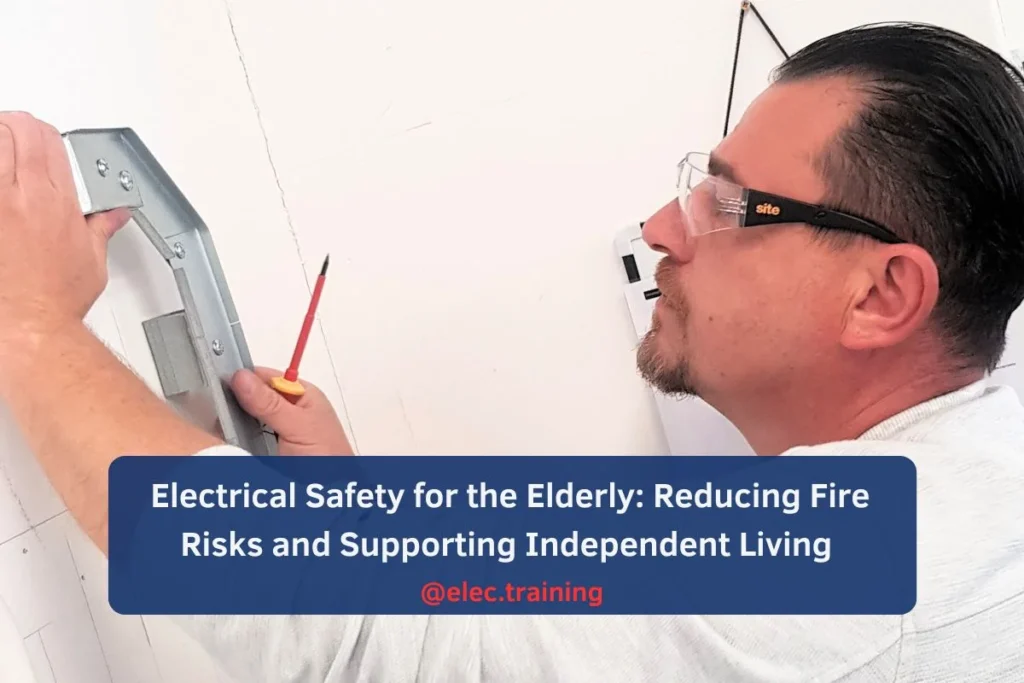
Older adults are among the most vulnerable when it comes to electrical safety at home. Many live in properties with ageing wiring, older appliances, and limited access to professional safety checks — a combination that can quickly b ecome dangerous.
At Elec Training, we believe electrical safety shouldn’t depend on age, income, or mobility. This guide highlights the key risks affecting elderly homeowners, explains how families and neighbours can help, and outlines simple steps that can make a major difference in preventing fires and injuries.
Why Older People Face Higher Electrical Risks
People aged 60 and over are statistically ten times more likely to die in a house fire than someone aged 17–24. That risk increases further for those living alone.
There are several factors behind this:
- Older wiring systems that have not been checked or upgraded for decades.
- Limited awareness of electrical hazards or warning signs.
- Faulty or misused appliances, especially heaters and blankets.
- Reduced mobility or memory issues that delay emergency response.
- Loneliness, which can lead to less frequent home visits or maintenance.
Faulty electrics alone cause more than 20,000 domestic fires every year. Many occur in homes that haven’t been inspected recently or lack modern safety features such as Residual Current Devices (RCDs), which automatically trip when a fault occurs.
Despite this, most families underestimate the risk. Surveys show that 75% of UK households have never helped an elderly relative check their electrics, and 80% say they aren’t concerned about appliance safety.
Understanding how to identify hazards early is crucial — and it’s a skill every homeowner can learn. For a broader look at the subject, see The Importance of Identifying Electrical Hazards at Home, which explains how proper awareness and training can prevent many of these incidents.
The Loneliness Factor
The UK’s ageing population adds another layer of risk. Around 18% of people in the UK are now over 65, and nearly half of them live alone. Fire and rescue data shows that those living alone — particularly over pensionable age — account for 17% of all household fires.
Elderly residents who live alone face both practical and emotional challenges. They may struggle to test smoke alarms, replace damaged cables, or notice early warning signs such as flickering lights or scorched sockets. Regular visits from friends, relatives, or community workers can make a real difference in spotting problems before they escalate.
It’s not just about fire prevention — staying socially c onnected helps keep people safer in every sense.
Electric Heaters: Convenience with Hidden Risks
Portable heaters are a common source of warmth and comfort, especially for those in older properties without modern central heating. But they’re also one of the biggest causes of electrical fires among older adults.
There are four main types of portable electric heaters:
- Fan heaters
- Oil-filled radiators
- Halogen heaters
- Convector heaters
Each can be used safely — but only if basic precautions are followed:
- Never dry clothes over or near a heater.
- Never leave heaters switched on overnight or unattended.
- Keep heaters at least 1 metre from furniture and fabrics.
- Always place heaters on a flat, stable surface.
- Avoid second-hand units, as internal wiring may be damaged.
Newer models often include safety features such as anti-tip cut-off switches or thermostatic shut-off, but these should never replace vigilance.
The London Fire Brigade reports that over the past five years, more than 800 fires were caused by electric heaters — many fatal. In most cases, items placed too close to the heat source were to blame.
If you work in the trade or support vulnerable customers, understanding how appliances fail can form part of your professional knowledge. The article Understanding Electrical Inspection and Testing for Working Electricians explains how modern inspection practices can identify early signs of failure in everyday domestic settings.
Electric Blankets: Warmth That Requires Caution
Electric blankets are another high-risk appliance, particularly for those aged 65 and above. It’s estimated there are 10 million electric blankets in use across the UK — but many are well past their safe lifespan.
Over time, internal heating elements can wear down, insulation can break, and plugs can loosen. Damaged electric blankets are responsible for more than 5,000 house fires every year.
To stay safe:
- Replace electric blankets every 10 years or sooner if damaged.
- Never buy second-hand.
- Check for burn marks, frayed cables, or loose connectors.
- Look for the UK Safety Standard Kitemark on all new purchases.
- Store blankets flat or loosely rolled, not tightly folded.
- Have older blankets tested — local councils and Fire & Rescue Services often offer this for free.
In Warwickshire, one council inspection found that one in three blankets tested was unsafe. For many older residents, such services are invaluable and can prevent catastrophic fires before they start.
Smoke Alarms Save Lives
A smoke alarm is the simplest and most effective protection any household can have. Every home should have at least one smoke alarm on each level, ideally in hallways and bedrooms.
For elderly residents, monthly testing is essential — but it’s also something neighbours or family can assist with. If someone is physically unable to reach their alarm, local Fire and Rescue Services offer free home safety visits, often including installation of new alarms.
In 2017–18, almost 18% of fires occurred in homes occupied by someone over pensionable age living alone. The earlier a fire is detected, the better the chance of escape — and that makes working alarms non-negotiable.
For a broader perspective on safety regulations and minimum standards, see The Need for Green: Why Electricians Should Gear Up for Clean Tech Work. While it focuses on sustainability, it also explores how electrical professionals can integrate safer, smarter systems for every type of household.
Fire Safety Checks and Support Services
Fire and Rescue Services across England carry out hundreds of thousands of Home Fire Safety Checks each year. In 2017–18 alone, more than 311,000 of those visits were for residents aged 65 or over.
These visits usually include:
- Inspecting wiring, sockets, and visible hazards.
- Checking smoke alarms and installing new ones where needed.
- Offering advice on appliance use and safe escape planning.
If you know an elderly neighbour or relative who hasn’t had a fire safety visit, encourage them to book one through their local authority or fire service. It’s free, and it can save lives.
Simple Electrical Safety Checks for Family and Neighbours
Even if you’re not a qualified electrician, you can still carry out simple visual checks to spot potential risks in an elderly person’s home.
Here’s what to look for:
- Smoke alarms – test monthly.
- Plug sockets – look for burn marks or buzzing sounds.
- Extension leads – avoid daisy-chaining (plugging one into another).
- Consumer unit (fuse box) – make sure it includes an RCD.
- Appliances – turn off before bed; never leave heaters or cookers running u nattended.
- Electric blankets – inspect yearly and replace if older than 10 years.
If anything looks unsafe, don’t attempt repairs yourself — contact a registered electrician. The Electrical Competent Person Scheme lets you find verified professionals in your local area.
For professionals, understanding these home-based risks ties directly into the wider skills shortage in the sector. Read UK Electricians Shortage – Why Demand for Skilled Workers Has Never Been Higher for insight into how qualified electricians are increasingly needed to improve domestic safety standards across the UK.
Supporting Independent Living Through Electrical Awareness
Electrical safety for the elderly is about more than avoiding fires — it’s about maintaining independence, comfort, and dignity. Regular checks, clear communication, and small acts of neighbourly care can make all the difference.
The next time you visit an elderly friend or relative, take five minutes to check their smoke alarms, sockets, and heaters. It’s a small gesture that could prevent a life-changing incident.
To learn more about electrical safety, professional training routes, and community education, visit https://elec.training/ — helping to make homes across the UK safer, one circuit at a time.
FAQs
Why are older adults at greater risk from electrical fires and hazards?
Older adults are at greater risk due to factors like living in older homes with faulty wiring or appliances, reduced mobility that hinders quick escape, and higher likelihood of living alone, which delays detection or response. They experience more electrical fires (e.g., 3,849 in England for those 65+ in one year), often exacerbated by poor-quality housing or outdated electrics.
How often should electrical wiring in older homes be checked or upgraded?
Electrical wiring in older homes should be checked every 10 years, with upgrades recommended every 25-30 years or sooner if signs of issues like flickering lights or frequent trips appear. Homes over 30 years old may need rewiring, and immediate action is advised for outdated systems to prevent hazards.
What are the most common electrical appliances linked to fires among the elderly?
Common appliances include electric blankets, portable heaters, cooking appliances (e.g., ovens, toasters), washing machines, tumble dryers, and fridges/freezers, often due to faults or misuse. These account for many incidents, with washing appliances causing 509 fires in 2021-2022.
How can families or neighbours help improve electrical safety for older residents?
Families or neighbors can assist by checking appliances for faults, arranging professional inspections, ensuring smoke alarms are working, helping with safe heater use, and applying for grants for upgrades. They can also encourage free home safety visits and monitor for hazards like overloaded sockets.
What safety precautions should be taken when using portable electric heaters?
Precautions include placing on flat surfaces at least 1 meter from flammables, avoiding extension leads, never leaving unattended or overnight, not drying clothes on them, and checking for damage before use.
How can you tell if an electric blanket is unsafe or too old to use?
Signs include scorch marks, fraying fabric, exposed wires, damaged cords/plugs, stains, or if it’s over 10 years old; replace immediately if any issues are found.
How often should smoke alarms be tested in elderly households?
Smoke alarms should be tested monthly, with a full system inspection every six months, and batteries replaced annually (or as needed for non-mains).
What free fire safety checks or support services are available for older people?
Free home fire safety visits are offered by local fire services (e.g., via 0800 1691234 or online forms), targeting those 70+, with dementia, or at risk, including smoke alarm installation.
What simple visual checks can non-electricians do to spot electrical hazards?
Check for damaged cables/plugs, scorch marks on sockets, flickering lights, overheating appliances, exposed wires, or overloaded extensions; use apps like Electrical Safety First’s for guidance.
How can electrical awareness training help older adults live independently and safely?
Electrical awareness training educates on hazards, safe appliance use, and basic checks, empowering older adults to identify risks, prevent accidents, and maintain independence through informed practices. Resources like guides from Electrical Safety First support this.
