

Exploring the Future of Satellite Communications: What Comes Next for SATCOM?

- Technical review: Thomas Jevons (Head of Training, 20+ years)
- Employability review: Joshua Jarvis (Placement Manager)
- Editorial review: Jessica Gilbert (Marketing Editorial Team)
- Last reviewed:
- Changes: New article. Research sourced from UK Space Agency, ESA, and UKSA Skills Survey 2023.
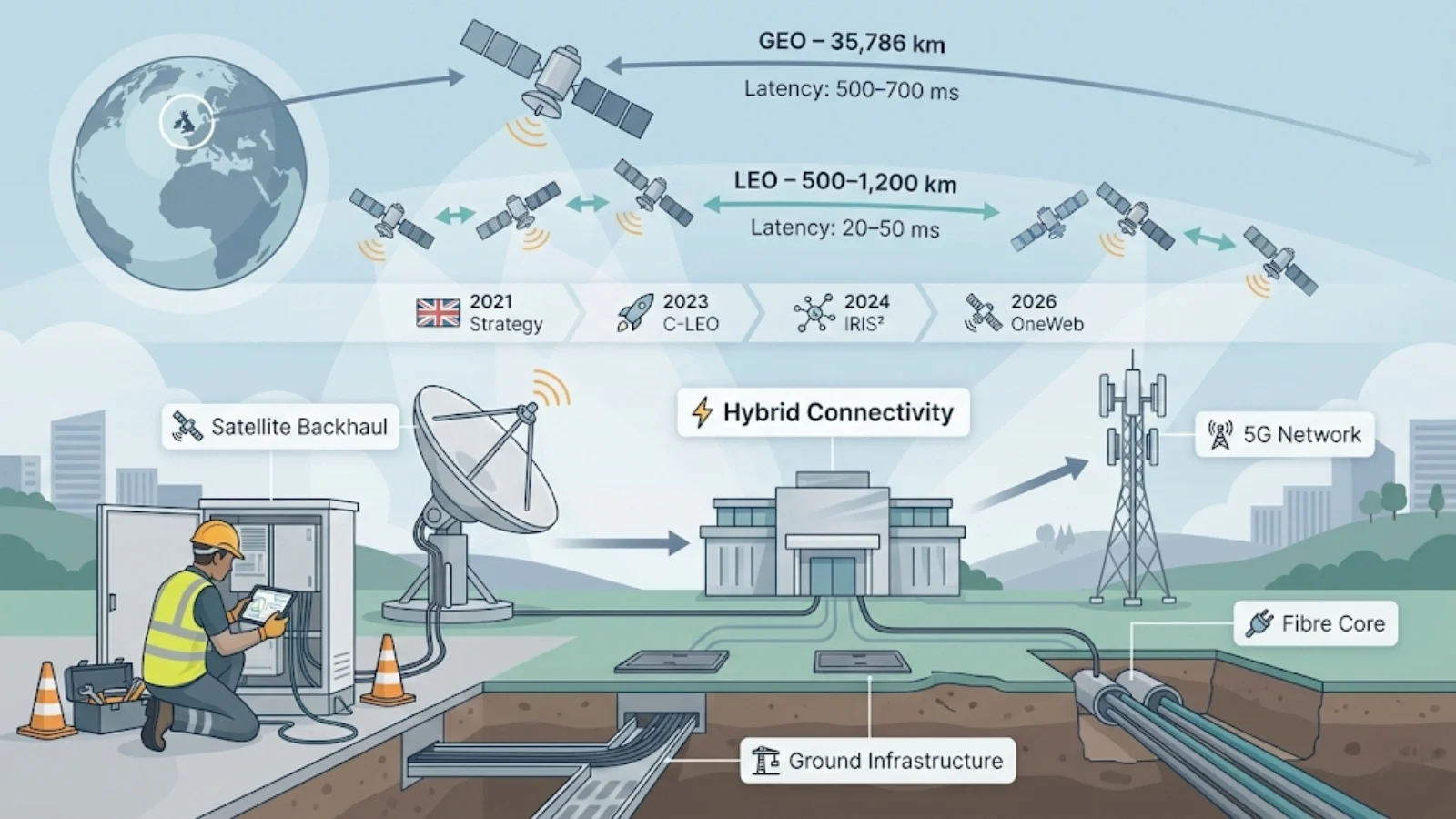
Most conversations about satellite communications start with the sky. The launches, the constellations, the billionaires with rockets. That makes sense for a headline, but if you want to understand where the actual engineering work is happening, and where the skills shortage is biting hardest, you need to look closer to home.
The UK space sector is worth approximately £17.5 billion, with satellite applications accounting for 71% of total income according to the UK Space Agency Size and Health Report. A significant chunk of that value runs through ground-based infrastructure: the gateway stations, the UPS systems, the RF cabling runs, the server room cooling. Not quite as cinematic as a rocket launch, but this is where qualified technicians are needed right now.
If you have got questions about how electrical qualifications connect to emerging sectors like this, our training questions answered page is a good place to start.
What Is Actually Changing in Satellite Communications
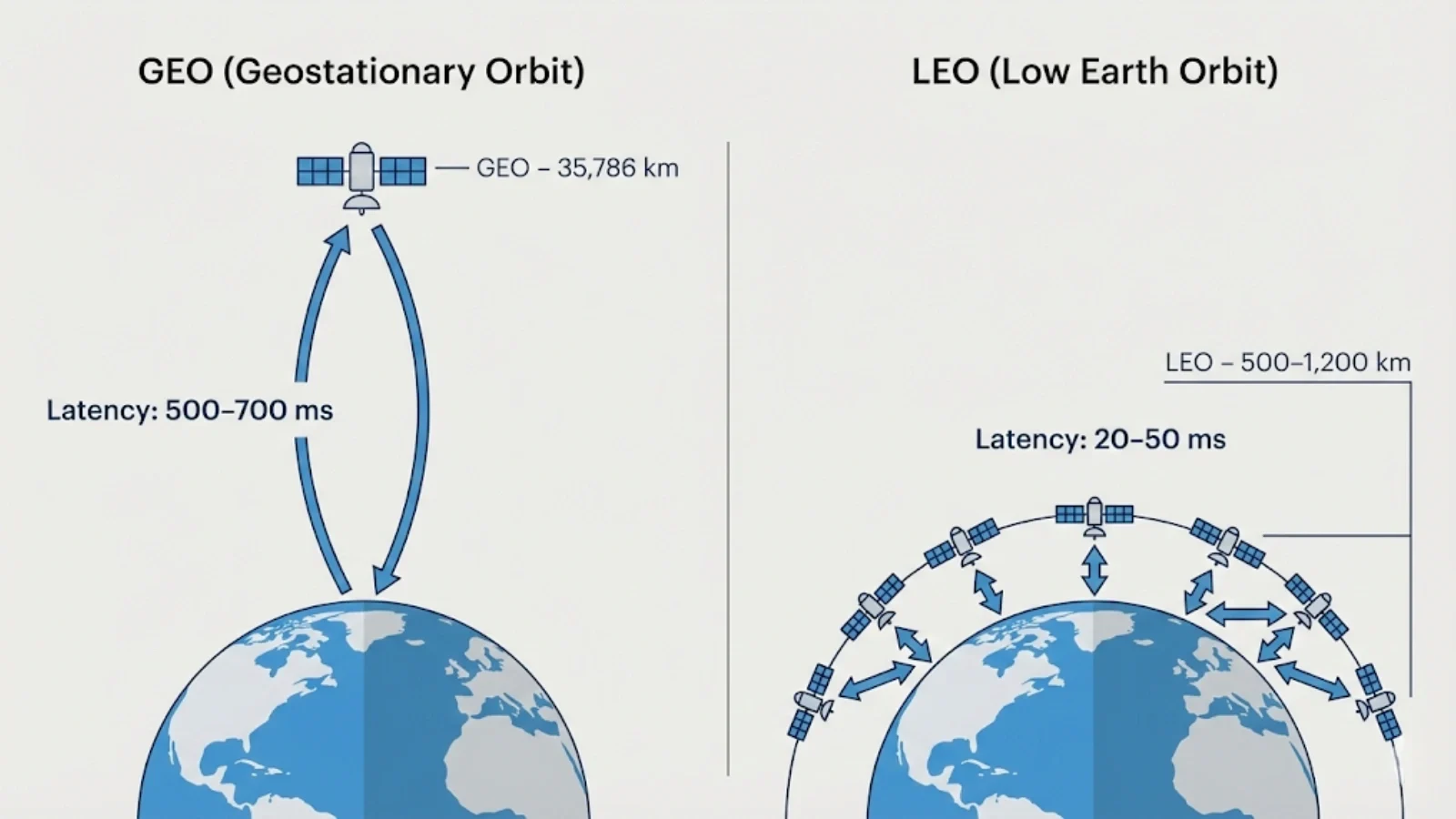
For most of telecommunications history, geostationary (GEO) satellites sat at around 35,786km above the equator. They appear fixed in the sky from Earth’s perspective, which makes them reliable for broadcast and military communications. The trade-off is latency: data travelling that distance and back takes 500-700 milliseconds. For streaming a television signal, that is fine. For video conferencing, cloud computing, or real-time applications, it is a meaningful problem.
Low Earth Orbit (LEO) satellites orbit at 500-1,200km. The proximity cuts latency to 20-50ms, which is comparable to many terrestrial broadband connections. The catch is that a single LEO satellite covers a smaller area and completes an orbit every 90 minutes or so, which means you need constellations of hundreds or thousands of satellites to provide continuous coverage.
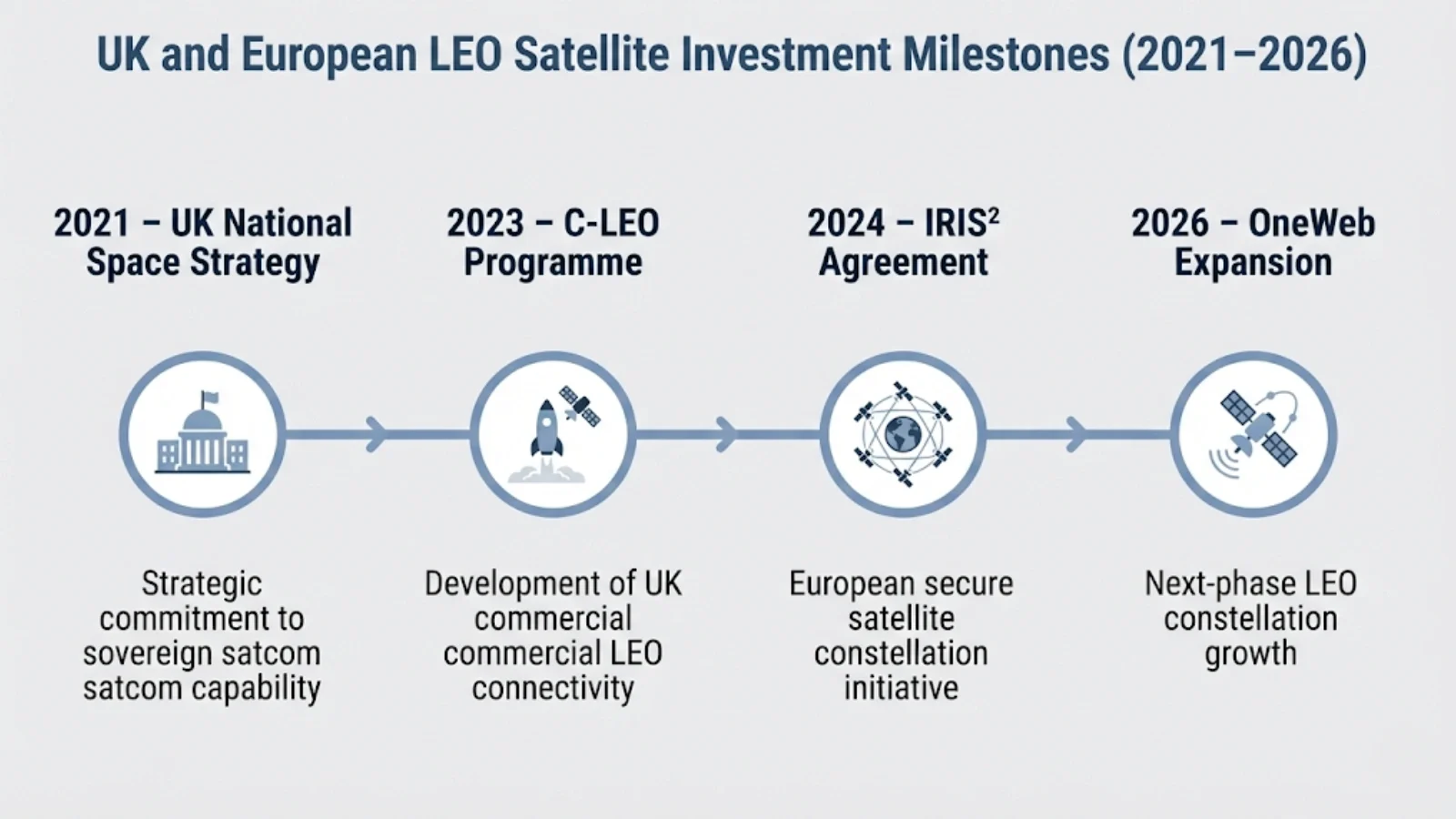
That is exactly what operators like Eutelsat OneWeb are building. OneWeb’s constellation currently exceeds 600 satellites, with further expansion planned. The UK government has backed this directly: the Connectivity in Low Earth Orbit (C-LEO) programme has committed £160 million to enhance commercial LEO capabilities, with the National Space Strategy identifying satellite communications as critical national infrastructure.
The infrastructure required to make all of this work from the ground up is the story that does not get told often enough.
The Ground Segment: Where the Engineering Work Actually Lives
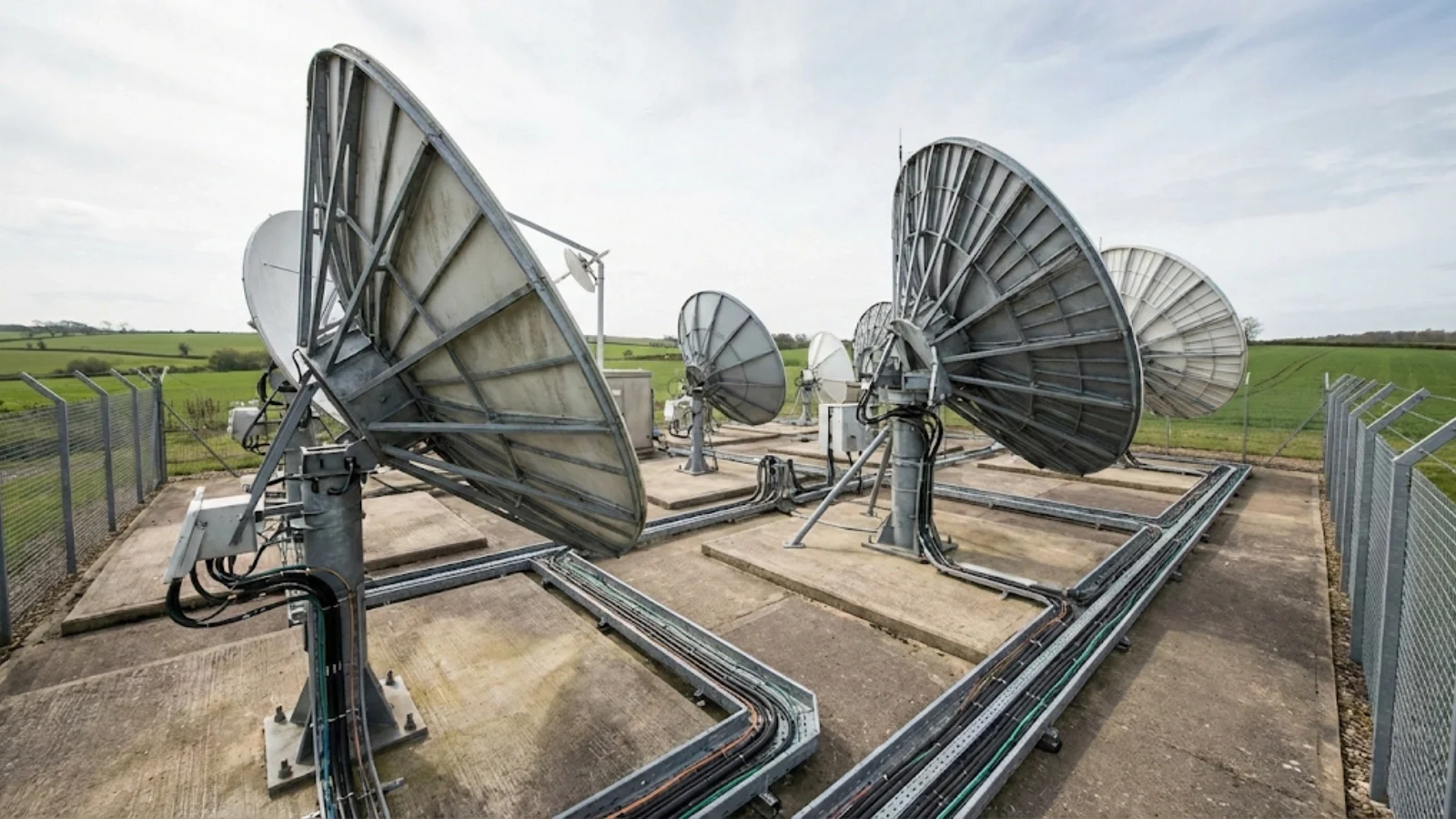
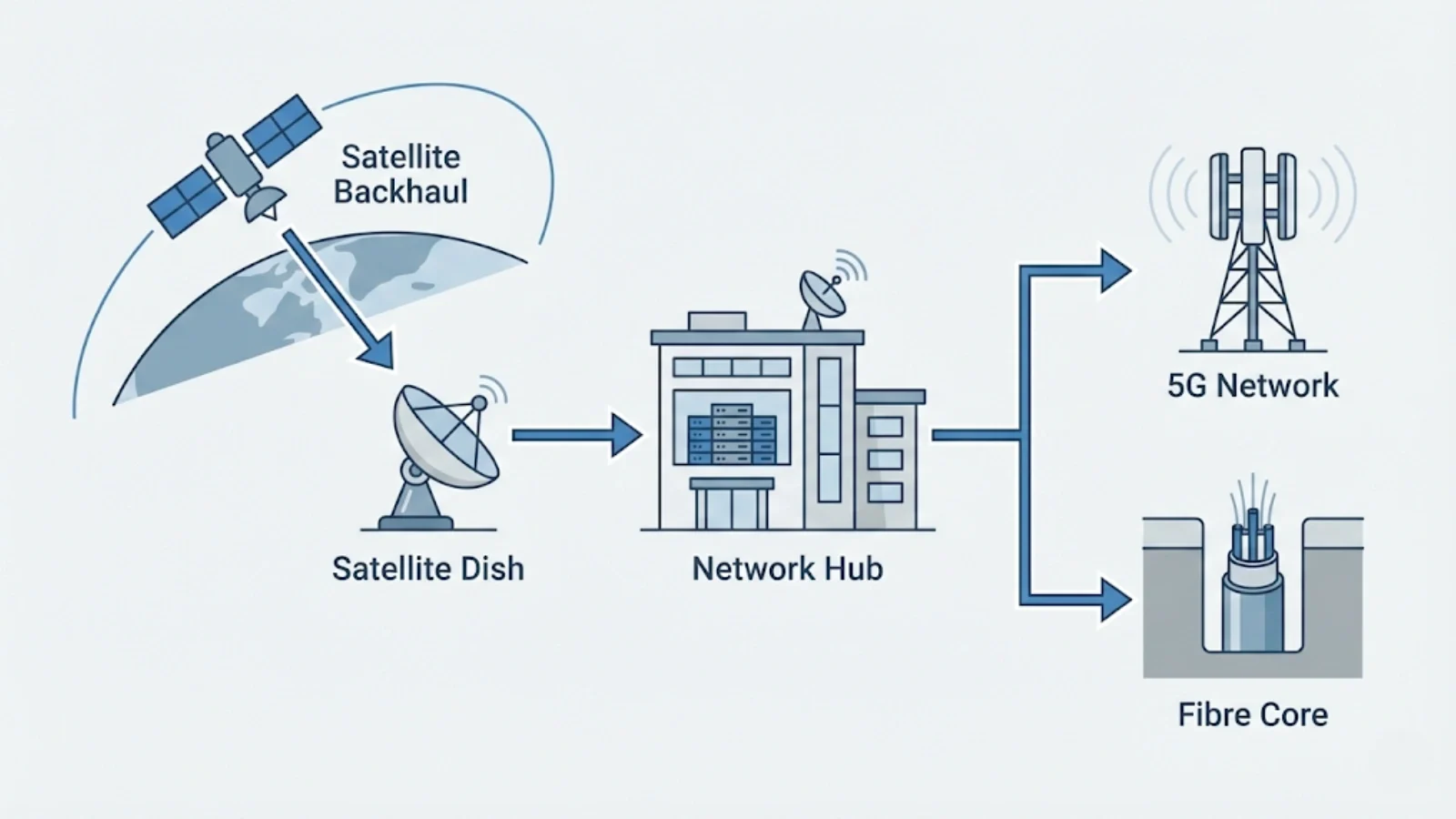
Here is what the launch coverage misses. For every satellite you put into orbit, you need ground infrastructure capable of tracking it, receiving its signal, and routing that data into the terrestrial fibre network. As LEO constellations get denser, you need more gateway stations, not fewer.
Modern gateway facilities are complex sites. They require precision-aligned tracking antenna mounts, extensive RF cabling infrastructure, high-capacity server rooms with proper thermal management, and power systems engineered to 99.999% uptime requirements. That means Uninterruptible Power Supply (UPS) design, backup generation, properly discriminated distribution systems, and ongoing maintenance by people who understand how the components interact.
Thomas Jevons, Head of Training at Elec Training, puts it plainly:
"In practice, modern satcom ground sites are systems integration projects. Power, cooling, communications infrastructure, monitoring systems. The electrician who comes to site needs to understand how those elements interact, not just complete their individual section and leave."
Thomas Jevons, Head of Training
The skills required here are not exotic. They are an extension of what qualified electricians already do: power distribution, cable management, earthing and bonding, compliance with BS 7671, commissioning and testing. What changes is the operational context and the expectation that you can work across disciplines on the same site.
The UK and European Position
The UK is a significant player in the global satcom sector. Eutelsat OneWeb is headquartered in the UK (following the merger of OneWeb with Eutelsat), providing LEO services with a focus on government, enterprise, and rural connectivity. The UK remains an active member of the European Space Agency’s ARTES programme, which funds advanced telecommunications research, and is involved in the IRIS² project: the EU’s sovereign secure communications constellation.
Ground infrastructure sites in Cornwall (Goonhilly), Scotland, and the Midlands (Madley) are expanding to handle increased LEO data volumes. Ofcom manages spectrum licensing for Non-Geostationary Orbit (NGSO) systems, with regulatory frameworks evolving to accommodate the density of new constellation deployments.
For UK electricians and technicians, this matters because ground station builds and upgrades require local contractors. The work is not centralised in a handful of specialist firms. It filters out through commercial and industrial electrical contractors who are picking up gateway and data centre adjacent projects across the country.
What the Skills Shortage Actually Looks Like
The UK Space Agency’s Skills Survey 2023 found that 95% of UK space organisations face skills challenges, with particular gaps in software, systems integration, and data analysis. That figure points to the top of the engineering pyramid. Further down, among the technician and installation workforce, the gap is equally real but less often discussed.
Joshua Jarvis, Placement Manager at Elec Training, has a direct view on how learners respond when sectors like this come up:
"Confidence is often the missing piece when learners hear about sectors like satellite infrastructure. They assume it's out of reach. The truth is the core competencies are the same. Once trainees realise their NVQ gives them a legitimate route into these projects, the mindset shifts."
Joshua Jarvis, Placement Manager
The crossover with electrical qualifications runs deeper than many people realise. RF cabling, data infrastructure, power resilience systems, and thermal management for server rooms all sit within or adjacent to the NVQ Level 3 skill set. What employers in this sector need is the electrical foundation. The sector-specific knowledge develops on the job.
Our placement support team works with 120+ contractor partners across the UK, including firms active in commercial and industrial builds of exactly the kind that feed into infrastructure like this.
Common Myths Worth Clearing Up
Three things come up regularly when satcom is discussed that are worth addressing directly.
The first is that satellites will replace fibre. They will not, at least not for urban and suburban populations. Fibre delivers the highest bandwidth at the lowest cost per bit in densely populated areas. Satellite serves the geography that fibre cannot reach cost-effectively: rural communities, maritime applications, aviation, remote enterprise sites. The two technologies are complementary, not competing.
The second is that LEO solves all connectivity gaps. It reduces latency significantly compared to GEO, but LEO still requires a clear line of sight to the sky. Urban canyons, heavy foliage, and building integration all present genuine signal challenges that the technology has not fully resolved.
The third is that ground infrastructure is minimal. This one is almost the opposite of the truth. For every £1 invested in space-based hardware, significant investment flows into the terrestrial infrastructure needed to make it work. Gateway density is increasing. Power and cooling requirements are growing. The ground segment is the sector’s biggest installation and maintenance challenge.
IoT, 5G, and the Hybrid Network Future
The longer-term direction is toward what the sector calls integrated non-terrestrial networks: a model where mobile devices can hand off seamlessly between a terrestrial cell tower and a satellite, without user intervention. The 6G standards currently in development are being designed with this kind of integration in mind.
Internet of Things (IoT) applications are also accelerating satellite demand. Remote monitoring in agriculture, environmental sensing, logistics tracking across areas without cellular coverage: these applications are growing, and they all require the ground infrastructure to receive, process, and route the data they generate.
For UK contractors, this means the demand for electrical work in gateway stations, data hubs, and edge computing facilities connected to satellite backhaul is likely to increase rather than stabilise over the next decade. The contractors who position themselves to take on this work now are building relationships and references that will matter as the sector scales.
What This Means If You Are Looking to Train
The satcom sector is not an alternative qualification pathway. It is a destination that opens up once you have the foundational electrical qualifications in place. The route is the same as it is for any commercial or industrial electrical career: NVQ Level 3 (2357), 18th Edition (BS 7671), AM2 assessment, ECS JIB Gold Card.
From that point, the options branch in several directions. Employers working on gateway builds and data infrastructure projects are recruiting qualified electricians. The systems integration knowledge develops in the role. What they need at the point of hire is the compliance foundation and the site-readiness that comes from a properly supervised NVQ portfolio.
At Elec Training, our NVQ package is priced at £10,000 and includes AM2, tutor support, assessor visits, and placement support through our in-house recruitment team. That team makes contact with 120+ contractors daily to secure work placements for learners who have completed their classroom training. It is the part of the process that most providers ignore, and it is the part that actually determines whether a qualification leads to a career.
If you are based in Herefordshire or the surrounding area, we offer electrical courses Hereford with the same full pathway support.
Call us on 0330 822 5337 to discuss the fastest route to a qualification that opens doors across the UK’s growing infrastructure sectors. We will explain exactly what you need, how long it realistically takes, and what our placement team can do to get you into work. No hype. No shortcuts. Just a practical conversation about a real pathway.
FAQs
What’s the biggest change happening in satellite communications right now, and why does LEO matter more than launches?
The major shift in satellite communications is the rapid expansion of low Earth orbit (LEO) constellations. Global end-user spending on LEO services is projected to reach about £11.2 billion by 2026, reflecting strong growth as providers such as Eutelsat OneWeb expand broadband coverage in remote UK areas.
While launches deploy the satellites, the real impact comes from what LEO enables: lower latency, higher speeds and new service models such as IoT connectivity and maritime broadband. In the UK, this shift places growing importance on ground infrastructure — including gateway stations in locations such as Cornwall and Scotland — where electrical competence in power distribution, resilience and monitoring is critical. The sector focus is moving from simply putting satellites into orbit to building robust, service-ready terrestrial support.
What’s the practical difference between GEO and LEO satellites in terms of latency, and why does that change what services are possible?
Geostationary (GEO) satellites orbit at roughly 36,000 km and typically produce latency of 500–700 milliseconds due to the long signal path. This is acceptable for broadcasting and fixed services but limits real-time applications.
Low Earth orbit (LEO) satellites operate much closer to Earth (around 500–2,000 km), reducing latency to roughly 20–50 milliseconds — comparable to terrestrial broadband.
This lower delay enables:
- Video conferencing
- Online gaming
- Remote control systems
- Low-latency IoT applications
In the UK, LEO’s performance supports rural broadband and emergency connectivity, but it also increases demands on ground infrastructure, including resilient power systems and compliant installations under BS 7671.
Why do LEO constellations require hundreds or thousands of satellites to achieve continuous coverage?
Because LEO satellites orbit relatively close to Earth, each satellite covers only a small footprint and moves quickly, completing an orbit in about 90 minutes. Unlike GEO satellites, they do not remain fixed over one location.
To maintain uninterrupted global coverage, operators deploy large constellations with overlapping coverage and continuous handovers between satellites.
For the UK sector, this means:
- More gateway capacity
- Greater traffic management
- Higher reliance on robust ground infrastructure
Electrical competence in power distribution, monitoring and earthing — aligned with BS 7671 — becomes essential to support these dense networks.
What is the “ground segment” in satcom, and why is it where most of the engineering and maintenance work actually happens?
The ground segment includes all terrestrial infrastructure supporting satellite operations, such as:
- Telemetry, tracking and command stations
- Gateway stations
- Control centres
- Backhaul networks
Most hands-on engineering work happens here because satellites in orbit cannot be physically repaired. Ground teams handle:
- Antenna alignment
- Power resilience
- Fault diagnosis
- Network management
In the UK satcom sector, sites supporting constellations like Eutelsat OneWeb rely heavily on skilled technicians maintaining electrical systems, UPS infrastructure and earthing to ensure continuous service.
What electrical systems are typically critical inside a modern satcom gateway site?
Modern gateway facilities depend on highly resilient electrical infrastructure, typically including:
- Primary grid power supplies (often 650 kW or more)
- Uninterruptible Power Supplies (UPS)
- Backup diesel generation
- Redundant power distribution and switchgear
- Deep earthing and lightning protection systems
- Real-time monitoring platforms
These systems must operate to very high reliability standards and comply with BS 7671. In the UK, gateway sites supporting LEO constellations require particularly robust electrical design to maintain continuous data flow.
How do uptime targets like 99.999% change the way power resilience and maintenance are designed compared with normal commercial buildings?
An uptime target of 99.999% (five nines) allows only about five minutes of downtime per year. This is far more stringent than typical commercial buildings, which may tolerate significantly more downtime.
To achieve this, satcom sites typically use:
- N+1 or 2N redundancy
- Dual grid feeds
- Parallel UPS systems
- Standby generators
- Predictive maintenance monitoring
Maintenance is designed to occur without service interruption. Compared with standard buildings, the focus shifts from basic compliance to continuous availability, which increases both design complexity and demand for skilled electrical technicians.
What does the UK’s role in satcom look like in practice, and where does the work show up on the ground?
The UK plays a significant role through:
- Investment in Eutelsat OneWeb
- Participation in ESA ARTES programmes
- UK Space Agency funding and skills initiatives
- Airbus satellite manufacturing involvement
On the ground, this activity appears in:
- Gateway stations (e.g. Cornwall and Scotland)
- Network operations centres
- Ground infrastructure projects
- Skills and training programmes
Much of the employment impact is terrestrial, particularly in electrical infrastructure, power systems and site operations.
What does the UK Space Agency Skills Survey 2023 reveal about skills gaps?
The survey reported that around 52% of organisations face workforce skills gaps. Key shortages include:
- Software and data skills (72%)
- AI and machine learning
- Systems engineering
- Electronics and RF telecoms
Recruitment challenges affect roughly 67% of firms. For technicians, this translates into strong demand in ground infrastructure roles — especially where electrical systems, power resilience and monitoring are involved. The findings support increased focus on vocational upskilling aligned with UK space sector growth.
Which parts of NVQ Level 3 electrical competence map directly onto satcom ground infrastructure work?
Core NVQ Level 3 competencies that transfer directly include:
- Power distribution installation
- Inspection and testing
- Fault diagnosis
- BS 7671 compliance
- Earthing and bonding
- Backup power integration
These underpin safe operation of gateway facilities.
Sector-specific knowledge — typically learned on the job — includes:
- RF awareness
- Satellite signal environments
- Fibre integration
- Ofcom spectrum considerations
- Telemetry and monitoring systems
In practice, the NVQ provides the electrical foundation, while satcom specialisation develops through site experience.
What are the most common myths about satcom, and what’s the reality in UK terms?
Several misconceptions persist:
Myth: Satellites will replace fibre
Reality: Satellite complements fibre, mainly serving rural or hard-to-reach areas.
Myth: LEO solves all coverage problems
Reality: LEO improves latency but still faces capacity and environmental limits.
Myth: Satcom requires minimal ground infrastructure
Reality: Extensive ground systems are essential, including power, gateways and control centres.
In the UK context, satcom growth is heavily dependent on robust terrestrial infrastructure and skilled electrical support. Satellites enable connectivity, but reliable service ultimately depends on what is built and maintained on the ground.
References
- UK Space Agency Size and Health of the UK Space Industry 2022: https://www.gov.uk/government/publications/the-size-and-health-of-the-uk-space-industry-2022
- UK Space Agency Corporate Plan 2025-26: https://www.gov.uk/government/publications/uk-space-agency-corporate-plan-2025-26/uk-space-agency-corporate-plan-2025-26
- National Space Strategy: https://www.gov.uk/government/publications/national-space-strategy/national-space-strategy
- C-LEO Programme: https://www.gov.uk/government/publications/c-leo-programme
- UKSA Space Sector Skills Survey 2023: https://www.gov.uk/government/publications/space-sector-skills-survey-2023/space-sector-skills-survey-2023-report
- ESA ARTES Programme: https://www.esa.int/Applications/Telecommunications_Integrated_Applications
- ESA IRIS2: https://www.esa.int/Applications/Connectivity_and_Secure_Communications/Europe_chooses_resilient_and_secure_space-enabled_connectivity_with_2.1_billion_investmenthttps
- Eutelsat OneWeb: https://eutelsat.oneweb.net/
- Ofcom Satellite Services: https://www.ofcom.org.uk/phones-telecoms-and-internet/information-for-industry/satellite-services
- IET Wiring Regulations BS 7671:2018+A2:2022: https://www.theiet.org/
- ECS/JIB Card Requirements: https://www.jib.org.uk/
Note on Accuracy and Updates
Last reviewed: 21 February 2026. This article is maintained. Sources are checked against current UK Space Agency publications and ESA programme data. Satellite deployment figures and government investment totals are updated as new data is published.
