

Renewable Energy Work for Electricians: What You Actually Need to Know

- Technical review: Thomas Jevons (Head of Training, 20+ years)
- Employability review: Joshua Jarvis (Placement Manager)
- Editorial review: Jessica Gilbert (Marketing Editorial Team)
- Last reviewed:
- Changes: Initial publication addressing renewable energy electrical work qualifications and employment realities
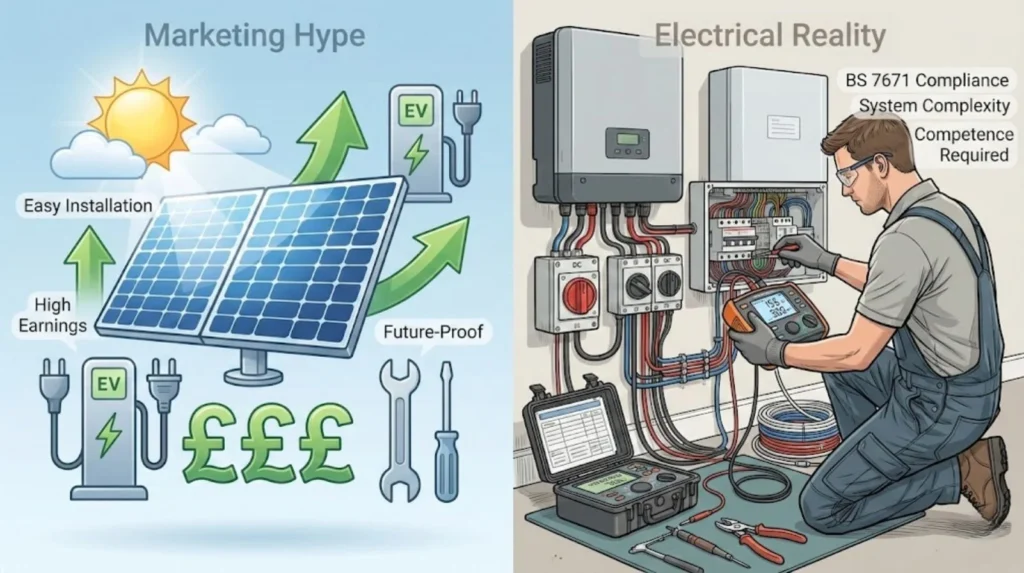
The renewable energy sector gets talked about like it’s some separate career universe where electricians earn double and work half as hard. Solar panels! Wind farms! EV charging points! Government targets! Green jobs for everyone!
Here’s the reality nobody mentions in those glossy training provider adverts: renewable energy isn’t creating a new type of electrician. It’s creating more work for qualified electricians who already know what they’re doing.
If you’re considering electrical training because you’ve heard renewable energy is “the future,” you’re not wrong. The sector is growing. But if you think a three-day solar panel course is going to get you hired at £40 an hour, you’re about to waste a few hundred quid and several months wondering why nobody’s calling you back.
What Renewable Energy Electrical Work Actually Means
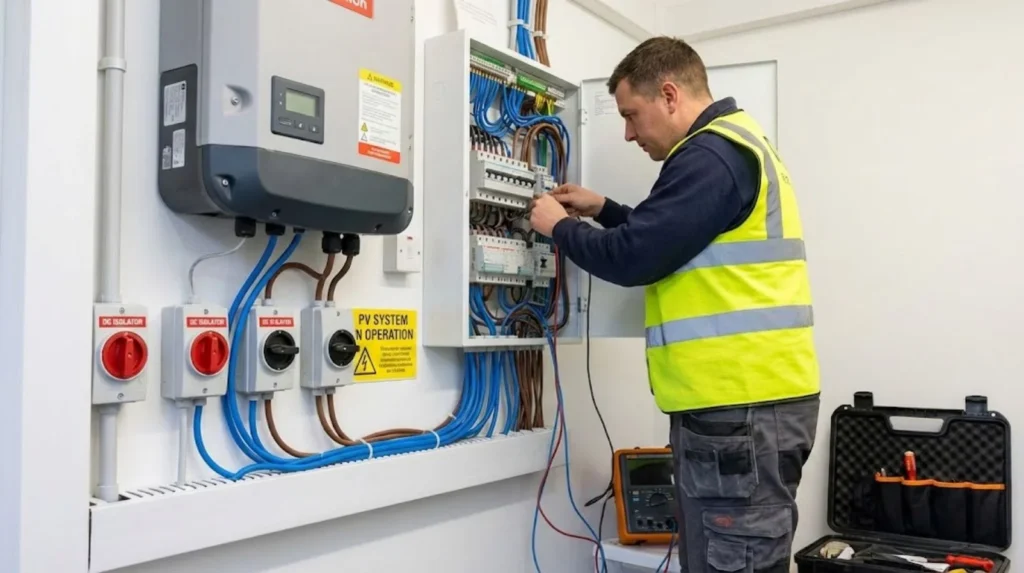
When people say “renewable energy electrician,” they’re usually talking about one of three things: solar PV installations (domestic rooftops and commercial arrays), EV charging infrastructure (home chargers, workplace installations, public rapid chargers), or wind farm electrical systems (onshore and offshore maintenance, grid connections).
Here’s what connects all three: they’re electrical installations that must comply with BS 7671:2018+A2:2022, just like every other bit of electrical work in the UK. The Wiring Regulations don’t suddenly disappear because you’re bolting solar panels to a roof instead of running cables through a house.
Solar installations involve DC systems, inverters, battery storage, grid connection, and consumer unit modifications. EV chargers need dedicated circuits, earth fault protection, and load balancing calculations. Wind farms require high-voltage switching, SCADA systems, and complex fault protection.
None of that is entry-level work. All of it requires a qualified electrician who understands safe isolation, testing procedures, earthing and bonding, and electrical design principles. The renewable bit is the specialism that sits on top of core electrical competence, not a replacement for it.
To be fair, this isn’t what most training provider websites tell you. They’ll happily sell you a five-day solar course and imply you’re ready to start invoicing £200 a day. You’re not. You’ve just bought an expensive introduction that leads nowhere unless you’re already a qualified spark looking to expand your skillset.
The Qualification Reality: What Employers Actually Want
Right, so you want to work in renewable energy as an electrician. What do you actually need?
Minimum standard for any renewable electrical work: NVQ Level 3 Electrical Installation (2357), 18th Edition BS 7671 (current edition), AM2 or AM2E assessment (practical competence proof), Inspection and Testing qualification (2391 or equivalent), and ECS Gold Card (JIB registered electrician status).
Notice what’s not on that list? A standalone solar course. An EV charging course. A three-day renewable energy certificate.
Those specialist courses are additional. They’re what you do after you’re qualified, not instead of getting qualified.
Here’s why: every solar installation, every EV charger, every bit of renewable energy work is an electrical installation first and a renewable technology second. Employers need electricians who can design circuits, calculate volt drop, test earth loop impedance, issue electrical certificates, and work safely on live systems.
The solar panels are just the load. The EV charger is just another circuit. The complexity lies in the electrical infrastructure that connects them to the grid, and that’s standard electrical engineering covered in your NVQ Level 3 electrical qualification.
Training providers that sell solar courses to unqualified people are selling hope, not employability. Employers in the renewable sector advertise for “qualified electricians with solar experience,” not “solar installers who might learn the electrical side later.”
The difference matters. One gets you a job. The other gets you an expensive certificate and a LinkedIn profile that doesn’t lead anywhere.
Solar Installation Work: The Reality Behind the Hype
Solar PV installation is probably the most visible bit of renewable energy work, which is why it’s the most oversold by dodgy training providers. Let’s break down what the work actually involves and what you’d need to do it competently.
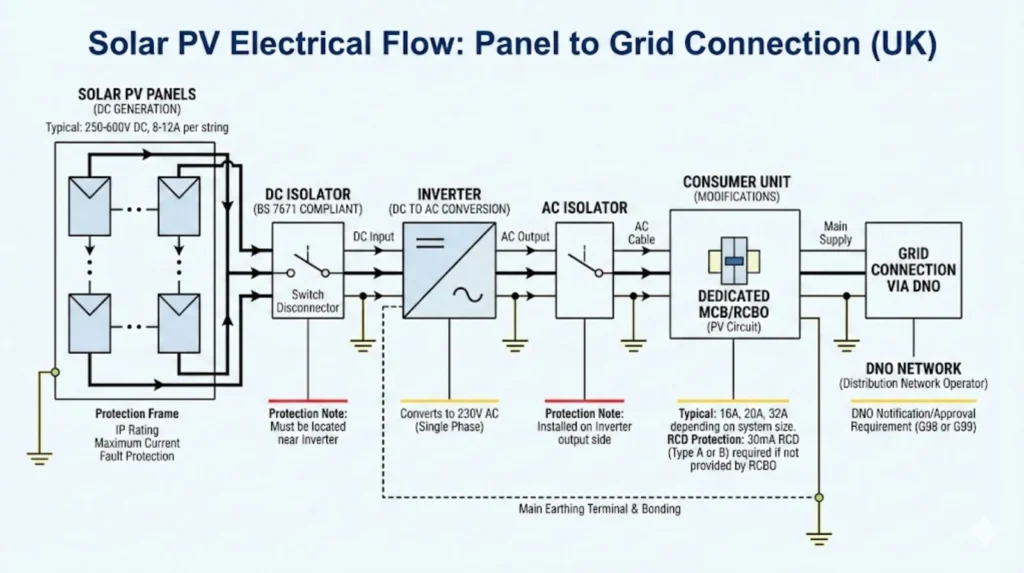
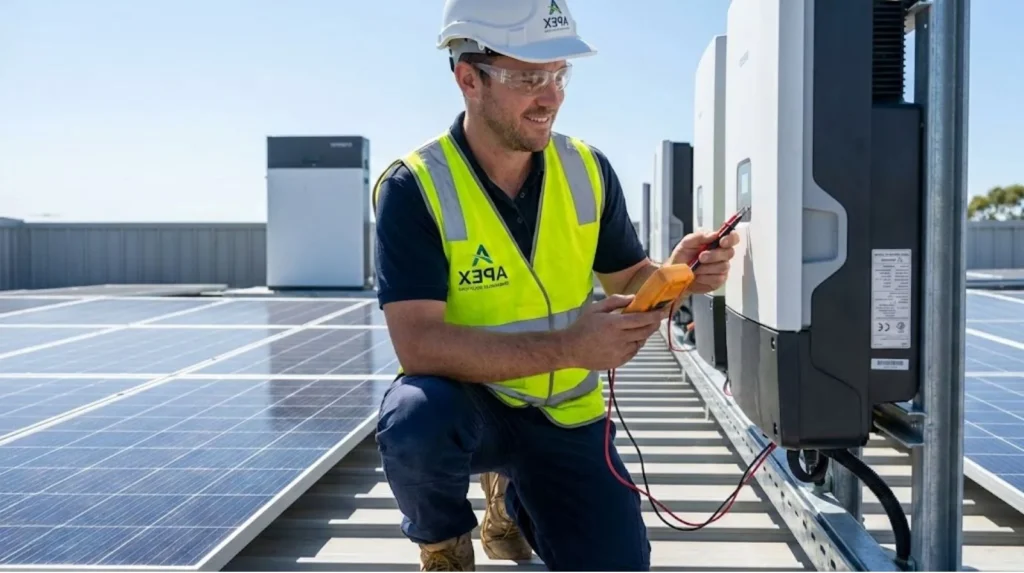
Domestic solar installations typically involve surveying the property and calculating system size, installing mounting rails and solar panels on the roof (this bit isn’t electrical work, it’s basically scaffolding and mechanical fixing), running DC cables from panels to inverter, installing and wiring the inverter (this is electrical work and must comply with manufacturer instructions and BS 7671), connecting the inverter to a new consumer unit or modifying the existing one, installing battery storage if required (additional DC work and safety interlocks), testing and commissioning the entire system, issuing electrical certificates, registering the installation with the local DNO (Distribution Network Operator), and applying for MCS certification if the customer wants to access government incentives.
Notice how much of that is pure electrical installation work? Everything from the inverter onwards is identical to any other electrical modification. You’re adding a new circuit, you’re modifying earthing arrangements, you’re calculating maximum demand, you’re testing and certifying.
The panels themselves are the easy bit. The electrical integration is where competence matters, and that’s where unqualified “solar installers” fall apart. They might know how to bolt panels to a roof, but they don’t know how to design the electrical system, size cables correctly, or test earth fault loop impedance.
Employers know this, which is why solar installation companies advertise for qualified electricians, not solar course graduates. The typical job advert says something like: “Qualified electrician required for domestic solar installations. NVQ Level 3, 18th Edition, full driving license. Solar experience preferred but training provided.”
Translation: we need a real electrician who we can teach the solar-specific stuff to. We don’t need someone who knows about solar but can’t wire a consumer unit.
EV Charging Infrastructure: Where the Real Growth Is
EV charging installation is growing faster than solar work, mainly because the government’s 2030 petrol/diesel ban is forcing the issue. Every workplace, every car park, every new housing development needs charging points.
The work splits into three categories:
Home chargers (7kW single-phase): Relatively straightforward for a qualified electrician. Run a dedicated circuit from the consumer unit, install the charging point, test and commission. Most take half a day once you know what you’re doing.
Workplace/commercial chargers (7-22kW three-phase): More complex. Load balancing across multiple chargers, potential three-phase installation, communication systems for usage tracking and billing. Requires proper electrical design and often involves liaison with the DNO for supply capacity.
Rapid/ultra-rapid chargers (50kW-350kW DC): Industrial-scale electrical work. High-voltage switching, dedicated substations, complex protection systems. This is advanced electrical engineering, not something you walk into straight from training.
The qualification requirements mirror the complexity. Home chargers need a qualified electrician with 18th Edition and a one-day EV charging installation course. Commercial installations need the same plus three-phase experience and proper design capability. Rapid chargers need industrial electrical experience and often additional high-voltage qualifications.
What you don’t need is an “EV charging installer” course if you’re not already a qualified electrician. Those courses exist for qualified sparks to understand the specific requirements of EV charging points. They’re not a standalone qualification that gets you work.
The day rates for EV charging work are identical to standard electrical installation rates, by the way. If you’re JIB registered and charging £180-£220 a day for domestic work, that’s what you’ll charge for home EV chargers. The renewable aspect doesn’t add a premium. Your qualification and experience determine the rate, not the type of installation.
Wind Farm Work: Not What You Think
Wind farms sound exciting, right? Offshore platforms, massive turbines, high-tech engineering, probably decent wages. Here’s what that work actually involves for electricians.
Maintenance electricians work on turbine electrical systems, switchgear, control systems, and generators. Usually on a rota basis (two weeks on, two weeks off for offshore work). Requires industrial electrical experience, often high-voltage switching qualifications, confined space training, and offshore survival certification if it’s offshore work.
Grid connection electricians install the electrical infrastructure that connects wind farms to the National Grid. High-voltage cable laying, substation work, protection systems. Advanced electrical engineering requiring years of experience and additional qualifications beyond standard NVQ Level 3.
Commissioning engineers test and commission new turbines and electrical systems. Requires extensive testing experience and usually a degree in electrical engineering or equivalent experience.
Notice what’s not on that list? Entry-level positions for newly qualified electricians with a wind energy course certificate.
Wind farm work is specialist industrial electrical engineering. It’s what you work towards after years of experience in industrial electrical installation and maintenance. It’s not an alternative to the standard electrician career pathway, it’s an advanced destination within that pathway.
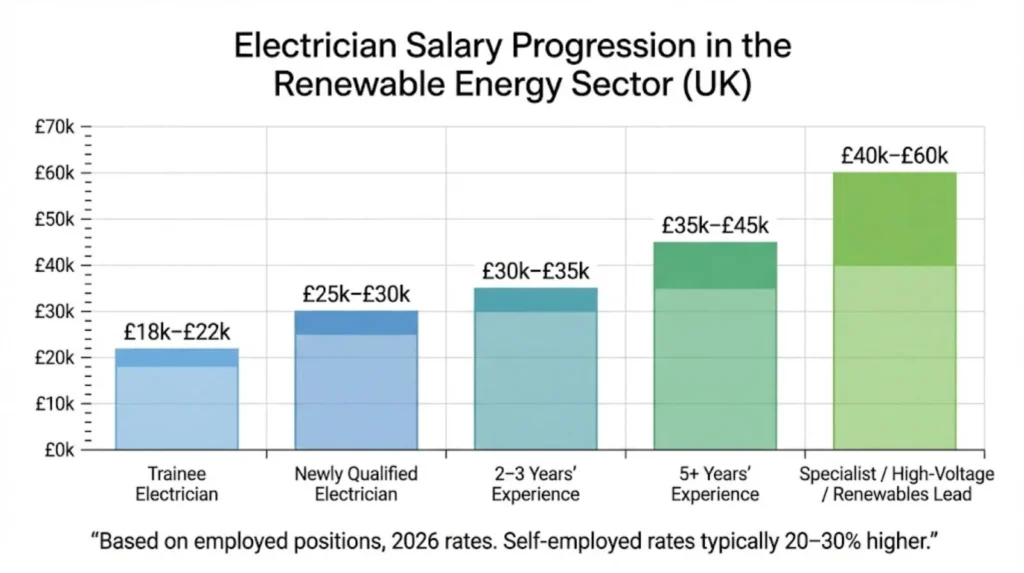
The wages reflect that reality. Offshore wind farm electricians earn £40,000-£60,000 depending on experience and role, but they’ve usually got 5-10 years of industrial electrical experience before they get there. They’re not fresh out of training.
If you’re interested in wind farm work eventually, the route is: get qualified as an electrician through the standard pathway, get industrial experience (factories, substations, commercial installations), build up your skillset with high-voltage qualifications and testing certifications, then apply for wind farm positions when you’ve got the experience they’re looking for.
There’s no shortcut. Anyone selling you a “wind energy electrician course” as a standalone qualification is selling you something that doesn’t lead to employment in that sector.
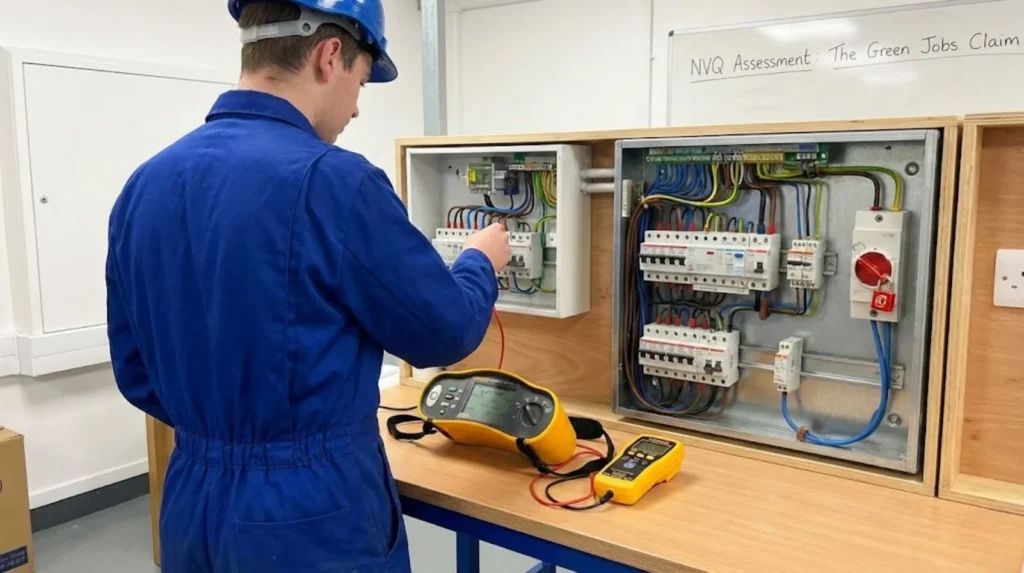
The Green Jobs Claim: What the Numbers Actually Mean
You’ve probably seen the headlines. “400,000 green jobs by 2030!” “Renewable energy creating massive employment opportunities!” “Electricians urgently needed for net-zero transition!”
All of that is technically true. The problem is how it gets interpreted by training providers and hopeful career changers.
When the government talks about 400,000 green jobs, they’re talking about the entire renewable energy supply chain. Manufacturing, installation, maintenance, project management, planning, finance, logistics. The actual electrician jobs within that figure are a fraction of the total.
The Committee on Climate Change estimates that the electrical installation and maintenance workforce needs to grow by around 15-20% to meet renewable energy targets. That’s significant growth, but it’s not a doubling or tripling of demand. It’s steady, consistent growth over the next decade.
What that means in practice: if you’re a qualified electrician, you’ll find consistent work in renewable energy projects if you want it. Solar installations, EV charging, heat pump installations (another bit of electrical work that’s growing). The work exists.
What it doesn’t mean: there’s some separate “green jobs” sector where unqualified people with short courses can walk into well-paid electrical work. That’s fantasy.
The electricians benefiting from renewable energy growth are the ones who got qualified properly through electrician courses covering the full technical pathway: Level 2, Level 3, NVQ, 18th Edition, testing qualifications. They’re adding renewable specialisms on top of that foundation, not replacing it.
The training providers selling standalone renewable energy courses are exploiting that confusion. They’re implying that green jobs are somehow different from normal electrical jobs, that you can bypass the qualification pathway because it’s “new technology.” You can’t. It’s still electrical installation work governed by BS 7671 and requiring the same competence standards.
What Actually Makes You Employable in Renewable Energy
Right, so you want to work in renewable energy as an electrician. Forget the marketing hype and focus on what actually gets you hired.
The foundation (non-negotiable): You need to be a qualified electrician first. That means NVQ Level 3 electrical installation, 18th Edition, AM2 assessment, and an ECS Gold Card. That’s the baseline for any electrical work, renewable or otherwise. The timeline for that qualification pathway is 18 months to 3 years depending on your route (fast-track, apprenticeship, experienced worker assessment). There’s no way around it. Anyone promising a quicker route is lying.
The specialist addition (employer-dependent): Once you’re qualified, then you can add renewable-specific training. A one-day EV charging course. A three-day solar PV course. An MCS certification pathway if you’re planning to work on domestic installations that need to access government incentives. These courses are useful, but only after you’ve got the core qualification. They’re like adding languages to your CV when you already speak English fluently. They expand what you can do, they don’t replace the foundation.
The experience factor (the bit nobody talks about): Most renewable energy contractors want electricians with at least 1-2 years post-qualification experience. They’re not training people from scratch. They need sparks who can work independently, understand commercial realities, and solve problems on site without constant supervision. That experience comes from working as an electrician on any type of electrical installation. Domestic rewires, commercial fit-outs, industrial maintenance. The renewable work comes later, once you’ve proved you know what you’re doing.
The soft skills bit (equally important): Renewable installations are usually customer-facing. You’re in someone’s home installing their solar panels. You’re explaining how their new EV charger works. You’re dealing with commercial clients who want to understand return on investment. That requires communication skills, professionalism, and the ability to explain technical concepts to non-technical people. Those skills matter just as much as technical competence, and they develop through experience, not courses.
The Salary Reality: What Renewable Work Actually Pays
Let’s talk money, because that’s usually why people ask about renewable energy work in the first place.
A qualified electrician with NVQ Level 3 and an ECS Gold Card earns around £30,000-£35,000 employed, or invoices £150-£220 per day self-employed, depending on location and experience. That’s the standard rate for electrical installation work across the UK.
Solar installation work? Same rate. You’re a qualified electrician doing electrical installation work. The panels don’t change your day rate.
EV charging installation? Same rate. It’s a dedicated circuit installation with specific requirements. Your qualification determines the rate, not the type of load you’re installing.
The only time you see significantly higher rates is for specialist work requiring additional qualifications and significant experience. High-voltage work on wind farms. Offshore electrical maintenance. Industrial renewable energy projects. But those rates reflect the additional qualifications and years of experience, not the renewable aspect itself.
Here’s what actually increases your earning potential in electrical work: additional qualifications (inspection and testing, electrical design, high-voltage switching), specialist experience (industrial systems, three-phase installations, complex testing), business skills (running your own electrical contracting business), and years of experience (senior electrician, supervisor roles).
The renewable energy sector offers consistent work and long-term job security. Government net-zero targets guarantee that. But it doesn’t offer a premium over standard electrical rates unless you’re in specialist high-voltage or offshore work requiring years of additional experience.
If someone’s telling you that solar electricians earn £50,000+ in their first year, they’re either talking about self-employed electricians who were already qualified and experienced, or they’re making it up. The actual employed salary for a newly qualified electrician doing solar work is £25,000-£30,000, same as any other newly qualified spark.
The Elec Training Approach: Why the Foundation Matters
We don’t sell standalone renewable energy courses because they don’t lead to employment. We focus on getting people properly qualified as electricians first, because that’s what actually works.
Our NVQ Level 3 electrical package covers the technical foundation you need for any electrical work, including renewable installations. The qualification pathway includes Level 2 and Level 3 electrical installation theory (2365), NVQ Level 3 portfolio and on-site assessment (2357), 18th Edition BS 7671 (current Wiring Regulations), AM2 practical assessment, and full support toward ECS Gold Card application.
Once you’re qualified through that route, renewable energy work becomes an option within your broader electrical career. You can take specialist courses in solar PV, EV charging, or heat pump installations if that’s the direction you want to go. Or you can focus on domestic electrical work, commercial installations, industrial maintenance, or any other electrical specialism.
The point is this: proper qualification gives you options. Short courses give you certificates that don’t lead anywhere.
The renewable energy sector needs more qualified electricians. It doesn’t need more people with renewable energy course certificates who can’t actually do electrical installation work to BS 7671 standards.
If you’re serious about working in renewable energy as an electrician, the pathway is clear: get qualified properly through the full electrical installation route, build experience across different types of electrical work, then specialise in renewable projects if that’s where you see long-term opportunity.
The work exists. The growth is real. But the route to employability hasn’t changed just because the sector involves solar panels instead of socket outlets.
If you’re considering electrical training with the intention of working in renewable energy eventually, focus on the qualification pathway that actually leads to employment.
Call us on 0330 822 5337 to discuss the full electrician qualification route. We’ll explain exactly what’s involved in NVQ Level 3 electrical training, the timeline to qualification, and how our in-house recruitment team supports placement into electrical work across all sectors, including renewable energy projects.
We won’t promise you a solar job in six months. We will support you toward proper qualification as an electrician over 18 months to 3 years, which is what renewable energy employers are actually looking for.
What we’re not going to tell you: • That you’ll be earning £50k in six months • That a 5-week course makes you qualified • That it’s easy
What we will tell you: • The full pathway takes 18 months to 3 years • It costs £10,500 for our complete NVQ package (including AM2 fee and PPE) • Our in-house recruitment team works with 120+ contractors to secure placements • Qualified electricians have genuine job security in renewable energy work • Green energy work creates additional opportunities, not shortcuts
No hype. No unrealistic promises. Just the qualification pathway and placement support that leads to actual employment in electrical installation work, renewable energy included.
References
- BS 7671:2018+A2:2022 (IET Wiring Regulations): https://www.theiet.org/
- ECS (Electrotechnical Certification Scheme): https://www.ecs.co.uk/
- MCS (Microgeneration Certification Scheme): https://mcscertified.com/
- Committee on Climate Change – Sixth Carbon Budget: https://www.theccc.org.uk/
- ONS Labour Market Statistics: https://www.ons.gov.uk/
- JIB Wage Rates and Gradings: https://www.jib.org.uk/
- City & Guilds 2357 NVQ Level 3 Specification: https://www.cityandguilds.com/
Note on Accuracy and Updates
Last reviewed: 13 January 2026. This retrospective analysis reflects data through 2024/25, incorporating Home Office Incident Reporting System statistics, English Housing Survey annual reports (2010-2024), ONS mortality records, NHS Hospital Episode Statistics, and peer-reviewed academic literature on alarm effectiveness. The 2022 amendments extending CO alarm requirements to all combustion appliances and social housing are noted separately as they represent policy evolution beyond the 2015 baseline being evaluated. Enforcement data remains fragmented due to lack of centralised local authority reporting. Fire incident trends are subject to reporting variations, particularly during COVID-19 (2020-2022). Always verify current legal requirements with official government guidance when making compliance decisions.
FAQs
Do you need to be a fully qualified electrician to work in renewable energy installations?
Yes. For the electrical aspects of renewable installations such as solar PV or EV charging in the UK, you must hold core qualifications including NVQ Level 3 in Electrical Installation, the AM2 assessment, and compliance with BS 7671. Non-electrical tasks (for example, mounting panels) may not require this, but all electrical connections must be carried out by a fully qualified electrician to meet legal and safety standards.
Can short solar or EV charging courses lead to paid renewable energy work on their own?
No. Short add-on courses alone do not qualify you for paid electrical work in renewables. Employers require core electrical qualifications first. These courses provide supplementary knowledge but lack the depth needed for standalone employability without NVQ Level 3, AM2, and inspection and testing experience.
What renewable energy jobs are realistically available to newly qualified electricians?
Entry-level roles include assisting with solar PV installations, basic domestic EV charger installations, or support roles in small-scale battery storage projects. These typically begin under supervision within general electrical firms that offer renewable services, rather than specialist renewable companies, which usually prefer experienced electricians.
Is solar PV installation mainly electrical work or general installation work?
Solar PV installation is primarily electrical work, involving wiring, inverters, protection devices, and grid connections that must comply with BS 7671. General tasks such as mounting panels or roofing are secondary and are often handled by non-electricians, but the core responsibility is electrical design, installation, and testing.
What additional training do electricians actually need for EV charger installations?
Beyond core qualifications (NVQ Level 3, AM2, and BS 7671), electricians need specific knowledge of BS 7671 Section 722, which covers EV charging installations. Employers also expect practical experience in inspection and testing. Manufacturer-specific courses are useful but are not mandatory for basic installations.
Does renewable energy work pay more than standard domestic or commercial electrical work?
Not necessarily. Pay is broadly similar to standard electrical roles, typically around £30,000–£45,000 per year depending on location and experience. Renewable projects may offer small premiums in high-demand areas such as London, but there is no guaranteed uplift in earnings.
How much post-qualification experience do employers expect before hiring electricians for renewable projects?
Employers typically look for 1–3 years of post-qualification experience in general electrical work, including inspection and testing to BS 7671. For more complex renewable projects, such as large solar arrays, 3–5 years of experience is common to ensure real-world competence and compliance.
Is wind farm electrical work an entry-level option for electricians?
No. Wind farm roles are not entry-level positions. They usually require significant experience (often 5+ years), an ECS Gold Card, and specialised skills such as high-voltage systems training. Offshore roles also require additional safety and survival certifications. Newly qualified electricians may only access onshore support roles at best.
What qualifications and certifications do employers typically look for in renewable energy electrician roles?
Core requirements include NVQ Level 3 in Electrical Installation, the AM2 assessment, 18th Edition BS 7671 certification, and an ECS Gold Card. For renewable roles, employers also expect evidence of inspection and testing competence. Solar PV or EV-specific courses are viewed as bonuses, not replacements for core qualifications.
Why do many renewable energy training courses fail to lead to real employment?
Many focus heavily on theory without providing practical experience or the core electrical qualifications employers require. This can give trainees unrealistic expectations about employability. In practice, employers prioritise proven competence through NVQ Level 3, AM2, and hands-on experience, particularly in a market with fluctuating project demand.
