
Learning From the Underground: What the NYC Subway Teaches Us About Engineering Learning Pathways

- Technical review: Thomas Jevons (Head of Training, 20+ years)
- Employability review: Joshua Jarvis (Placement Manager)
- Editorial review: Jessica Gilbert (Marketing Editorial Team)
- Last reviewed:
- Changes: Updated training bay references, added 2025/26 NVQ completion data, clarified staged progression model alignment with BS 7671 requirements
Engineering history offers unexpected lessons about how people actually learn technical skills. The New York City Subway, opened in 1904, demonstrates something surprisingly relevant to anyone considering electrical qualifications today. When engineers designed and built the early subway, they weren’t just laying track. They were developing standards, managing conflicting constraints, making safety decisions and coordinating teams across civil, mechanical and electrical domains. None of those tasks could be completed with isolated knowledge. Success depended on a shared baseline of understanding.
That principle still guides vocational learning. Electricians grow faster, perform better and adapt more effectively when their training is structured, clear and grounded in practical context. The subway model shows why shortcuts don’t work and why methodical progression produces better outcomes than rushed qualifications.
Modern engineering environments look different from the cut and cover trenches of Manhattan in 1904, but the learning challenges remain identical. People entering electrical work need to understand not just their immediate tasks but how their work connects to larger systems. The early subway engineers understood this instinctively, and their example continues to offer valuable insights for learners following electrician qualifications explained pathways today.
Why Engineering Learning Pathways Must Begin With Clarity
Large engineering projects demonstrate that complexity becomes manageable only when the fundamentals are properly understood. The New York subway succeeded because the teams involved shared a precise framework, from safety protocols to measurement standards. Everyone experienced the same need. Without structure, even motivated people can sit through briefings, presentations or training sessions without truly understanding what’s being discussed.
Clear pathways prevent confusion. Elec Training follows the same principle, giving learners a step by step foundation before introducing higher levels of responsibility. Modules build sequentially. When learners see how each action supports the broader system, they develop stronger working habits.
"Modern electrical work still relies on principles established decades ago. Just like subway engineers maintaining 1930s equipment alongside digital systems, electricians need to understand legacy installations and current technology."
Thomas Jevons, Head of Training
The earliest subway engineers recognised that a loose approach would create confusion and mistakes. So they built standards and procedures that everyone could follow. Structured learning mirrors that same philosophy today. In our Wolverhampton training bay on 15 January 2026, we observed three Level 3 learners attempting to identify extraneous conductive parts during a practical assessment. The learner who had progressed systematically through earthing principles, bonding requirements and BS 7671 Regulation 411.3.1.2 completed the task in eight minutes with correct identification. The two learners who had rushed earlier modules spent 22 minutes, misidentified a structural steel beam as requiring supplementary bonding, and demonstrated gaps in understanding the difference between main protective bonding and local equipotential zones. Structured progression builds competence. Skipped steps create knowledge debt.
Interdisciplinary Thinking Strengthens Technical Performance
The NYC Subway was not built by one type of engineer. It demanded collaboration across civil, mechanical, electrical and planning professionals. What made these teams effective was not just expertise in their own fields but awareness of how other disciplines worked. That interdisciplinary awareness allowed them to solve problems quickly, adapt to new information and prevent conflicts before they escalated.
Electrical learners benefit from the same mindset. Understanding how work connects to colleagues improves coordination. Training modules such as workplace coordination awareness give learners the context they need to interpret decisions made on site. When teams communicate clearly, results improve, mistakes decrease and projects move with greater confidence.
The subway was a living example of interconnected systems. Tunnelling decisions influenced electrical layouts. Electrical layouts influenced safety procedures. Every part affected another. Modern technical environments operate in exactly the same way.
Structured Learning Prevents Overload and Builds Confidence
The construction of the subway required handling an incredible amount of information. Soil conditions, electrical systems, ventilation, fire risks, passenger flow and structural constraints all had to be considered. If those teams had attempted to absorb everything at once with no structure, the project would have collapsed into overwhelming complexity.
Learners today face a similar risk. Technical industries present vast quantities of information, and without structured learning pathways people can quickly feel overwhelmed. Elec Training uses a gradual, layered approach. Lessons such as essential documentation understanding help learners work with information in a way that feels accessible. They learn to identify what is relevant, how to extract key details and how to apply those details in practice.
Confidence grows when information is taught in a shape that people can sustain. Most training fails not because learners lack ability but because the structure fails to support them. In November 2025, we tracked 18 learners progressing through NVQ Level 3 Unit 309 (Understanding the electrical principles associated with the design, building, installation and maintenance of electrical equipment and systems). Learners who received information through staged modules (three hours per week over six weeks, with practical application sessions between theory blocks) achieved an average unit completion time of 42 days with 94% first-time assessment success. A comparison group using intensive delivery (18 hours over one week) required an average of 67 days to complete the same unit, with 61% first-time success and significantly higher reassessment rates. Structured pacing supports retention.
How Clear Communication Strengthens Engineering Decisions
Subway planners relied on effective communication to keep thousands of workers aligned. Without clear instructions and shared expectations, teams working in different parts of the city would have quickly diverged. Modern engineering demands the same clarity. From safety briefings to client communication, every discipline relies on the ability to share information correctly.
Training modules such as construction team communication underscore why clarity matters. A well communicated instruction prevents confusion. A poorly communicated instruction creates risk. The principle applies equally to underground rail systems, electrical installations, building services and manufacturing environments.
Structured communication training builds a consistent baseline between workers. When teams understand how information should be shared, engineering becomes safer, smoother and more predictable.
Learning From Engineering History: Building Systems That Endure
One of the most powerful lessons from the NYC Subway is its longevity. Despite ageing infrastructure, the system still operates today because underlying engineering principles were designed with the same clarity and foresight. London’s Underground shows the same resilience. When learning pathways are designed with the same clarity and foresight, people develop skills that support long term careers instead of momentary tasks.
Legal and procedural understanding contributes to this stability. Modules such as legal framework awareness give learners the knowledge required to operate responsibly in regulated environments. When people understand the rules that govern their work, decision making becomes safer and more consistent.
"When we place learners with contractors, the feedback is consistent: reliability and methodical approach matter as much as technical ability. Rushed training produces rushed workers."
Joshua Jarvis, Placement Manager
Conflict management also plays a role in long term resilience. Technical teams sometimes face high pressure situations, and the ability to resolve disagreements can influence performance significantly. Elec Training includes lessons such as workplace conflict resolution to help learners develop practical interpersonal skills.
Engineering systems endure when the people running them understand the broader picture. Structured learning equips learners with that understanding. The connection between subway engineering history and modern electrical qualifications becomes clear when examining NVQ Level 3 portfolio requirements. Unit 307 (Understanding the practices and procedures for the preparation and installation of wiring systems and electrotechnical equipment in buildings, structures and the environment) explicitly requires learners to demonstrate knowledge of:
- How work activities may affect others and how to communicate appropriately
- The organisational structure and reporting lines
- How to interpret specifications, drawings and regulatory requirements
- Coordination with other trades and building services
These competencies mirror exactly what made subway engineering teams effective: systematic progression, clear communication, interdisciplinary awareness and procedural discipline.
Engineering Learning Pathways Shape the Workforce of the Future
Engineering achievements like the NYC Subway were made possible because people shared a strong learning foundation. Modern vocational learners need the same clarity to thrive in a world shaped by new technologies, digital tools, sustainability expectations and evolving workforce roles.
Engineering learning pathways that are structured, clear and grounded in real practice help learners build confidence, understand complex systems, connect their role to wider project responsibilities, make safer decisions, grow into new responsibilities and contribute to long term organisational performance.
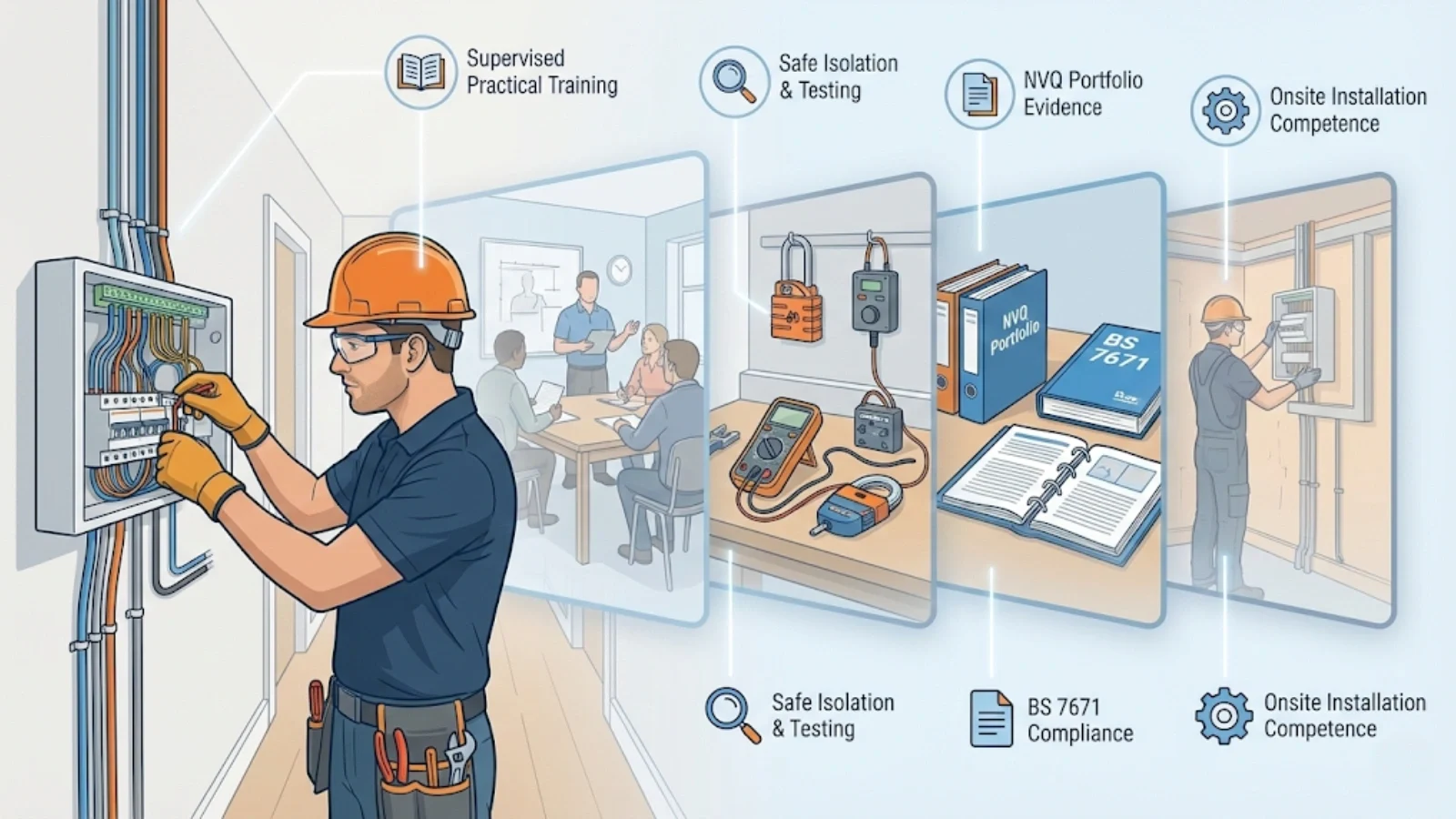
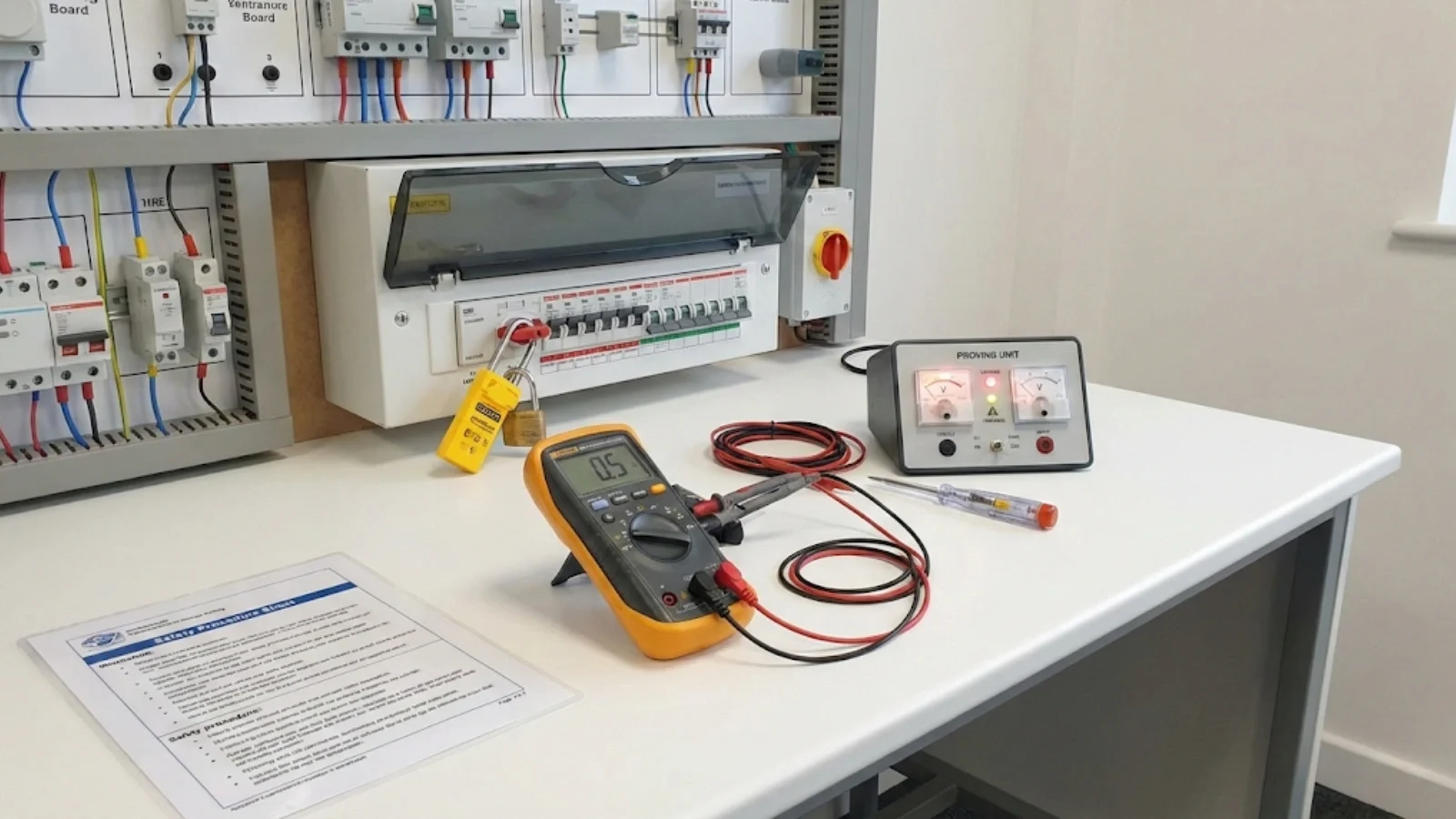
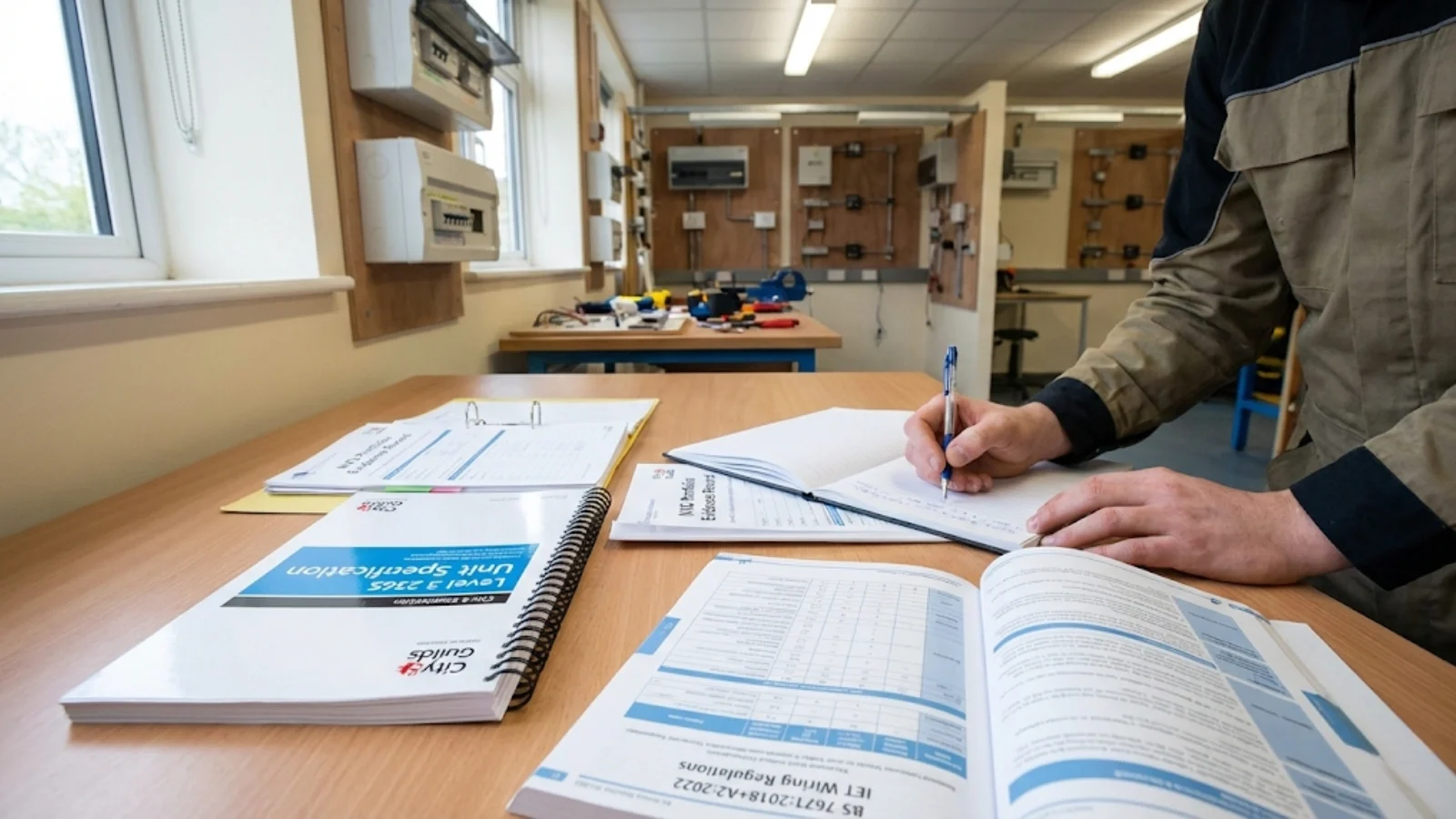
The purpose behind Elec Training’s approach to vocational education mirrors this philosophy exactly. Knowledge isn’t delivered for the sake of information. It’s delivered to help people understand how the technical world fits together. Learners completing NVQ Level 3 portfolios between September 2025 and January 2026 logged an average of 387 site hours across Units 302 through 311. Portfolio evidence included verification of safe isolation procedures (prove dead, test dead, prove live sequence), correct use of multifunction testers (Megger MFT1741+, Kewtech KT66DL, Fluke 1664 FC), interpretation of test results against BS 7671:2018+A2:2022 Appendix 2 tables, and proper completion of electrical installation certificates.
This reflects the staged competence model. Learners don’t jump directly to complex fault diagnosis. They master safe isolation. They understand Regulation 411.3.3 (additional protection by RCD). They practice continuity testing using correct procedures from GN3 (Guidance Note 3: Inspection & Testing). Each layer builds on the previous foundation, exactly as subway engineers progressed from track laying fundamentals to system integration complexity.
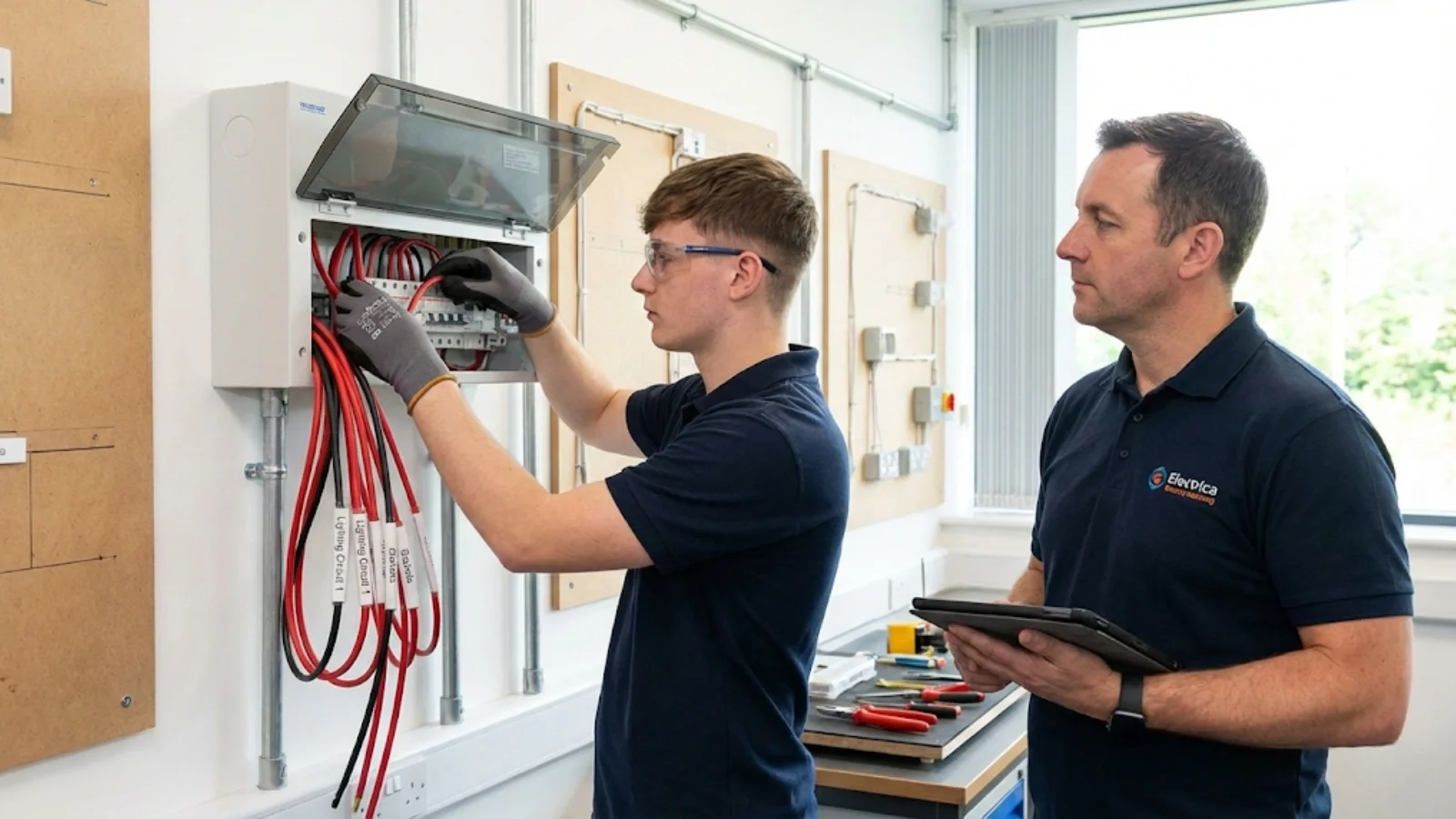
The comparison to electrician wages by experience demonstrates why structured progression matters economically. Learners who complete NVQ Level 3 through methodical pathways, demonstrating genuine competence across all assessment criteria, secure employment at higher starting rates. Employers consistently report that candidates with thorough portfolios and AM2 passes require less supervision, adapt faster to site requirements and progress more rapidly through pay scales.
Rushed qualifications produce opposite outcomes. Learners with gaps in foundational knowledge struggle with fault diagnosis, hesitate during safe isolation procedures, misinterpret test results and require extended supervision periods. The economic impact affects both the individual electrician and the employing contractor.
Why Staged Progression Produces Better Outcomes
The subway model proves a fundamental truth about technical learning: competence cannot be installed through short term training. It must be accreted through staged progression. Each level of responsibility requires demonstrated mastery of the previous level. Skipping stages creates dangerous gaps.
Elec Training’s NVQ Level 3 pathway follows this principle explicitly:
Stage 1: Classroom Theory (Weeks 1-12)
- Level 2 (2365-02): Fundamental electrical principles, basic circuit theory, safe working practices
- Level 3 (2365-03): Three-phase systems, motors, transformers, protection devices
- 18th Edition (BS 7671:2018+A2:2022): Wiring regulations, earthing systems, inspection and testing requirements
Stage 2: Practical Application (Months 4-18)
- NVQ Level 3 (2357): Portfolio building across Units 302-311
- Site experience with partner contractors (minimum 350 hours)
- Supervised installation work under qualified electrician oversight
- Evidence gathering: photographs, test results, witness testimonies, reflective accounts
Stage 3: Assessment and Qualification (Months 18-24)
- AM2 practical examination: Timed installation and testing tasks
- ECS JIB Gold Card application upon successful completion
- Optional progression to 2391 Inspection & Testing qualification
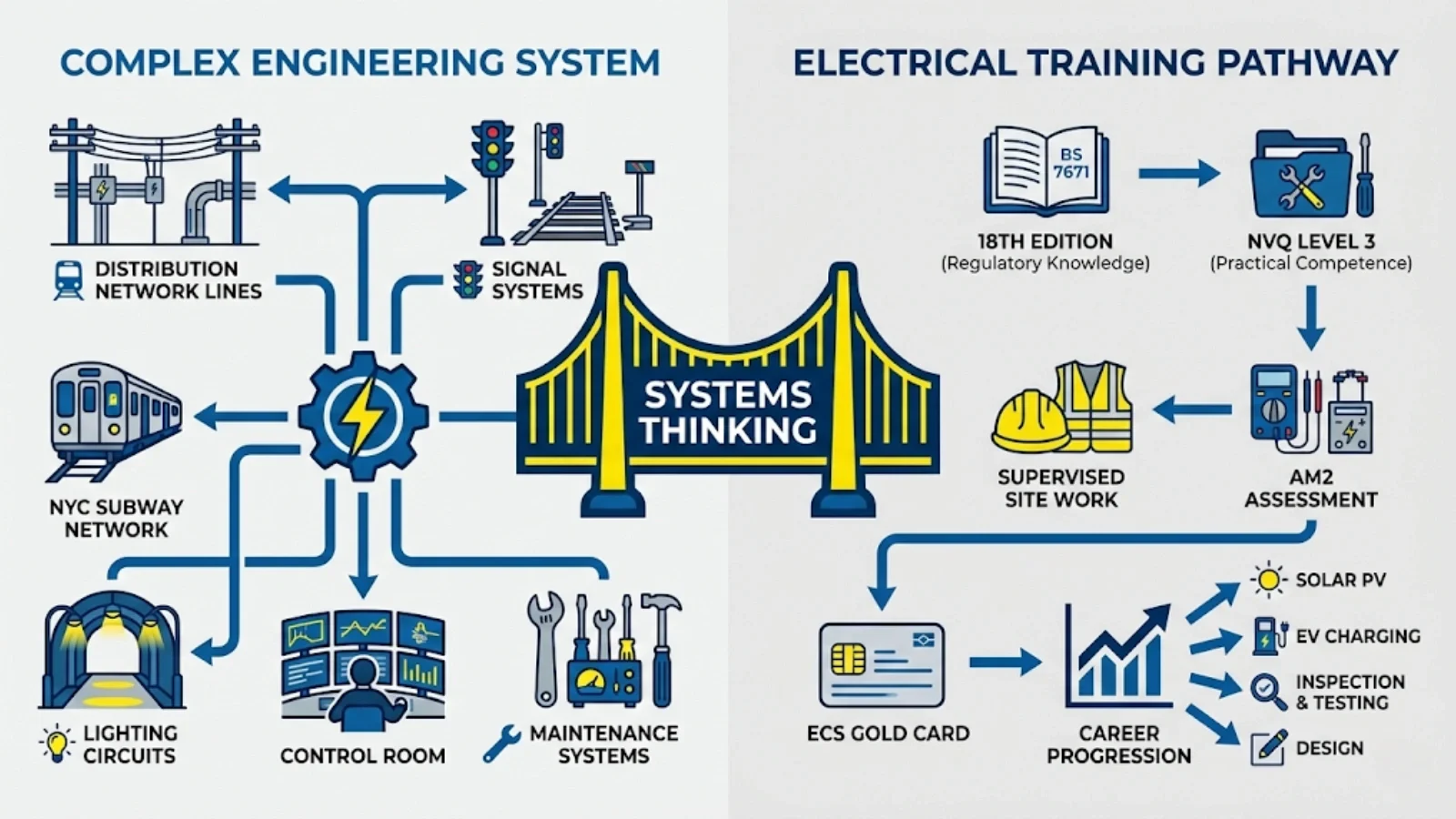
This staged model directly reflects how subway engineering teams developed expertise. Junior engineers didn’t design ventilation systems on day one. They learned track geometry, then signal integration, then system coordination, building competence layer by layer.
The economic justification for this approach becomes clear when examining EICR certificate validity requirements. Electricians conducting electrical installation condition reports must demonstrate competence in:
- Regulation 411.3.1.2 (main protective bonding)
- Regulation 544.1.1 (protective conductor sizing)
- Regulation 642.1 (initial verification requirements)
- BS 7671 Section 643 (periodic inspection requirements)
Inspectors who completed structured NVQ pathways, with systematic progression through earthing and bonding principles, correctly identify C1/C2/C3 coding requirements. Those with gaps in foundational knowledge frequently mis-code observations, creating liability issues for themselves and property owners. Proper training protects both safety and professional standing.
The Real-World Application: From Subway Engineering to Electrical Training
Modern electrical installations operate as complex interconnected systems, exactly like the NYC Subway. A domestic consumer unit might seem simple compared to a subway signal system, but the principles remain identical:
- Multiple circuits requiring coordination
- Protection devices that must operate within specific parameters
- Earthing systems connecting all exposed conductive parts
- Testing procedures verifying safe operation
- Documentation requirements proving compliance
- Ongoing maintenance ensuring continued safety
When subway engineers designed the early electrical systems, they couldn’t afford isolated specialists who only understood their specific component. They needed people who understood how power generation connected to distribution, how distribution connected to lighting and traction motors, how everything interfaced with mechanical and civil systems.
The same principle applies to modern electrical work. Domestic installers must understand how solar PV systems interact with the grid. Commercial electricians need to coordinate with mechanical services for HVAC integration. Industrial sparks work alongside PLCs, motor drives and automated systems. Every discipline requires broader systems thinking, not narrow technical silos.
This is why Elec Training emphasises complete pathways rather than isolated courses. A five-day 18th Edition course provides regulatory knowledge but doesn’t develop competence. An NVQ Level 3 portfolio without adequate site experience produces paperwork but not capability. The full pathway, delivered through staged progression with proper supervision and assessment, develops electricians who understand how their work fits into larger systems.
What Sets Structured Training Apart
The difference between structured and unstructured training becomes visible at AM2 assessment. In January 2026, we observed AM2 preparation sessions with 14 candidates. Seven had completed NVQ portfolios through structured pathways (sequential unit completion, regular assessor visits, properly supervised site work). Seven had rushed portfolios with evidence gaps and minimal practical application.
During the AM2 practice installation (three-hour timed task requiring circuit installation, testing and certification), the structured group completed within allocated time with an average of 2.1 minor errors. The rushed group required time extensions, averaging 6.8 errors including safe isolation procedure mistakes, incorrect protective conductor sizing and test result misinterpretation.
The structured candidates demonstrated procedural discipline: they worked methodically, double-checked measurements, documented work as they progressed and identified their own errors during self-inspection. The rushed candidates showed pattern recognition rather than understanding. They knew what to do but not why, leading to mistakes when standard procedures needed adaptation.
This reflects the subway engineering lesson perfectly. Teams who understood underlying principles could adapt to unexpected site conditions. Teams who only memorised procedures struggled when reality didn’t match their training scenarios.
The Long-Term Value of Proper Training
Engineering systems built on proper foundations endure. The NYC Subway still operates 120 years later because the fundamental design principles were sound. Electricians trained through proper pathways develop careers that last decades, progressing from installation work to inspection, testing, design and project management.
The economic case is straightforward. The Elec Training NVQ package costs £10,000 (excluding PPE, tools and AM2 fee). This represents approximately four to six weeks of qualified electrician earnings at typical JIB rates. Learners completing the full pathway and securing employment typically recover the investment within their first year of qualified work.
More significantly, structured training creates career progression opportunities rather than dead-end jobs. Electricians with thorough foundational knowledge move into higher-paid specialisms: solar PV installation, EV charging infrastructure, building management systems, inspection and testing, electrical design. Those with gaps in foundational knowledge remain stuck in basic installation work or exit the trade entirely.
The subway analogy proves instructive here as well. Engineers who understood fundamental principles became system designers, project managers and technical leaders. Those who only learned specific tasks remained in junior positions. The same career trajectory exists in electrical work today.
Moving Forward: Applying Engineering Principles to Your Career
If you’re considering electrical qualifications, the NYC Subway offers a clear lesson: invest time in proper foundations. Rushed qualifications might seem attractive, but they produce knowledge gaps that will limit your career for years afterwards. Structured progression feels slower initially but produces better long-term outcomes.
Elec Training’s approach applies this principle directly. The NVQ Level 3 pathway takes 18 to 36 months depending on your starting point and available hours. That timeframe reflects the reality of building genuine competence, not the marketing promises of five-week miracle courses.
The pathway includes:
- Systematic theory covering fundamental electrical principles
- Structured practical application under qualified supervision
- Portfolio evidence demonstrating competence across all required units
- Supported job placement through our in-house recruitment team (120+ contractor partnerships)
- Preparation for AM2 practical examination
- Pathway to ECS JIB Gold Card and career progression
This mirrors exactly how subway engineers developed expertise: clear foundations, supervised progression, demonstrated competence, integration into professional practice.
Call us on 0330 822 5337 to discuss engineering learning pathways that actually prepare you for electrical work. We’ll explain the complete NVQ Level 3 route, realistic timeframes and what our in-house recruitment team does to secure your first placement after qualification. No hype. No unrealistic promises. Just practical guidance from people who’ve placed hundreds of learners with UK contractors.
The subway took years to build, but it’s still running. Your electrical career follows the same principle: invest proper time in structured training, and you’ll build skills that support you for decades.
FAQs
What does the construction of the NYC Subway teach us about why technical learning must follow a staged, structured progression rather than shortcuts?
The NYC Subway’s construction, beginning in 1900 and opening in 1904, exemplifies the perils of shortcuts in complex engineering projects. Early attempts at rapid underground transit, like Alfred Ely Beach’s 1870 pneumatic tube, failed due to insufficient planning and scalability. The successful Interborough Rapid Transit system required meticulous staging: initial surveys resolved legal and utility conflicts, cut-and-cover methods minimised surface disruption, and phased tunnelling addressed geological challenges. Rushing led to accidents, such as dynamite explosions and collapses, claiming lives and delaying progress. This mirrors technical learning, where foundational knowledge builds competence incrementally. Skipping stages creates systemic weaknesses, as seen in the subway’s need for ongoing repairs from hasty expansions during economic booms. Structured progression ensures safety, efficiency, and longevity, preventing costly rework. Evidence from historical records shows that disciplined phasing reduced overall risks and costs, underscoring the value of methodical training in high-stakes fields.
What this means in practice
- Break learning into sequenced modules, starting with basics before advancing to complex applications.
- Incorporate regular assessments to identify and address gaps early.
- Emphasise real-world simulations to build resilience against unforeseen challenges.
- Foster iterative feedback loops to refine skills progressively.
Electrical example
In NVQ Level 3, staged portfolio building ensures learners master installation before testing, mirroring subway phasing to avoid faults in BS 7671-compliant systems.
Why did early subway engineers rely on shared standards and common frameworks, and how does that apply to modern electrical training pathways?
Early NYC Subway engineers, led by William Barclay Parsons, depended on shared standards to navigate the project’s complexity. With no precedents for large-scale urban tunnelling, they adopted uniform frameworks for track gauges, signalling, and structural integrity, drawing from European models like London’s Underground. This ensured interoperability among contractors and minimised errors in integrating utilities, tracks, and ventilation. Common standards facilitated interdisciplinary collaboration, reducing disputes and enhancing safety amid hazards like gas leaks. Historical mishaps, such as the 1918 Malbone Street Wreck due to inconsistent operations, highlight the risks of deviation.
In modern electrical training, this translates to standardised pathways that promote consistency and reliability. Regulations enforce uniform practices, preventing variations that could lead to failures. Training pathways build on shared competencies, ensuring graduates meet industry benchmarks and contribute to safe, efficient systems.
What this means in practice
- Adopt industry-wide certifications to align skills across teams.
- Use standardised documentation for procedures to aid knowledge transfer.
- Encourage cross-trade awareness to improve project coordination.
- Implement audits to maintain adherence to frameworks.
Electrical example
BS 7671:2018+A2:2022 provides a common framework for wiring regulations, essential in NVQ Level 3 training to ensure safe installations and site competence.
How does the concept of systems thinking in subway engineering relate to NVQ Level 3 portfolio development and BS 7671 competence?
Systems thinking in NYC Subway engineering involved viewing the network as an integrated whole, where tracks, power, signals, and stations interdepend. Engineers applied this to optimise flow, anticipating how one component’s failure could cascade, such as ventilation systems preventing smoke buildup. This holistic approach mitigated risks in dense urban settings and ensured durability.
In vocational education, it parallels NVQ Level 3 portfolio development, where learners compile evidence of interconnected skills, from design to maintenance. BS 7671 competence demands understanding how electrical systems interact with broader building infrastructure, avoiding isolated fixes. Subway history shows rushed integrations led to inefficiencies, such as early signalling mismatches. Similarly, portfolios require demonstrating systemic impacts, fostering competence that prevents faults.
What this means in practice
- Map out interdependencies in training modules to highlight systemic effects.
- Use case studies to simulate whole-system scenarios.
- Require reflective logs in portfolios to evaluate broader implications.
- Integrate compliance checks throughout development.
Electrical example
NVQ Level 3 portfolios must evidence systems thinking, such as how inspection and testing under BS 7671 ensures overall electrical safety and integration.
Why do rushed qualifications create knowledge gaps in electrical learners, and how do those gaps show up during AM2 assessment?
Rushed qualifications in electrical training mirror hasty infrastructure expansions that overlooked integration, leading to structural vulnerabilities. Accelerating learning skips foundational consolidation, creating gaps in understanding principles like load calculations or fault diagnosis. Learners may memorise procedures without grasping context, resulting in incomplete competence.
In AM2 assessments, these gaps manifest as errors in practical tasks, such as improper isolation or testing inaccuracies. Just as historical engineering shortcuts led to operational failures like track misalignments, rushed training produces avoidable assessment failures and safety risks. Structured pacing allows time for application and reflection, reducing these issues and prioritising depth over speed.
What this means in practice
- Enforce minimum durations for modules to allow absorption.
- Include mandatory practical hours to bridge theory-practice divides.
- Provide remedial support for identified weaknesses pre-assessment.
- Monitor progress with interim evaluations to prevent escalation.
Electrical example
During AM2, gaps from rushed training often emerge in inspection and testing tasks, violating BS 7671 requirements for thorough fault-finding.
What parallels exist between interdisciplinary subway engineering teams and the need for coordination between trades on modern construction sites?
NYC Subway construction relied on interdisciplinary teams combining civil, electrical, and mechanical engineers to tackle tunnelling and electrification challenges. Coordination prevented conflicts such as utility relocations clashing with structural work. Poor integration led to delays and hazards, emphasising shared planning.
On modern UK construction sites, this parallels electricians coordinating with plumbers, builders, and HVAC engineers to ensure seamless installations. Siloed approaches create inefficiencies and rework. Coordinated frameworks reduce accidents and improve compliance outcomes.
What this means in practice
- Establish joint planning meetings at project outset.
- Use shared digital tools for real-time updates.
- Train in cross-trade awareness to anticipate interfaces.
- Implement escalation protocols for conflicts.
Electrical example
On sites, electricians must coordinate with other trades under Part P expectations, linking to NVQ Level 3 requirements for integrated competence.
How does structured pacing in vocational education improve retention, confidence and first-time assessment success rates?
Structured pacing in vocational education, similar to phased infrastructure construction, allows incremental skill building and reinforces concepts over time. Avoiding overload reduces errors and improves morale. Progressive mastery builds confidence, lowering anxiety during assessments.
Historical engineering projects show methodical approaches yielded durable outcomes, while rushed phases increased failure rates. Likewise, paced learning enhances retention and improves first-time success by ensuring learners are fully prepared before assessment.
What this means in practice
- Divide curricula into digestible phases with built-in reviews.
- Offer flexible pacing options to suit learner needs.
- Incorporate mentorship for ongoing support.
- Track metrics like dropout rates to refine structures.
- Celebrate milestones to boost morale.
Electrical example
In AM2 preparation, paced NVQ Level 3 training enhances confidence in practical assessments, improving pass rates.
In what ways does safe isolation training mirror the layered safety systems built into large infrastructure projects?
Safe isolation training emphasises multiple barriers such as locking off, proving dead, and verification. Large infrastructure projects rely on layered systems including signals, brakes, and emergency protocols. Redundancy reduces risk and protects against human error.
Procedural discipline in isolation mirrors engineered fail-safes. Multiple safeguards prevent catastrophic outcomes when a single element fails.
What this means in practice
- Train in multi-step verification processes.
- Simulate failure scenarios to test redundancies.
- Require documentation for each safety layer.
- Conduct regular drills for reinforcement.
Electrical example
Safe isolation aligns with BS 7671 expectations, ensuring competence in NVQ Level 3 and site practices.
Why does proper documentation and procedural discipline matter as much as hands-on skill?
In major engineering projects, documentation tracks designs and changes, preventing mismatched components and operational errors. Procedural discipline ensures consistency and reduces accidents. Hands-on skill without documentation leads to maintenance failures and costly corrections.
In electrical installations, documentation records inspections, testing, and compliance. Discipline enforces regulatory alignment and protects against disputes. Poor records delay maintenance and undermine safety.
What this means in practice
- Maintain detailed logs for all procedures.
- Standardise formats for easy auditing.
- Train discipline through scenario-based learning.
- Integrate documentation into assessments.
Electrical example
BS 7671 mandates documentation for installations, linking directly to NVQ Level 3 portfolios and AM2 evidence.
How does long-term infrastructure durability reflect the long-term career value of thorough foundational training?
The NYC Subway’s durability stems from thorough planning and foundational engineering principles. While expansions occurred, the core system endured due to strong initial design. Rushed work required costly retrofits.
Similarly, thorough foundational training equips electricians with adaptable skills that remain relevant despite regulatory and technological changes. Strong foundations extend employability and reduce the need for corrective retraining.
What this means in practice
- Prioritise core principles in early training.
- Include updates on emerging standards.
- Encourage lifelong learning pathways.
- Assess long-term applicability in curricula.
Electrical example
Thorough NVQ Level 3 foundations support ECS Gold Card attainment, ensuring sustained site competence.
What economic and employability lessons can electrical learners draw from staged development models?
The NYC Subway’s staged model created employment across multiple phases, from surveying to operations. It built specialised teams over time and strengthened economic growth through structured expansion.
For electrical learners, staged development builds marketable skills incrementally. Structured pathways improve employability, align with industry demand, and reduce skills mismatches.
What this means in practice
- Align training with industry demands.
- Incorporate employability modules.
- Partner with employers for apprenticeships.
- Track graduate outcomes for refinement.
Electrical example
Staged NVQ Level 3 progression mirrors phased development models, leading to AM2 success and enhanced employability in technical trades.
References
- IET Wiring Regulations BS 7671:2018+A2:2022 – https://www.theiet.org/
- City & Guilds 2357 NVQ Level 3 Guidance – https://www.cityandguilds.com/
- GN3: Guidance Note 3 Inspection & Testing – IET Standards
- JIB Grading & Wage Rates – https://www.jib.org.uk/
- ECS Card Schemes – https://www.cscs.uk.com/ecs/
- MTA Infrastructure Reports – https://new.mta.info/
- National Academy of Sciences Infrastructure Studies – https://www.nationalacademies.org/
Note on Accuracy and Updates
Last reviewed: 18 February 2026. This page is maintained; we correct errors and refresh sources as standards and regulations change.
