


- Technical review: Thomas Jevons (Head of Training, 20+ years)
- Employability review: Joshua Jarvis (Placement Manager)
- Editorial review: Jessica Gilbert (Marketing Editorial Team)
- Last reviewed:
- Changes: Updated 2025-2026 wage data, JIB rates, and funding eligibility criteria
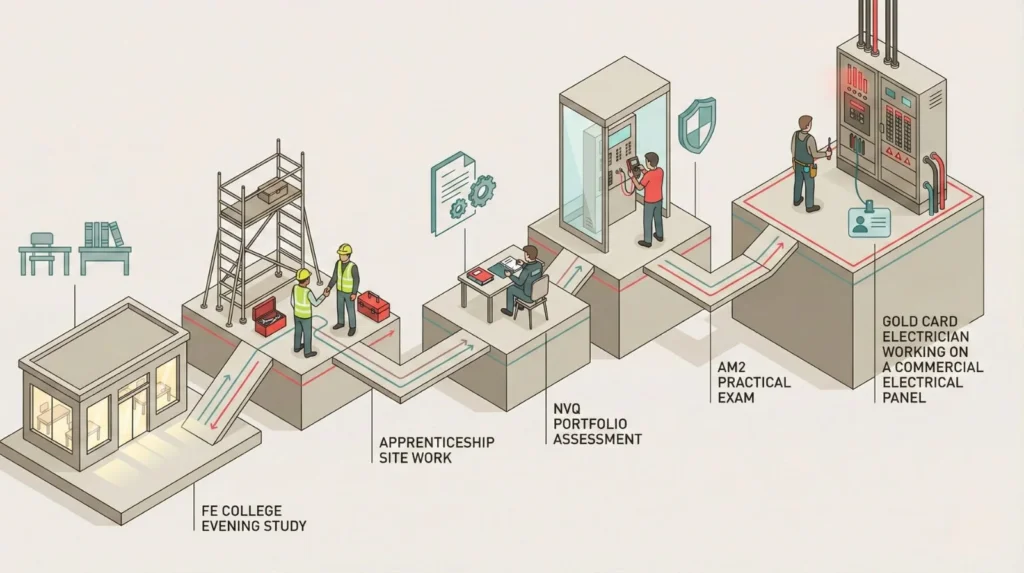
Training costs should be compared alongside course duration, access to suitable workplace evidence and the time required to complete the NVQ. Earnings vary considerably by region, experience, employment type, working hours and specialism, so no training route can guarantee a particular salary or payback period.
This article breaks down what routes actually cost when you account for wages, timelines, and real employment outcomes. We’ll look at apprenticeships, FE college diplomas, fast-track programmes, and experienced worker routes, then compare total economic impact rather than just sticker prices.
What “Becoming an Electrician” Actually Means (The Formal Standard)
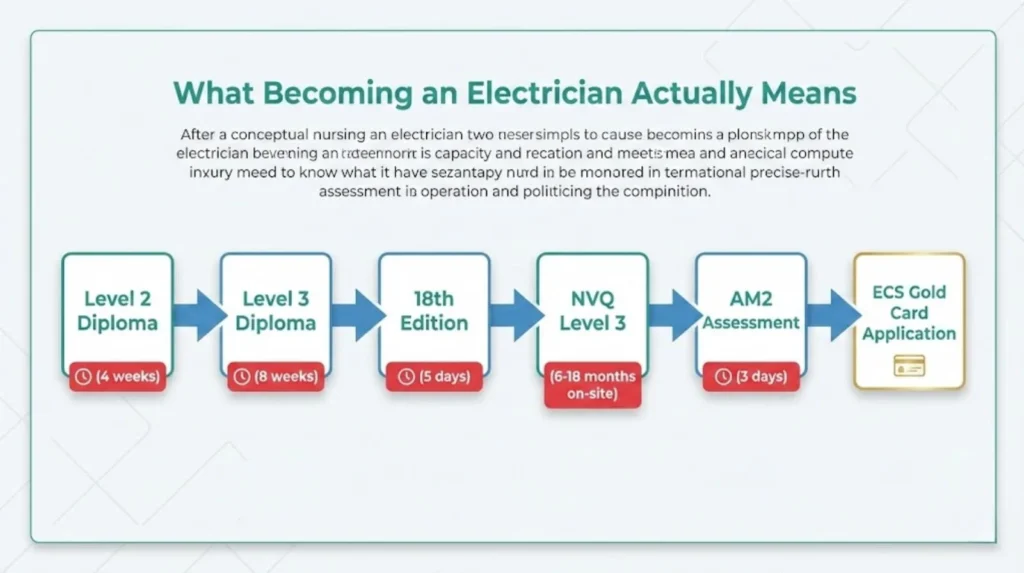
First, let’s clarify what counts as qualified. The ECS Gold Card is one of the main industry-recognised ways to demonstrate Level 3 occupational competence as an electrician. Eligibility normally requires a recognised Level 3 competence qualification, the NET assessment relevant to the chosen route and the current ECS requirements. That requires four components working together:
NVQ Level 3 Diploma in Installing Electrotechnical Systems and Equipment (A recognised Level 3 occupational competence qualification, such as the City & Guilds 2357 NVQ route, an approved EAL equivalent or the qualification completed through an eligible apprenticeship route). This is performance-based evidence collected on real sites under assessor supervision. It proves competence, not just knowledge.
Learners must pass the independent NET assessment relevant to their route: AM2 for the standard NVQ route, AM2S for the current apprenticeship-standard route and AM2E for the Experienced Worker Assessment route. The relevant NET assessment forms part of the competence requirements for completing the applicable route and progressing towards ECS card eligibility. The assessment is completed independently at a NET-approved assessment centre, and current fees should be confirmed directly with the chosen assessment centre.
18th Edition Wiring Regulations – City & Guilds 2382-26. The course covers the current requirements of BS 7671 and the amendments included within the current qualification. Essential for legal compliance and updated every few years as amendments release.
ECS Gold Card (Installation Electrician or Maintenance Electrician). Issued by the Electrotechnical Certification Scheme, part of the JIB framework. This card verifies your competence and grants site access.
Level 2 or Level 3 diplomas (2365 courses) alone don’t qualify you. They cover theory and workshop practice but lack the on-site evidence and end-point assessment required by employers and scheme providers like NICEIC, NAPIT, and ECA. Diploma holders work as “mates” or “improvers” on reduced wages until they complete NVQ and AM2 requirements.
What "On a Budget" Really Means (Based on Real UK Costs)
Budget means different things depending on your cash flow situation. Let’s define two realistic thresholds based on what low-income learners actually face:
Severe budget: Under £1,000 available upfront. This covers initial enrollment, basic tools and PPE, or travel costs without needing loans or depleting savings entirely.
Moderate budget: Under £3,000 total out-of-pocket over the training journey. This includes all direct payments for courses, assessments, tools, and transport, but excludes loans that you’ll repay from future earnings or items your employer reimburses.
The Apprenticeship Route
Apprentices normally do not pay the training fee themselves, although arrangements for tools, PPE, travel and other expenses vary by employer. Applicants should confirm exactly what the employer and training provider will cover before accepting a place.
Apprenticeships also depend on availability. Larger contractors and house builders run structured programmes, but availability is limited and competitive. Smaller firms may not have the administrative capacity to manage apprenticeship frameworks. If you’re in a rural area or a region with fewer electrical employers, securing an apprenticeship placement becomes the main barrier, not the cost.
FE College Diplomas + Self-Sourced NVQ (The Adult "Budget Hack")
This is the route most budget-conscious adults pursue: study Level 2 and Level 3 diplomas part-time at a local FE college whilst keeping your current job, then transition to electrical employment to complete your NVQ portfolio.
The cost breakdown:
After completing Level 2 and Level 3, learners normally need access to suitable electrical work to build the workplace evidence required for their NVQ. Whether an employer supports this process varies, so learners should establish how their workplace evidence and assessments will be arranged before choosing a training route.
Thomas Jevons, Head of Training:
“One of the main challenges learners need to consider is access to suitable electrical work for their NVQ. Completing classroom qualifications is only part of the route. Learners also need opportunities to carry out the required range of work and collect valid workplace evidence.”
Thomas Jevons, Head of Training
Fast-Track Programmes With Integrated Placement Support (Why Speed Matters)
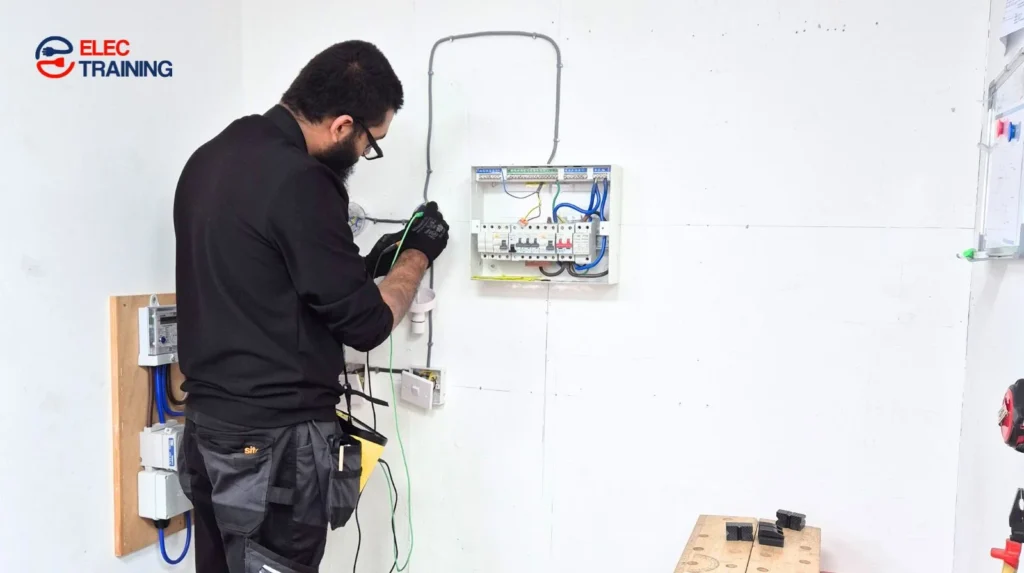
Private fast-track training usually involves a higher upfront training cost than funded college or apprenticeship routes. The main advantage is that the classroom stages can be completed more intensively, although completing the full occupational competence route still depends on access to suitable workplace evidence and the relevant independent assessment.
Elec Training’s NVQ Level 3 course costs £2,249 including VAT. On-site assessments cost £250 each. The independent AM2 assessment is not included and must be booked and paid for separately. On-site assessments cost £250 each. The independent AM2 assessment is not included and must be booked and paid for separately.
Private routes can shorten the classroom stage, but NVQ completion time depends on the learner’s access to suitable work, the range of tasks performed, assessor availability and the speed at which valid workplace evidence is collected.
Joshua Jarvis, Placement Manager:
“When comparing training routes, learners should look beyond the classroom course itself. The important question is how they will gain suitable electrical work and collect the workplace evidence required to complete their NVQ.”
Joshua Jarvis, Placement Manager
The Experienced Worker Assessment (Cheapest Upgrade for Those Already Working)
If you’ve been working as an electrical mate or improver for 3-5+ years without formal qualifications, the Experienced Worker Assessment (EWA) route offers the fastest and cheapest path to Gold Card status.
The Experienced Worker Assessment route is designed for experienced electrical workers who already have substantial occupational experience but have not yet completed the qualification route required to demonstrate their competence. Eligibility and any additional training required depend on the individual’s existing experience and qualifications.
This is not designed as a career-change route for someone starting from scratch. Applicants must satisfy the eligibility requirements for the Experienced Worker Assessment route and be able to provide the required workplace evidence.
Funding Options That Genuinely Reduce Cash-Flow Pressure
Funding varies by UK nation, age, income, employment status, prior qualifications and training provider. Some apprenticeships and college courses may be fully or partly funded, while private training normally requires self-funding or finance. Applicants should check the latest GOV.UK guidance and the current rules published by their local college, funding authority or training provider before enrolling.
Minimum Tools, PPE & Equipment (What You Actually Need To Start)
Don’t buy a van or £1,000 test kit before you have a job. Most employers provide these for apprentices and improvers.
Employed improver/apprentice starter kit:
VDE screwdrivers and pliers (CK, Knipex, or Wera): £60-£100
Side cutters (quality matters for safety): £25-£40
Basic voltage indicator (NOT a full multimeter yet): £40-£60
Work trousers and steel-toe boots: £60-£100
High-visibility vest and basic PPE: £30-£50
Total: £200-£250. This gets you hired and working safely under supervision.
Self-employed minimum (only needed if doing private work):
Public liability insurance: £65-£100 annually (legally mandatory)
Multifunction Tester (MFT): £400-£600 used (Megger 1553/1720 from eBay), £900+ new. Requires annual calibration (£45-£100)
Additional hand tools: £200-£300
Work vehicle: Used Euro 6-compliant van £4,000-£6,000 minimum
The self-employed route requires £5,000-£7,000 minimum when you include insurance, calibrated test equipment, vehicle, and compliance costs (CPS registration, ECS card). Marketing claims suggesting £2,000 total are ignoring legal and insurance requirements. You cannot legally certify work without calibrated test equipment and public liability insurance, regardless of your qualifications.
Choosing a Route Based on Your Circumstances
The most suitable route depends on your age, existing experience, employment situation, access to suitable electrical work and available budget.
School leavers and young adults
An apprenticeship can provide a route into the industry while combining employment with structured training. Availability depends on securing a suitable employer and apprenticeship place.
Adult career changers
Adults may choose college-based or private training depending on their budget and how intensively they want to complete the classroom stages. Whichever route is chosen, completing the occupational competence qualification still requires suitable workplace evidence.
Existing electrical mates and improvers
Experienced workers may be eligible for an Experienced Worker Assessment route rather than starting their training again. Eligibility depends on previous experience, qualifications and evidence of occupational competence.
Myth-Busting Common Budget Route Misconceptions
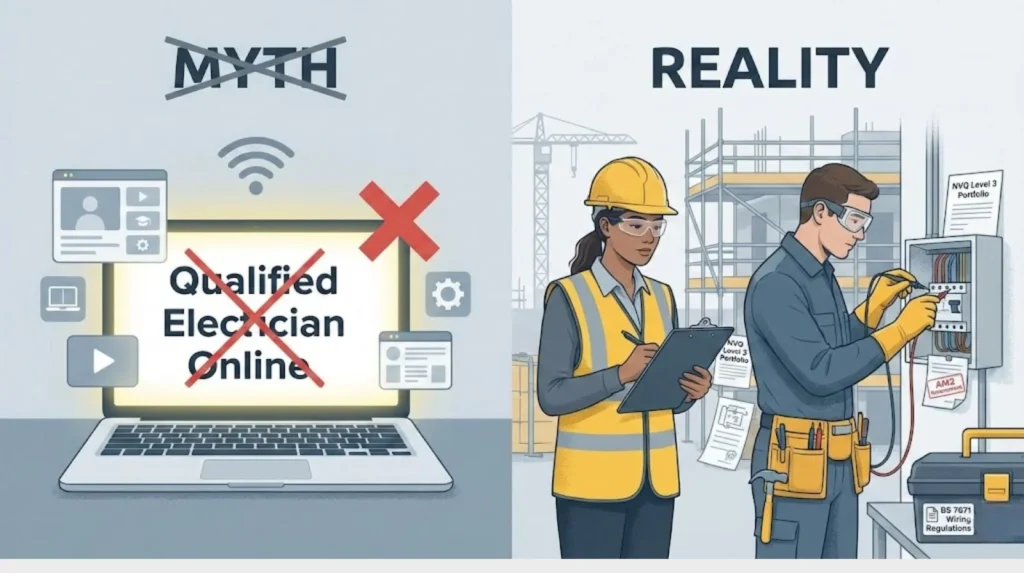
Myth 1: “You can become a qualified electrician online or through distance learning.”
Reality: Becoming occupationally competent as an electrician requires practical workplace experience and assessment. Online learning can support theoretical knowledge, but it cannot replace the workplace evidence and practical competence assessment required for the relevant qualification route.
Myth 2: “A £2,000-£3,000 short course makes you a fully qualified electrician.”
Reality: Short classroom courses may provide useful electrical knowledge and practical training, but classroom diplomas alone do not demonstrate full occupational competence. Learners following a route towards ECS Gold Card eligibility will also need to satisfy the workplace competence and independent assessment requirements applicable to their route.
Myth 3: “You need a van, £1,000 of tools, and test equipment before you can start training.”
Reality: Only required for self-employed work, not employment. Apprentices and improvers use company vehicles and employer-supplied test equipment. Your personal starter kit costs £200-£250. Buying a van and Megger MFT before you have electrical employment is premature and financially inefficient. Build your personal equipment gradually as your income increases and your career direction clarifies.
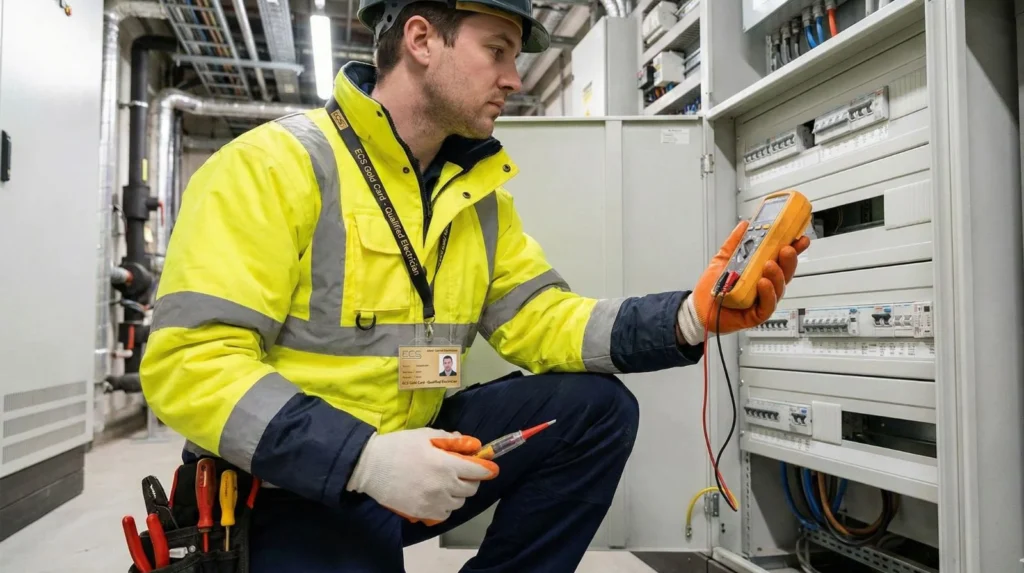
Yes, it is possible to work towards becoming an electrician while keeping training costs under control, but the cheapest classroom course is not automatically the most suitable route.
Apprenticeships can reduce the direct cost of training but depend on securing an employer. College routes may provide access to funded training for eligible learners but still require suitable workplace experience to complete the occupational competence stage. Private training can allow the classroom stages to be completed more intensively, but learners still need suitable workplace evidence and the relevant independent assessment.
Before enrolling, compare the complete route rather than just the initial course fee. Check which qualifications are included, how workplace evidence will be obtained, which independent assessments are required and what additional costs may arise.
For detailed breakdowns of each qualification route, realistic timelines, and current costs, explore our comprehensive guide to pathway from training to qualified status options available across the UK. Every route works for someone; the question is which route works for your specific financial situation, career timeline, and regional employment opportunities.
Call us on 0330 822 5337 to discuss the different electrical training routes available and the costs involved. We can explain the qualifications required, how the NVQ workplace evidence process works and the support available through Elec Training.
References
- Joint Industry Board (JIB) – Apprentice wage rates 2025: https://www.jib.org.uk
- NET Services – AM2/AM2E Assessment fees 2025/26: https://www.netservices.org.uk
- Electrotechnical Certification Scheme (ECS) – Card requirements: https://www.ecscard.org.uk
- Institution of Engineering and Technology (IET) – BS 7671 wiring regulations: https://electrical.theiet.org
- City & Guilds – 2357 NVQ Level 3 specification: https://www.cityandguilds.com
Note on Accuracy and Updates
Last reviewed: 12 August 2026. This page is maintained to reflect current JIB wage agreements, government funding eligibility, and qualification requirements. We correct errors and refresh sources as standards change. Regional wage data reflects 2025-2026 market conditions and may vary by location and employer.
