

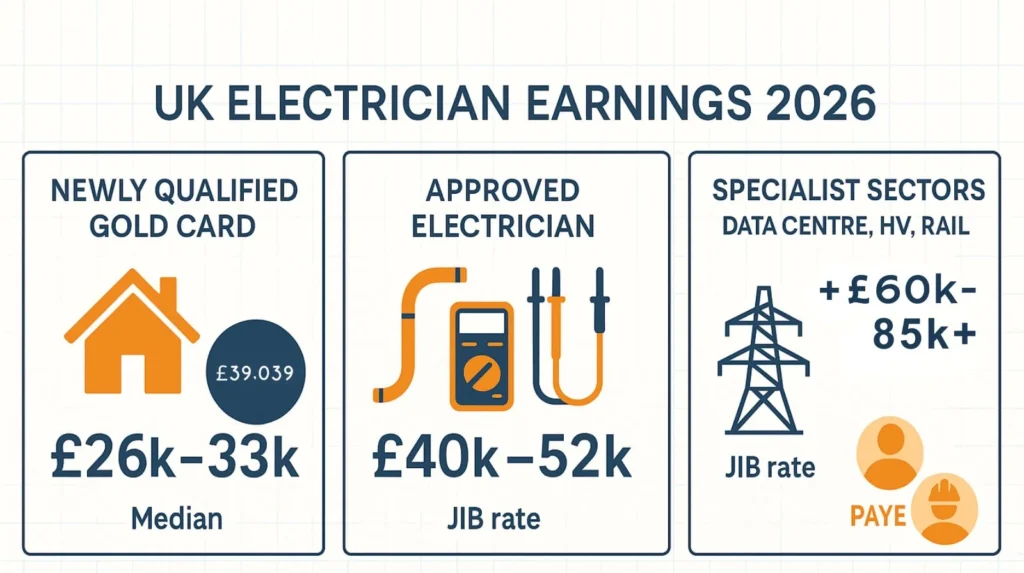
If you’re looking or searching for how much electricians make, then there is a likelihood you’re at the start of your career or doing the initial research before a career change.Not sure how to become an electrician? We got you covered with our 2026 guide. No experience beginner roles. Electrician’s
- Charanjit Mannu
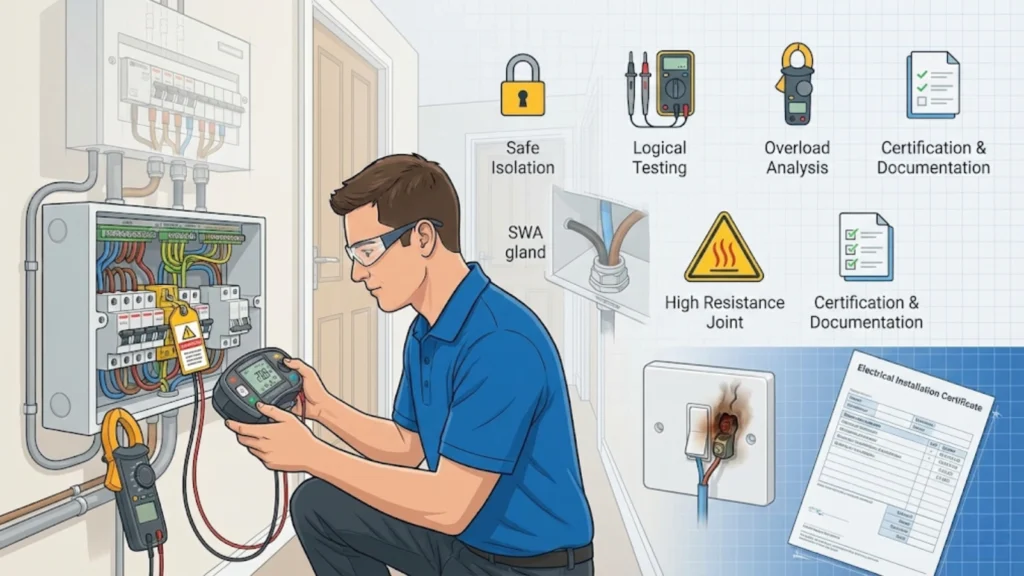
So, you've done your Level 2, Level 3 electrical installation, and 18th Edition. Congrats, honestly. But now you're looking at the 2357 NVQ and thinking, "Right, what's actually needed to get fully qualified?" Let me break this down for you. If you're one of the "I've got no experience and
- Charanjit Mannu
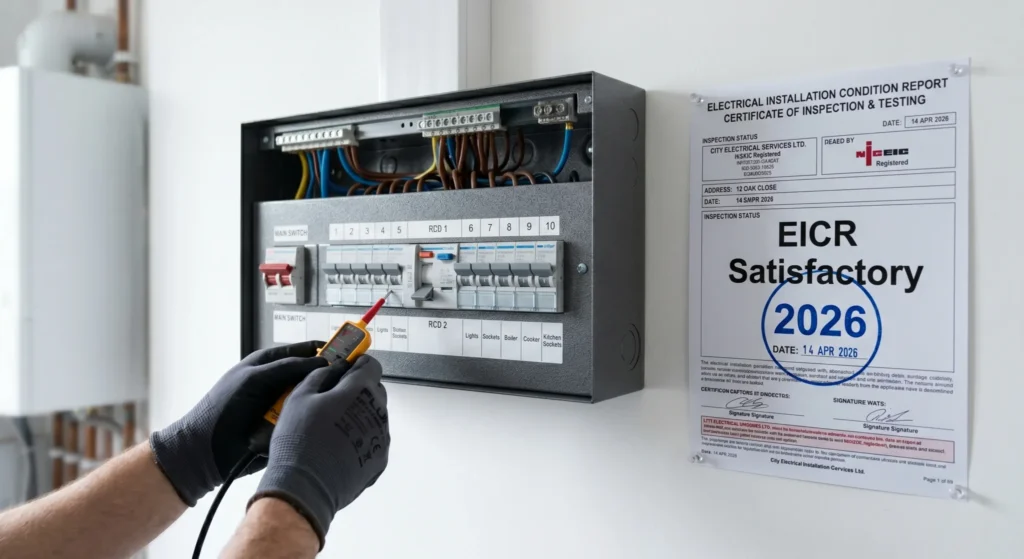
An EICR (Electrical Installation Condition Report) is the inspection certificate that proves your property's fixed electrical installation is safe, compliant with BS 7671, and fit for continued use. If you're a landlord in England, Wales, or Scotland, you legally need one every five years. If you're selling a house, buyers
- Charanjit Mannu

Start your journey toward becoming a qualified electrician in the UK with this complete beginner-friendly guide. Learn about apprenticeship routes, fast-track diploma options, required skills, training costs, electrician salaries, and career progression opportunities. Whether you're a school leaver or a career changer, this guide explains the different pathways to becoming
- Charanjit Mannu

There is a version of CPD that exists purely as a compliance exercise. You log 30 hours, you tick the box, you move on. Most people in the electrical sector have encountered it. Most have also encountered the reality that it does not tell you much about whether someone is
- Charanjit Mannu
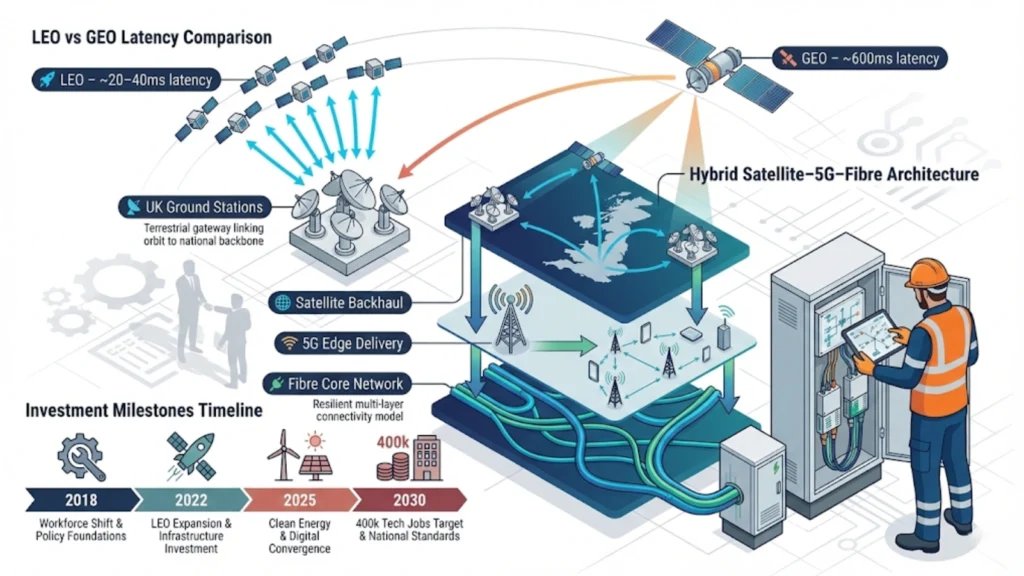
England's electrical installation workforce has contracted by 26.2% since December 2018. That's not a statistic buried in a footnote somewhere. That's 214,200 practitioners down to 158,000 in six years, while the demand side of the equation has moved in exactly the opposite direction. Clean energy targets, housing programmes, and infrastructure
- Charanjit Mannu
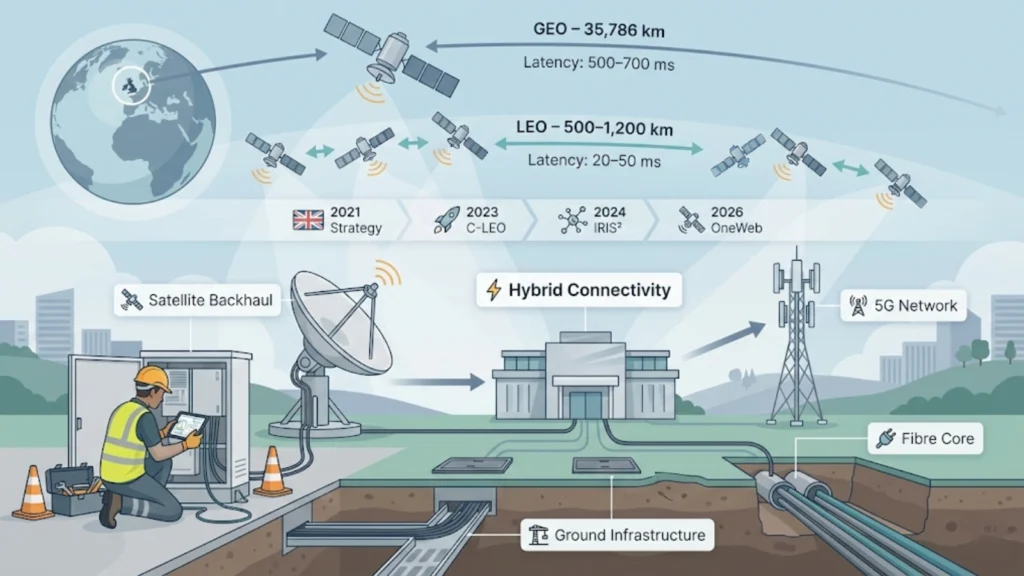
Most conversations about satellite communications start with the sky. The launches, the constellations, the billionaires with rockets. That makes sense for a headline, but if you want to understand where the actual engineering work is happening, and where the skills shortage is biting hardest, you need to look closer to
- Charanjit Mannu
- News
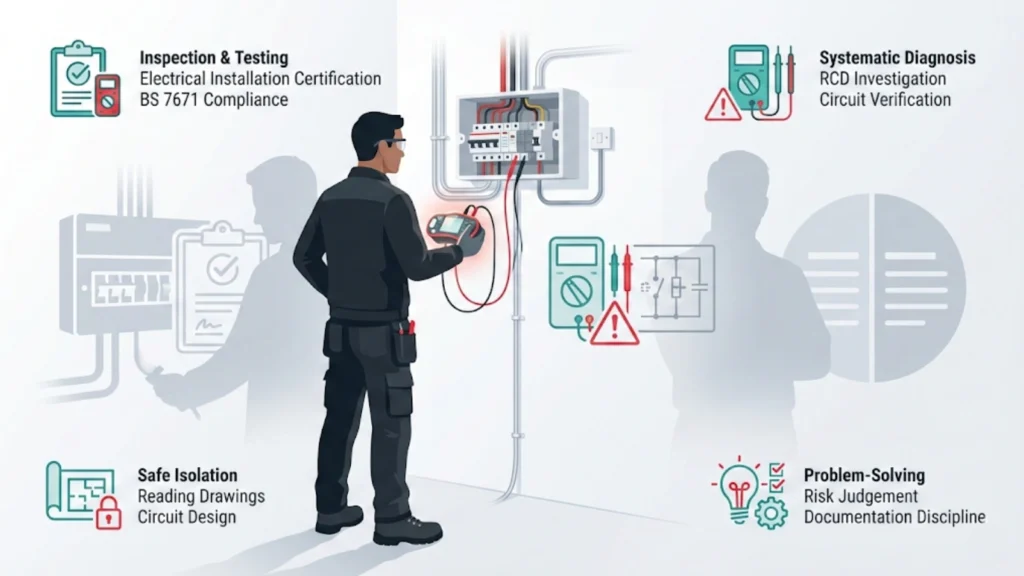
Ask most people what an electrician does and you'll get some version of "fixes wires" or "sorts out the lights." That's a bit like saying a surgeon "uses sharp things." Technically in the right postcode. Completely missing the point. Here is what electricians actually do: they take personal legal responsibility
- Charanjit Mannu
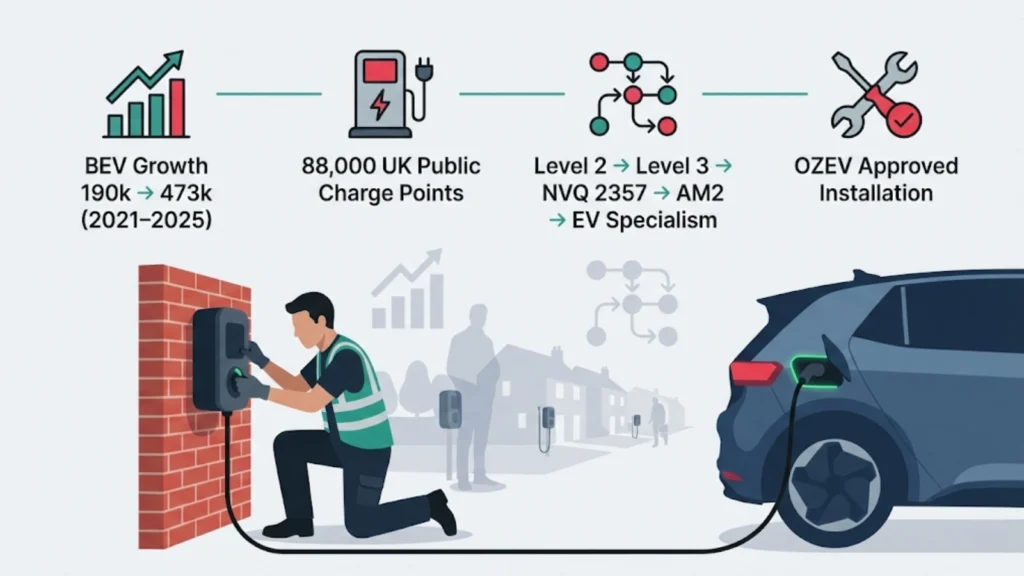
Do you remember September 2021? Queues at petrol stations stretching around the block. Drivers panic-buying. The phrase "fuel crisis" appearing on every news site, every hour, for about two weeks. Right in the middle of it, searches for electric vehicles shot up by an estimated 1,600%. People were asking a
- Charanjit Mannu
- News
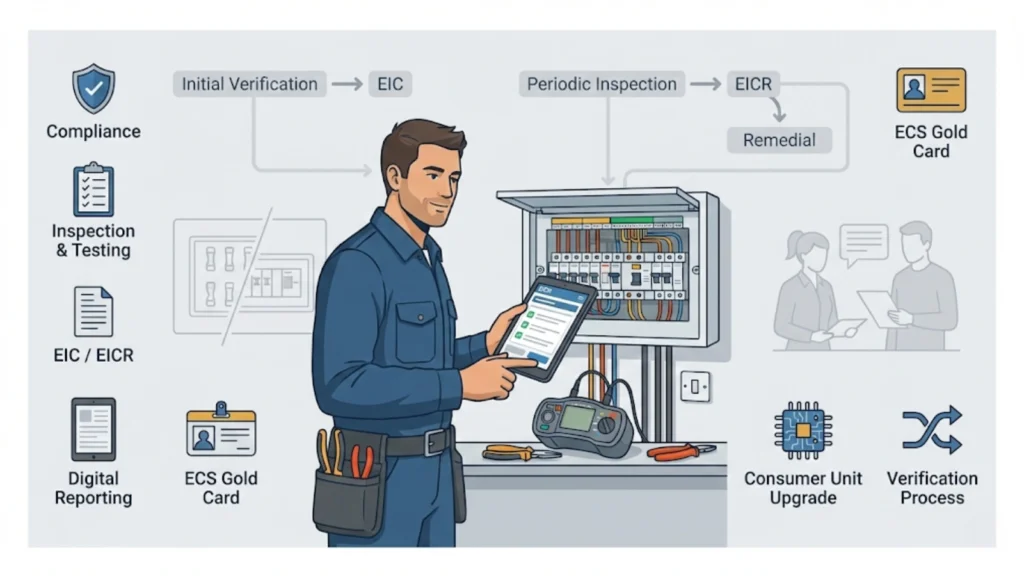
The Private Rented Sector regulations that came into force in 2020 transformed electrical inspection from a recommendation into a criminal law requirement. The 8.6 million homes in England's private rented sector (20% of housing stock) now require Electrical Installation Condition Reports every five years. From November 2025, social housing joined
- Charanjit Mannu
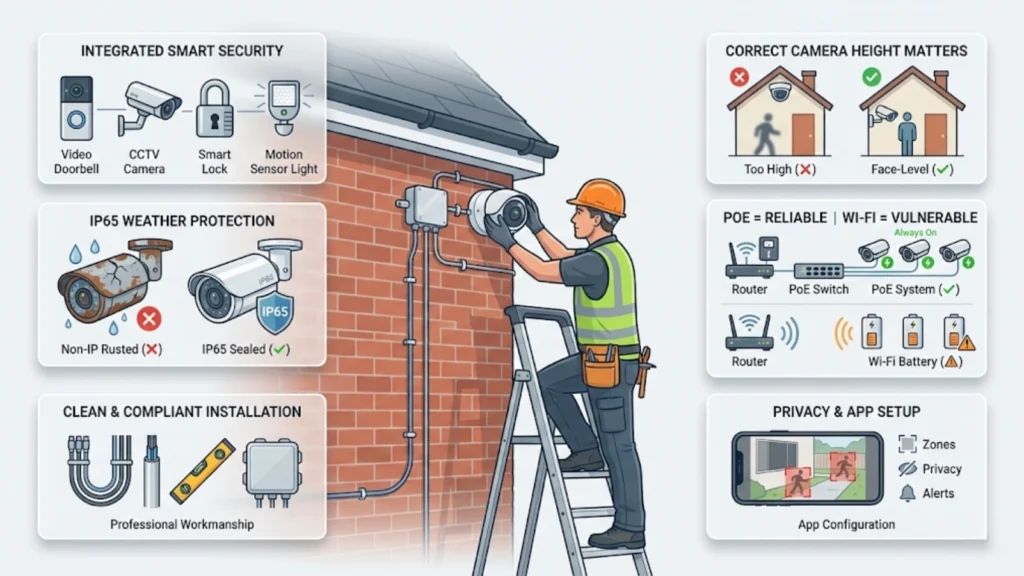
Domestic burglary in England and Wales fell 20% to around 342,000 incidents in the year ending September 2025, contributing to a long-term decline of over 70% since the early 2000s. Despite this downward trend, burglary remains a high-impact crime for the households it affects. Smart home device ownership has surged,
- Charanjit Mannu
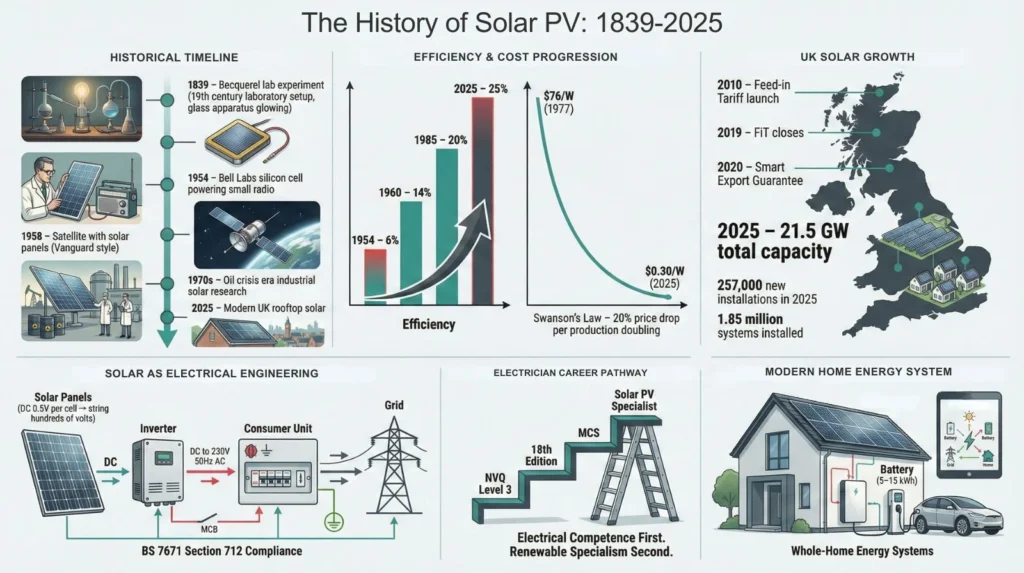
The photovoltaic effect was discovered in 1839, but it took over a century before Bell Labs created practical silicon cells in 1954. This history matters for electricians because it reminds us that solar PV is fundamentally electrical engineering applying established DC and AC principles, not mysterious new technology. The 2025
- Charanjit Mannu
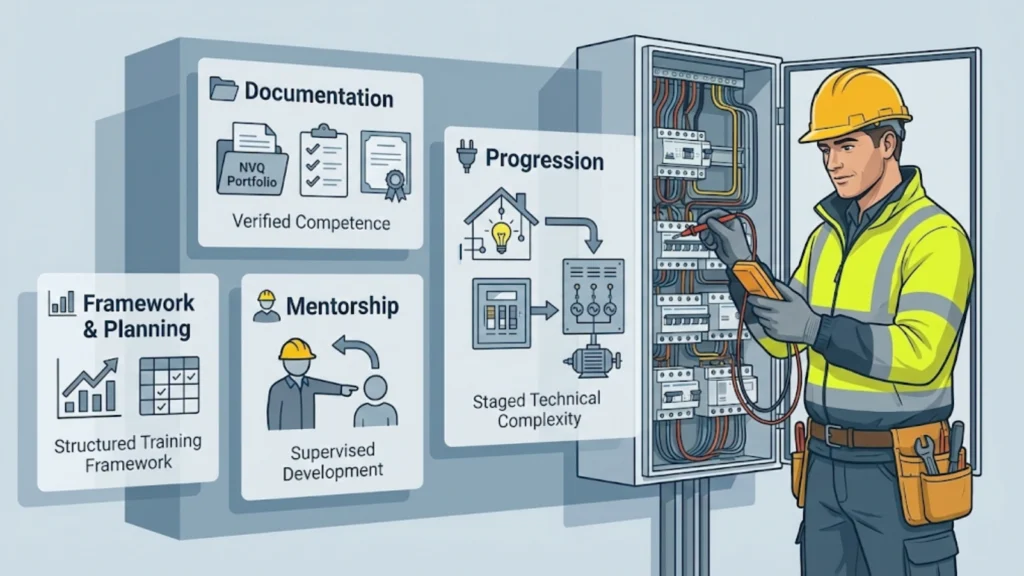
The UK rail industry faces a substantial workforce challenge. National Skills Academy for Rail (NSAR) data from 2025 shows the rail workforce stands at approximately 221,788 people, with an average age of 43.5 years. More significantly, 30% of workers are over 50, creating retirement forecasts predicting 68,000 to 70,000 exits
- Charanjit Mannu
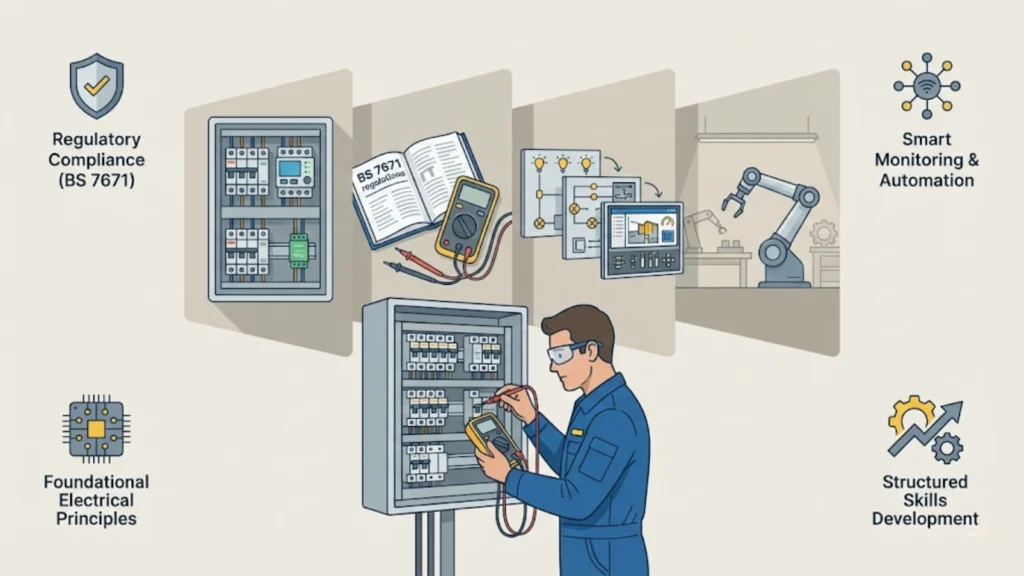
UK automation adoption sits at an interesting crossroads. ONS data from January 2026 shows industrial robot density has grown from 71 per 10,000 manufacturing employees in 2016 to 111 in 2022, though this remains below the global average of 151 and significantly trails Germany (397) and Japan (399). The government
- Charanjit Mannu
- News
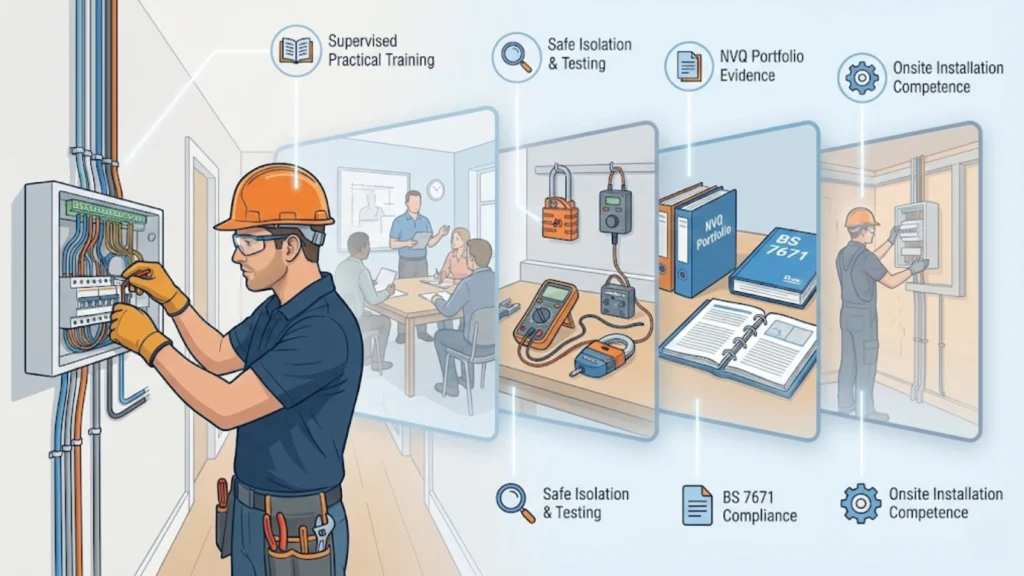
Engineering history offers unexpected lessons about how people actually learn technical skills. The New York City Subway, opened in 1904, demonstrates something surprisingly relevant to anyone considering electrical qualifications today. When engineers designed and built the early subway, they weren't just laying track. They were developing standards, managing conflicting constraints,
- Charanjit Mannu
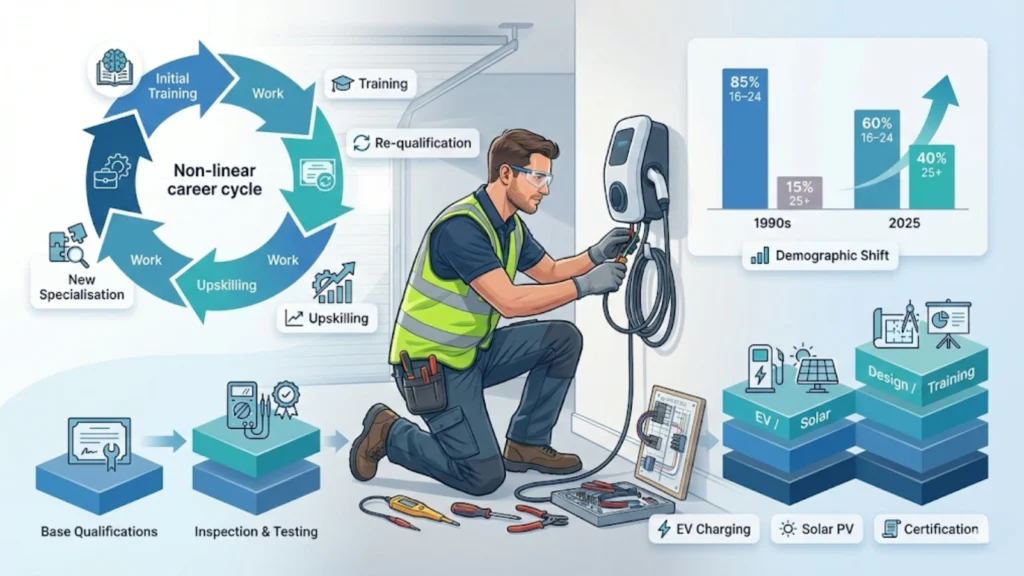
The UK vocational education system was built on an assumption that no longer holds: that you train once between ages 16 and 21, then work in that trade for 40 years using the same knowledge. This front-loaded, linear model defined technical workforce development from the 1960s through the early 2000s.
- Charanjit Mannu
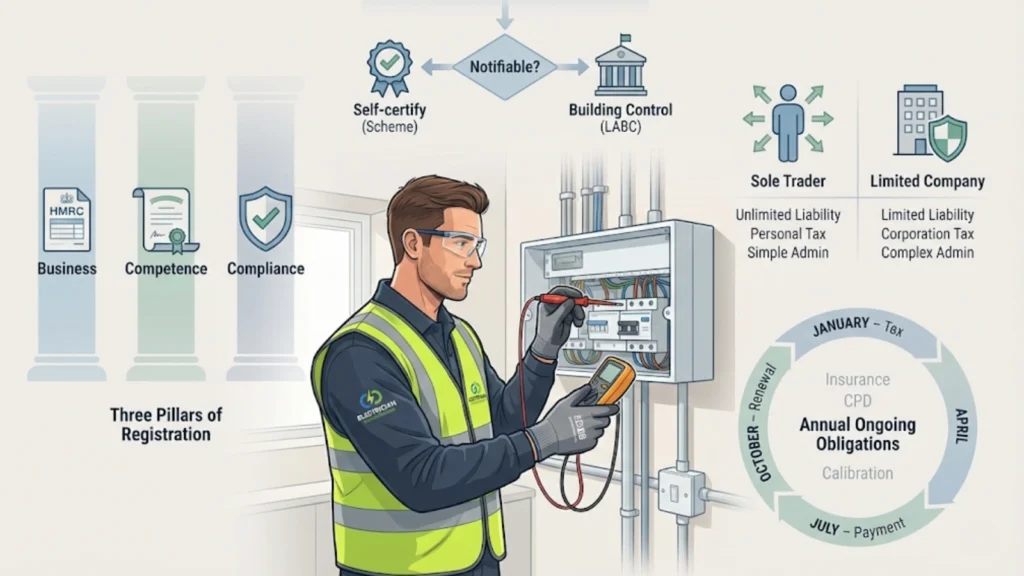
"How do I register as an electrician?" gets asked thousands of times monthly by newly qualified electricians, career changers completing training, and employed sparks going self-employed. The frustrating answer is: there's no single registration process in the UK.
- Charanjit Mannu
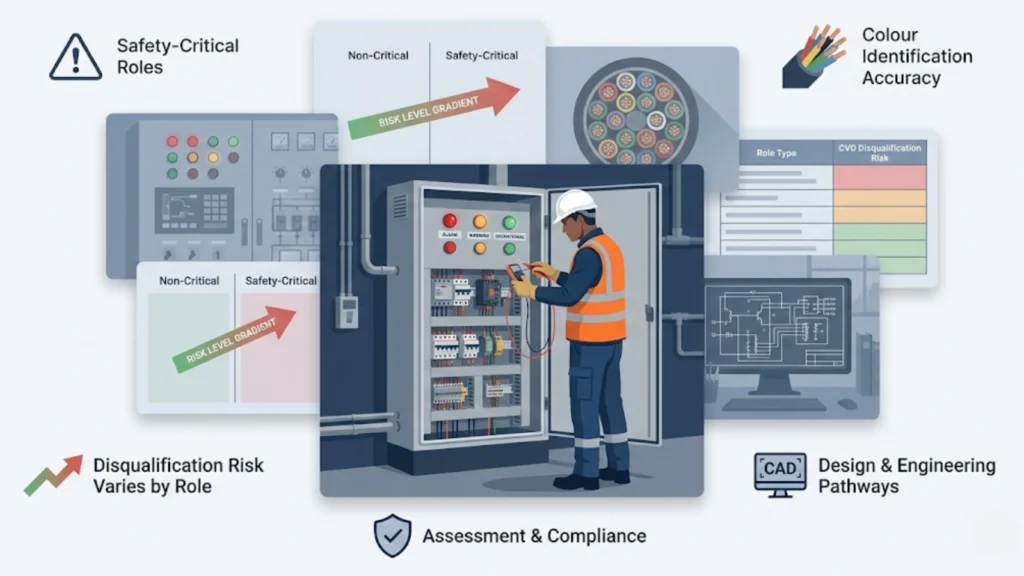
If you're targeting electrical roles in Indian shipyards like Cochin Shipyard Limited, Mazagon Dock, or Garden Reach Shipbuilders, or heavy industry positions at BHEL, NTPC, or Larsen & Toubro, you need to understand something critical: colour vision standards in these sectors are significantly stricter than domestic electrical work. This isn't
- Charanjit Mannu
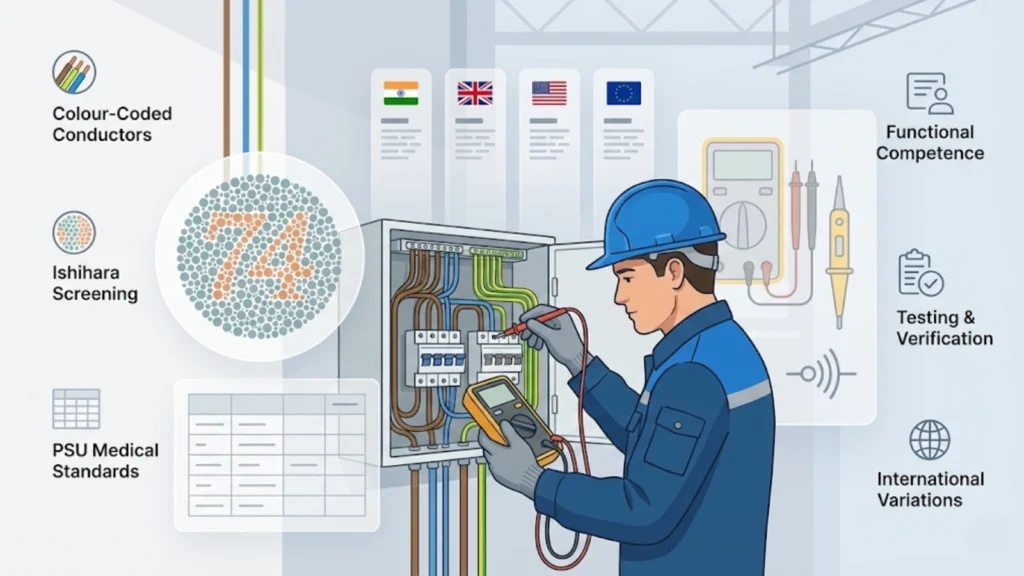
If you're applying for electrical trainee or executive trainee positions at Indian PSUs or shipyards, you've probably seen "Normal Colour Vision Required" buried in the medical standards section of recruitment notifications. That single line can end months of preparation if you have colour vision deficiency (CVD), commonly called colour blindness.
- Charanjit Mannu
- News
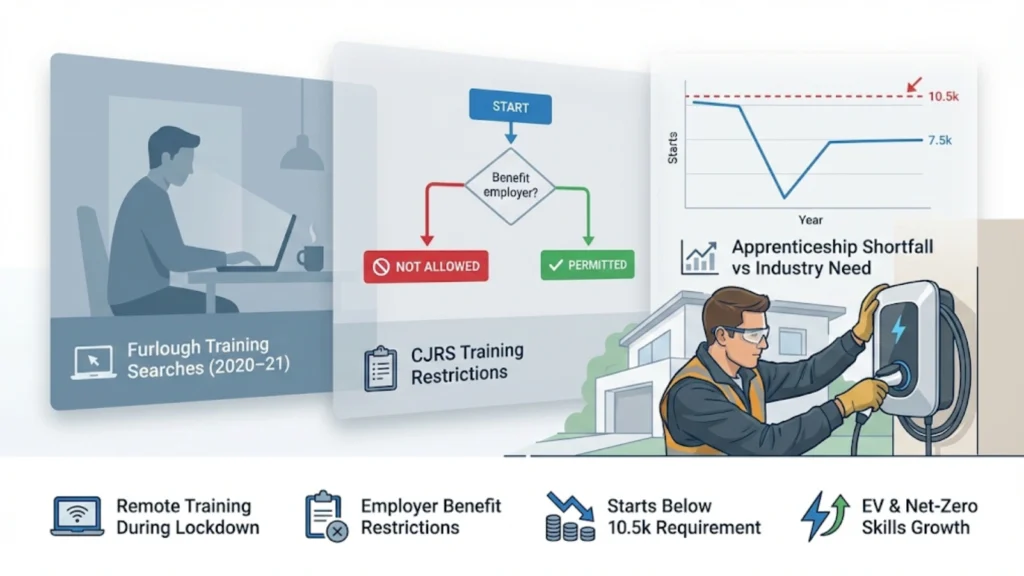
Between April 2020 and September 2021, "Can you train while furloughed?" became one of the UK's most-searched employment questions. Google Trends data shows the query spiked to 200-300% above baseline during the first lockdown in April 2020, with 8.9 million workers furloughed and suddenly facing enforced downtime, job insecurity, and
- Charanjit Mannu

Professional electrical quoting represents one of the most challenging business skills electricians develop, yet it receives minimal attention during training. Most electricians learn NVQ competencies, BS 7671 regulations, and testing procedures but enter self-employment unprepared for the complexity of translating technical work into formal written quotes managing both customer expectations
- Charanjit Mannu

"Is being an electrician a good career?" generates hundreds of monthly UK searches from school leavers, career changers, and people weighing university against vocational training. The question deserves more nuanced answer than simple yes or no. Electrical work offers genuine advantages - consistent demand, tangible problem-solving, progression routes, and autonomy
- Charanjit Mannu

Buying Christmas gifts for electricians feels deceptively straightforward until you realize their work involves highly specialized equipment, strong brand loyalties, and physical demands most people don't see. The worst gift is the £25 novelty voltage tester gathering dust because it lacks proper safety certifications. The best gift is the £20
- Charanjit Mannu
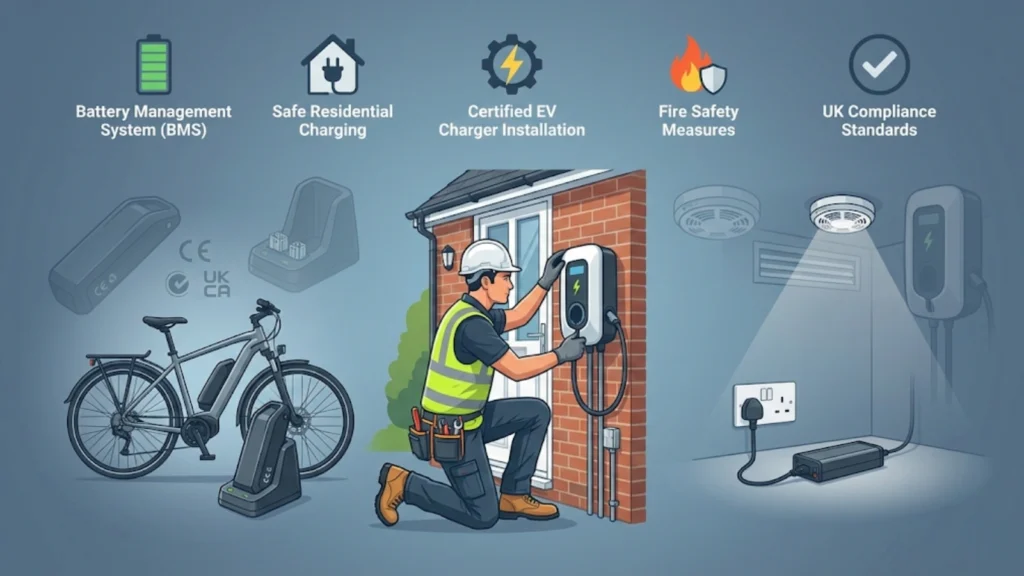
E-bike and e-scooter fire incidents generate alarming headlines, creating impression these devices are universally dangerous time bombs in UK homes. The reality is more nuanced: while legitimate fire risks exist, they're primarily concentrated in specific product categories rather than representing universal hazard across all electric mobility devices. UK fire services
- Charanjit Mannu
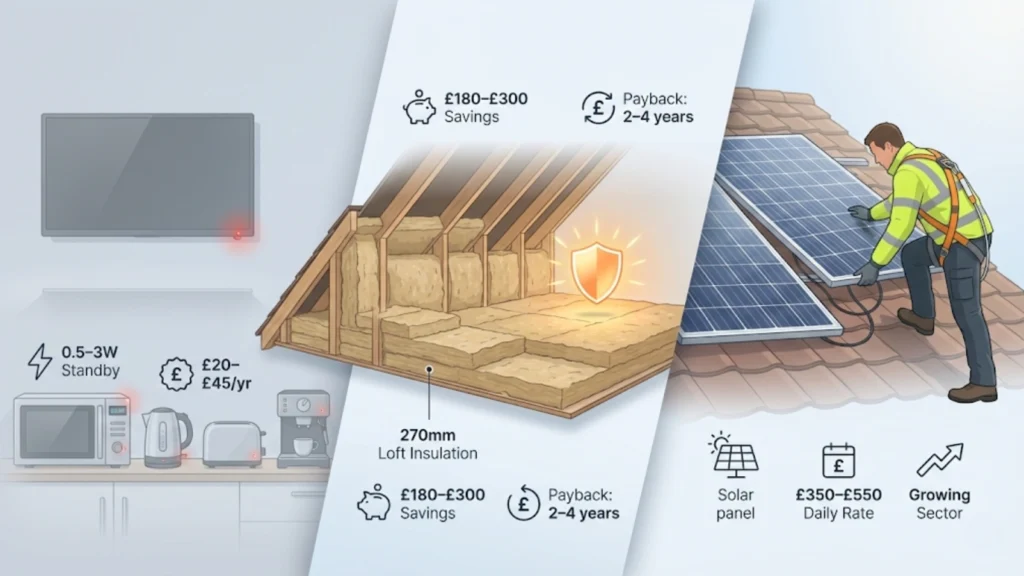
UK households seeking ways to reduce energy bills face overwhelming and often contradictory advice. Social media amplifies viral "energy-saving hacks," forum discussions debate whether leaving lights on uses more or less electricity than switching them frequently, and relatives share tips passed down from decades-old energy crises that no longer apply
- Charanjit Mannu
- News

The average UK tradesperson is currently chasing £6,121 in late payments, according to recent Federation of Small Businesses (FSB) research. For electricians specifically, late payment problems represent one of the most significant but rarely discussed challenges in the trade, affecting everything from daily cash flow to long-term business viability. This
- Charanjit Mannu

UK electrical training appears confusing in 2026, with multiple routes advertised, varying timeframes claimed, and terminology overlapping between different qualification types. Many learners assume this apparent complexity stems from recent changes to BS 7671 (the UK Wiring Regulations), particularly Amendment 4 published in January 2026. This assumption is wrong. BS
- Charanjit Mannu

In 2018, a typical UK domestic electrician charged £180-£250 per day for standard installations, testing, and repair work. By early 2025, that same work commands £300-£450 per day, representing a 50-80% increase over seven years. This isn't a simple inflation story. Between 2018 and 2025, the UK electrical trade experienced
- Charanjit Mannu
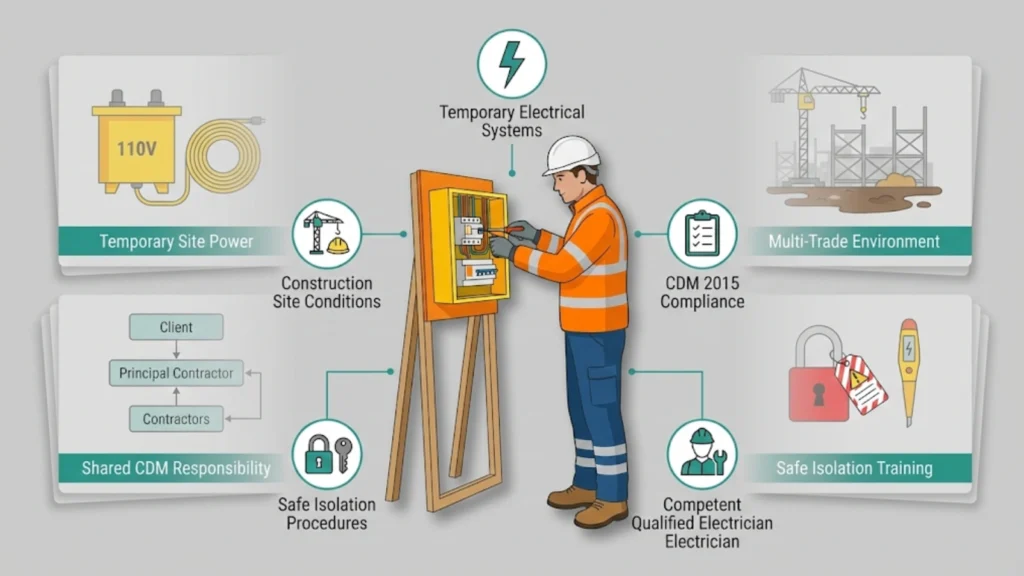
Construction sites kill people. That's not hyperbole, that's HSE data. In 2024/25, construction accounted for 35 fatal injuries in the UK, down from 51 the previous year, but still representing the highest fatality rate of any major industry sector. Electrical incidents contribute to nearly 10% of those fatal accidents. Electrocution
- Charanjit Mannu
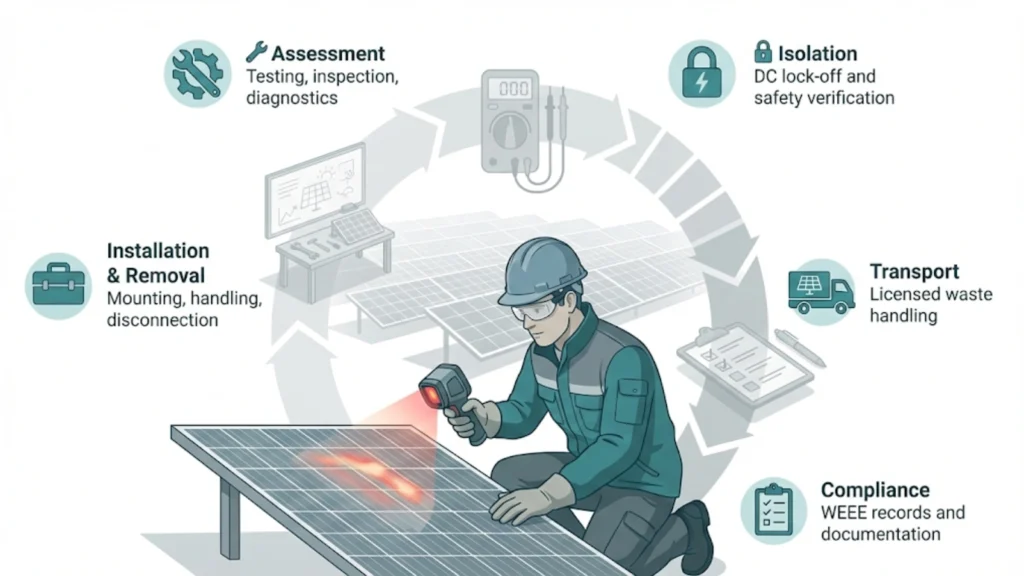
You've probably seen the headlines. "Solar panels will create a waste crisis." "Millions of toxic panels heading to landfill." "The dark side of green energy." Here's what those headlines don't tell you: the UK's solar waste "crisis" is almost entirely a future problem, not a current one. Most UK solar
- Charanjit Mannu
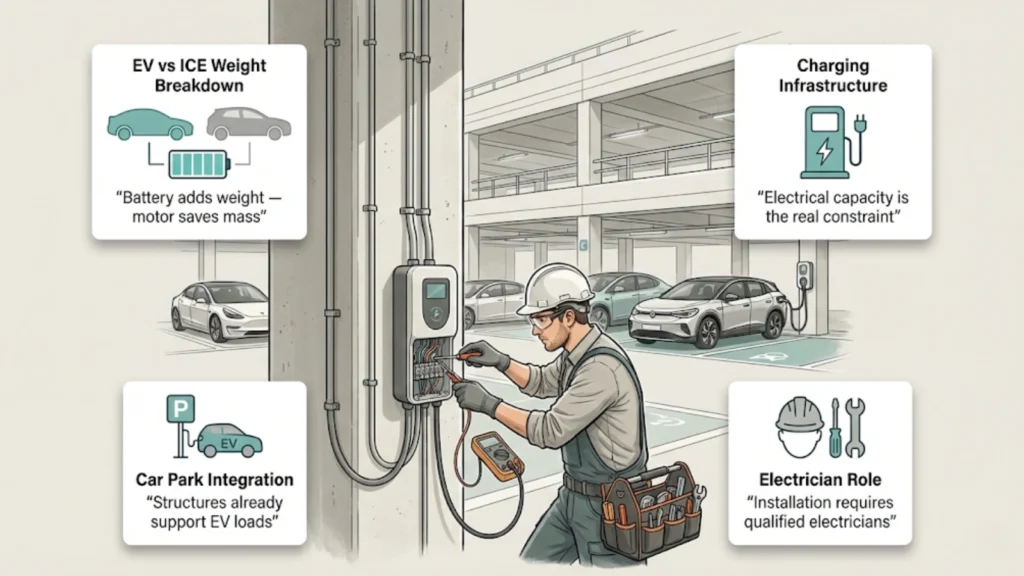
Electric vehicles are approximately 20-30% heavier than their petrol or diesel equivalents. A Tesla Model 3 weighs 1,847 kg / 4,072 lbs compared to a similar-sized BMW 3 Series at 1,540 kg / 3,395 lbs. A Ford F-150 Lightning electric pickup weighs 2,726 kg / 6,015 lbs while its petrol
- Charanjit Mannu
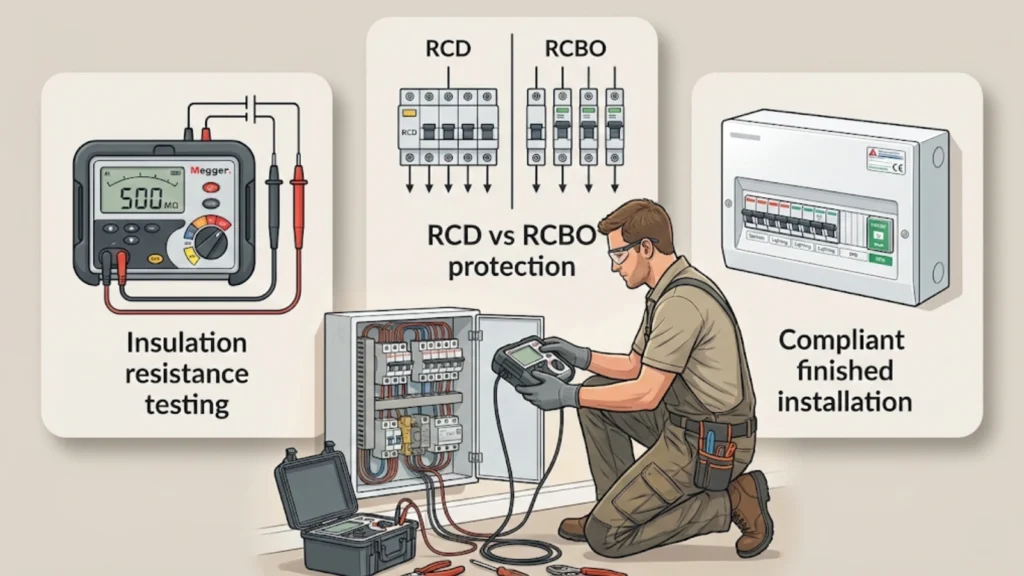
You've been told your consumer unit needs replacing. Maybe an electrician recommended it during an EICR. Maybe you're selling a house and the surveyor flagged your old plastic fuse box. Maybe you just know it's ancient and want peace of mind. Whatever the reason, here's what nobody tells you upfront:
- Charanjit Mannu

Electrical apprenticeships get marketed as the "proper" route into the trade, and in many ways, they are. But the gap between the marketing and the reality is substantial enough that roughly half of people who start one don't finish. That's not a criticism of apprenticeships themselves. It's an acknowledgment that
- Charanjit Mannu
- News
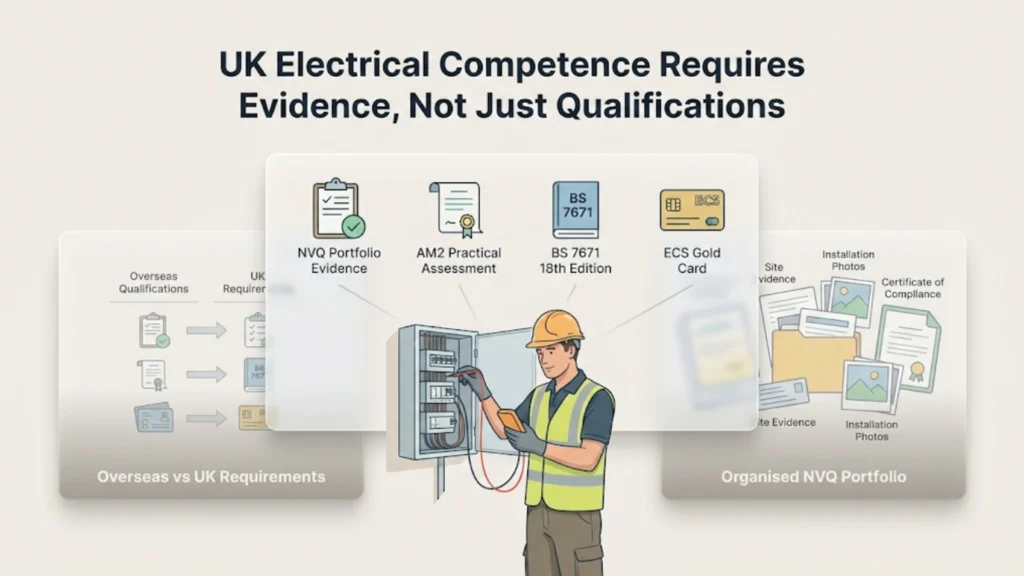
You're a qualified electrician with years of experience. You've wired commercial buildings, troubleshot complex faults, supervised apprentices. Then you move to the UK and discover your qualifications don't automatically translate into a Gold Card and site access. Frustrating? Absolutely. But the UK's recognition system isn't designed to dismiss overseas training.
- Charanjit Mannu
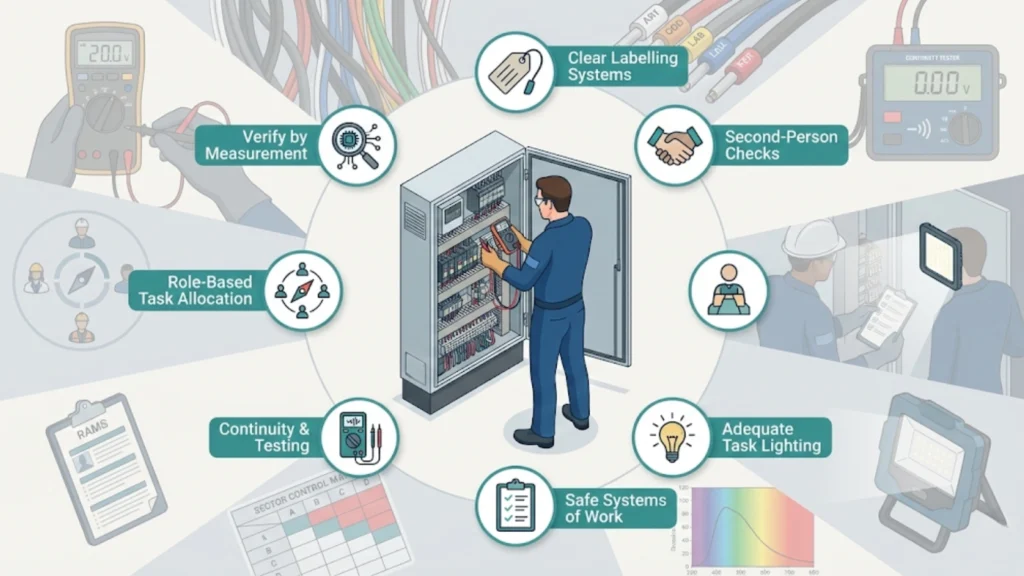
If you're researching how colour blind electricians actually do the work, you're asking the right question. Here's the thing: colour vision matters in electrical work, the industry doesn't pretend it doesn't. Conductors are colour-coded for a reason, phase identification relies on visual cues, indicator lights use red-green-amber systems. But here's
- Charanjit Mannu
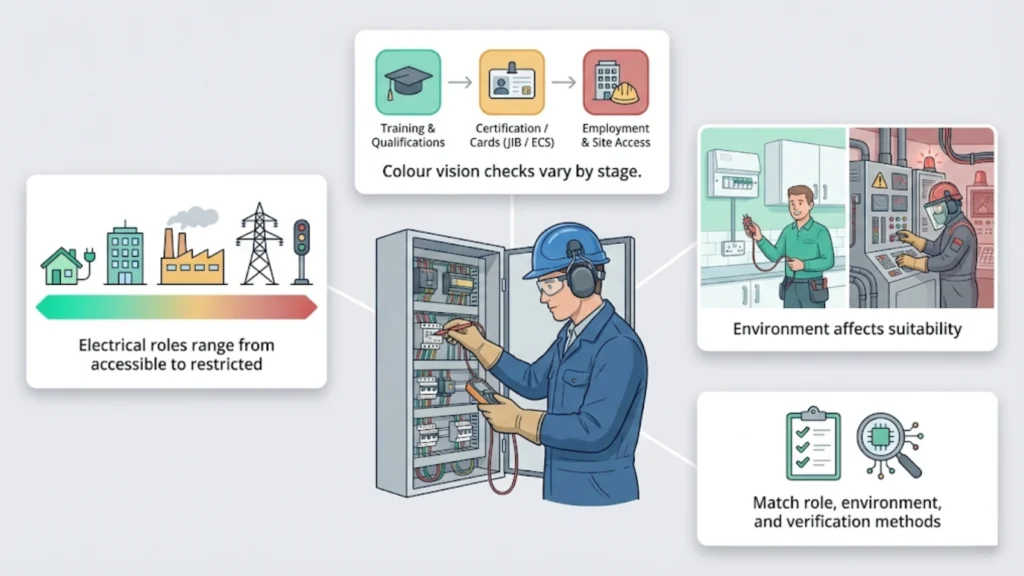
If you're colour blind and researching whether to pursue electrical work, you're probably encountering contradictory information. Some sources say it's impossible. Others claim colour vision doesn't matter at all. Forums are full of "I've been doing it for 20 years" stories alongside "I got rejected from training" warnings. Here's what's
- Charanjit Mannu
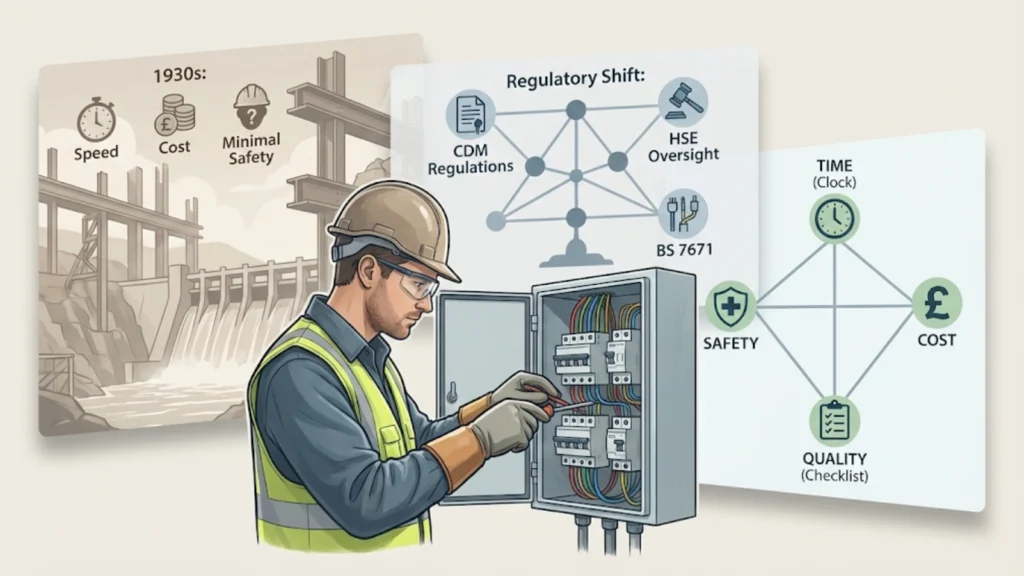
The Hoover Dam gets referenced constantly in project management circles, usually with the same tired narrative about "when projects were done properly" or "before regulations slowed everything down." Strip away the nostalgia, though, and you're left with something more useful: a 1930s megaproject that pioneered integrated delivery under extreme constraints,
- Charanjit Mannu
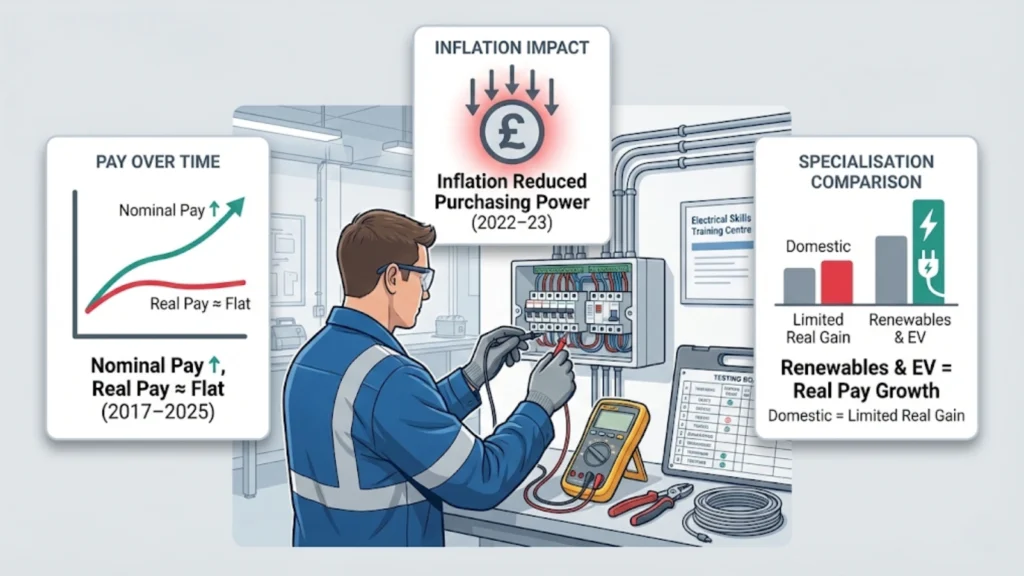
Back in 2019, electricians were headline news. Trade salary surveys showed a 5% pay jump in a single year, with electricians firmly "top of the league" among UK trades. The median went from £31,500 to £32,745, comfortably beating the 1.4% inflation rate and delivering actual purchasing power gains. That was
- Charanjit Mannu

You've probably seen the claims. Social media posts showing electricians driving new Mercedes vans, marketing ads promising six-figure incomes after a fast-track course, recruiters talking about £600 day rates like they're standard across the industry. Here's what you actually need to know: the £156k figure floating around social media isn't
- Charanjit Mannu
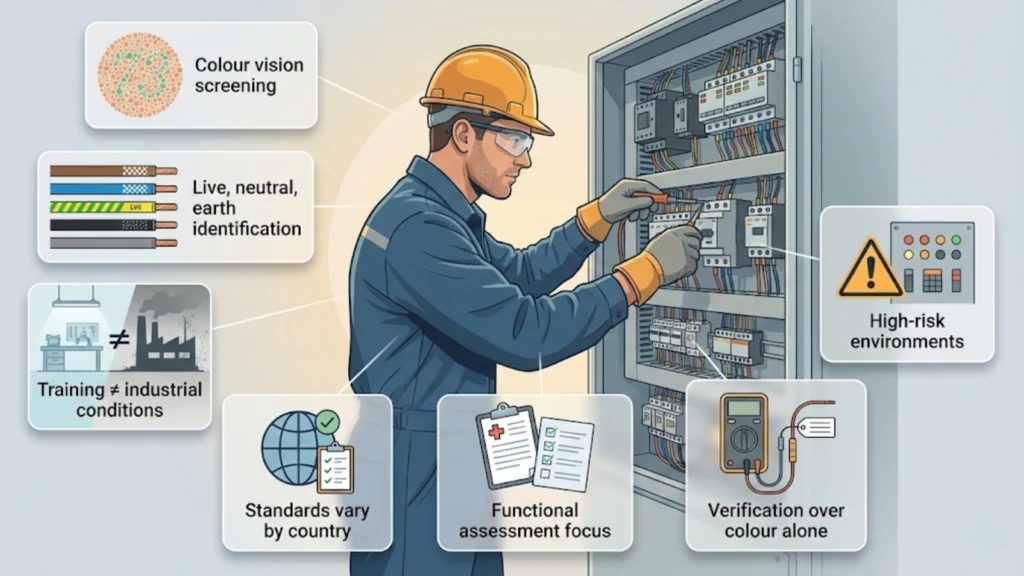
If you're researching whether colour vision deficiency will prevent you from working as an electrical trainee, particularly in heavy industry, shipyards, or rail, you're asking the right question at the right time. Here's the thing: colour blindness doesn't automatically disqualify you from electrical work, but it can lead to role-specific
- Charanjit Mannu
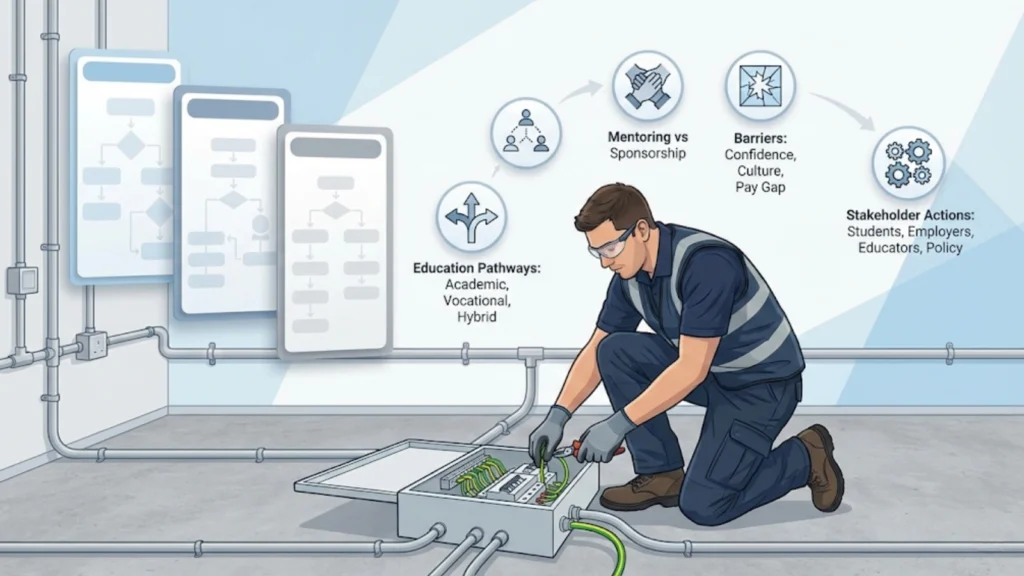
Awards ceremonies tend to highlight exceptional achievements—the top 1-3% of talent who've navigated their fields successfully. The 2025 Young Woman Engineer finalists represent exactly this: high-performing early-career engineers (typically 3-8 years post-qualification) working across space, aviation, civil engineering, and renewables.
- Charanjit Mannu
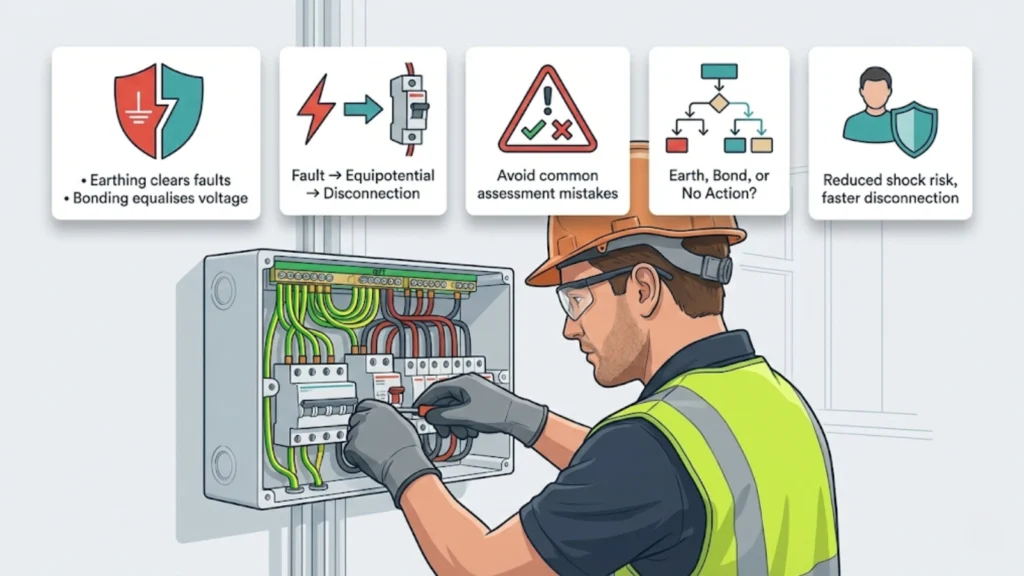
The terms "earthing" and "bonding" get used interchangeably by people who don't actually understand what either one does. On forums, in casual conversation, sometimes even by electricians who should know better, you'll hear "earth bonding" as if it's a single concept rather than two distinct protective measures with completely different
- Charanjit Mannu
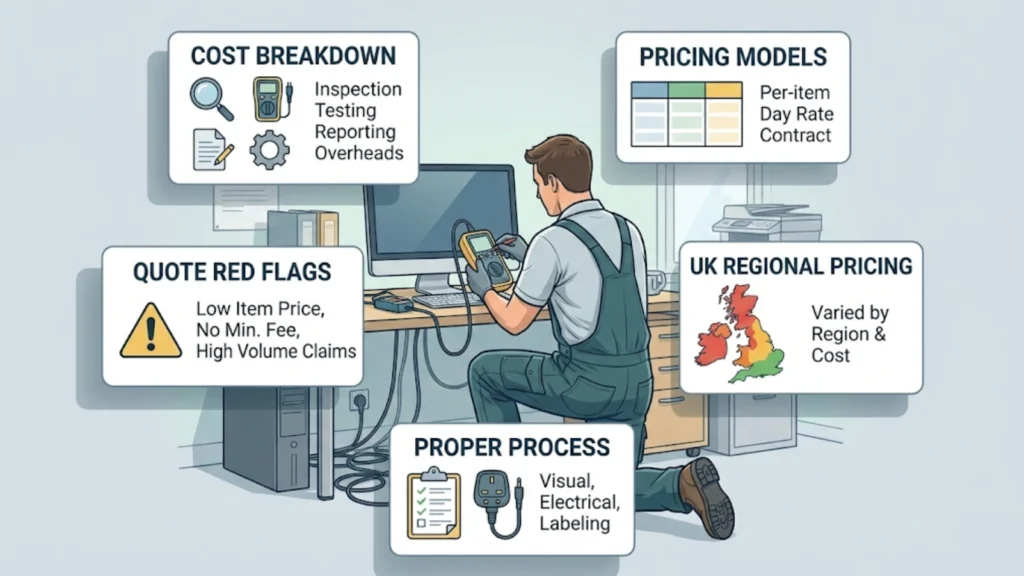
"How much should I charge for PAT testing?". This question appears constantly in electrician forums, procurement groups, and safety manager discussions. The answers range from £0.70 per item to £5.00+ per item, with some suggesting day rates of £200-£400 and others recommending minimum call-outs of £60-£100.
- Charanjit Mannu
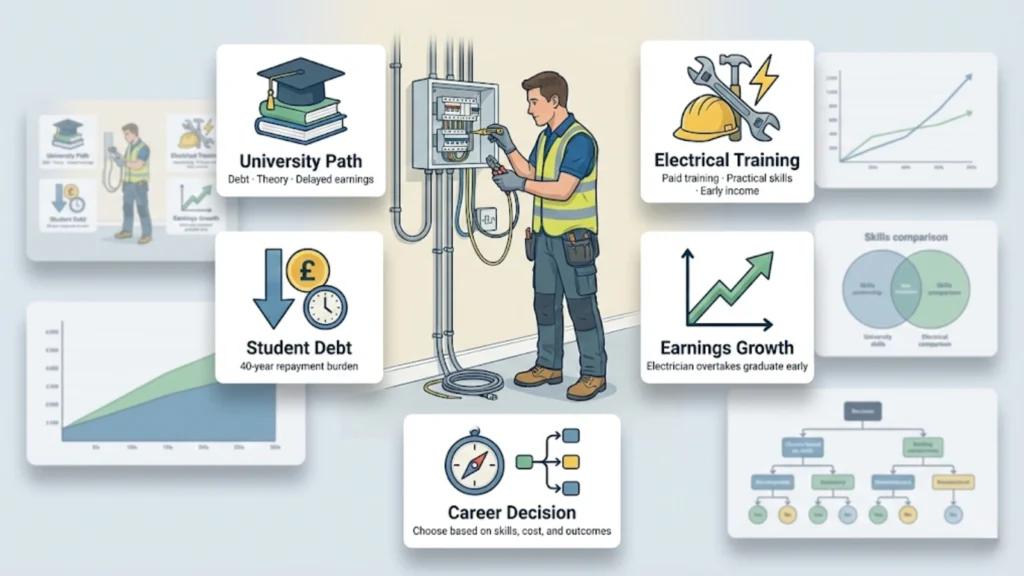
For decades, this has been the default narrative pushed on school leavers. University equals success, security, and higher earnings. Electrical training equals manual labor, limited prospects, and being stuck. Here's what the 2025 data actually shows: Graduates entering the workforce carry average debts of £45,000-£50,000 and face 6-9 month job
- Charanjit Mannu
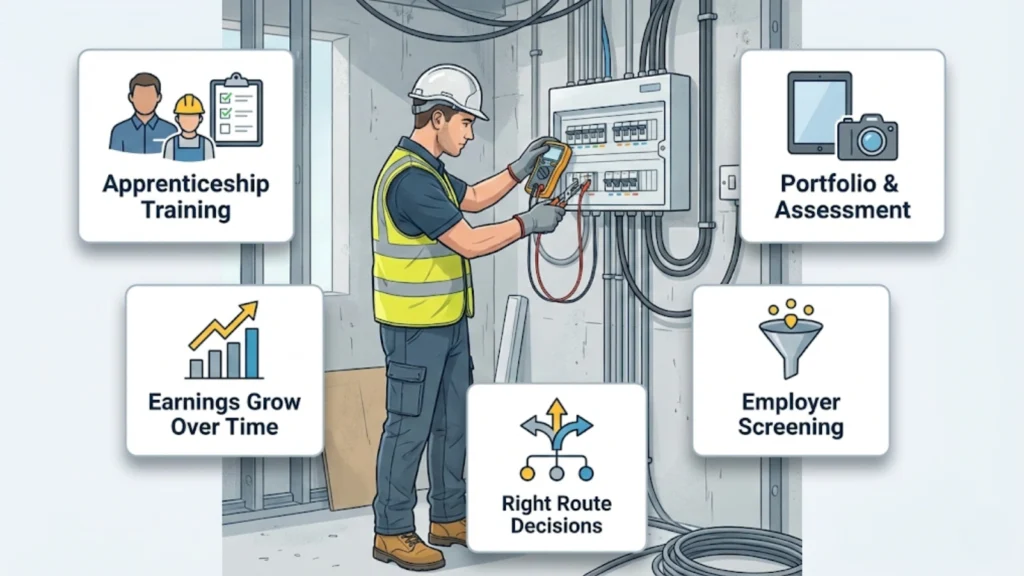
You've seen these promises from private training providers marketing electrical courses. They make apprenticeships sound unnecessarily long, financially punishing, and outdated compared to "modern" alternatives. Understanding what short electrical courses actually deliver helps clarify why apprenticeships remain the primary route to employment, as theory knowledge alone doesn't satisfy employer requirements
- Charanjit Mannu
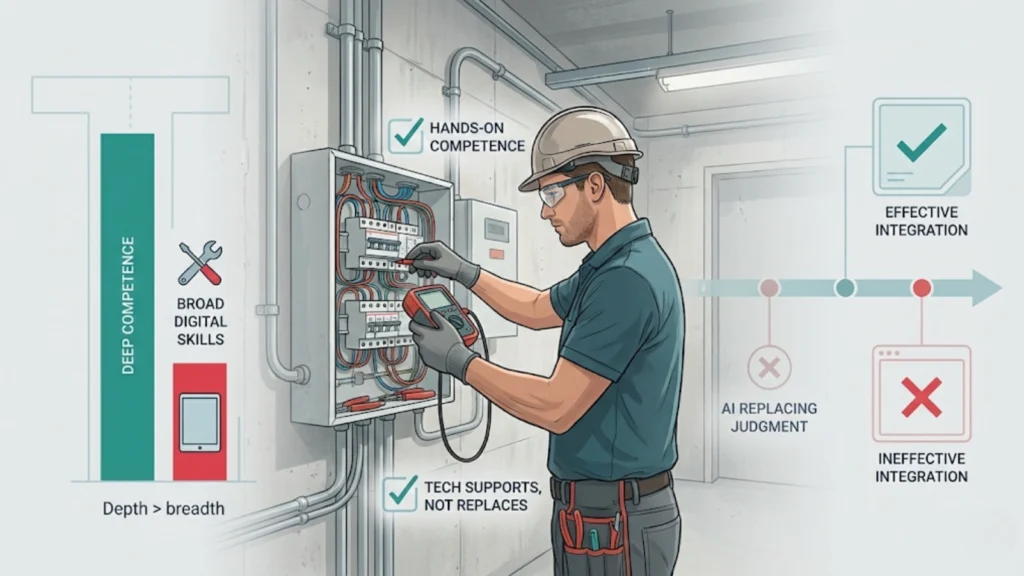
You've seen these claims. Technology companies, training providers, and media coverage often present vocational education as undergoing radical transformation where physical skills become secondary to digital fluency. Here's what's actually happening: Technology is augmenting vocational training in specific, measurable ways. VR simulators provide safe practice for high-risk scenarios (high-voltage work,
- Charanjit Mannu
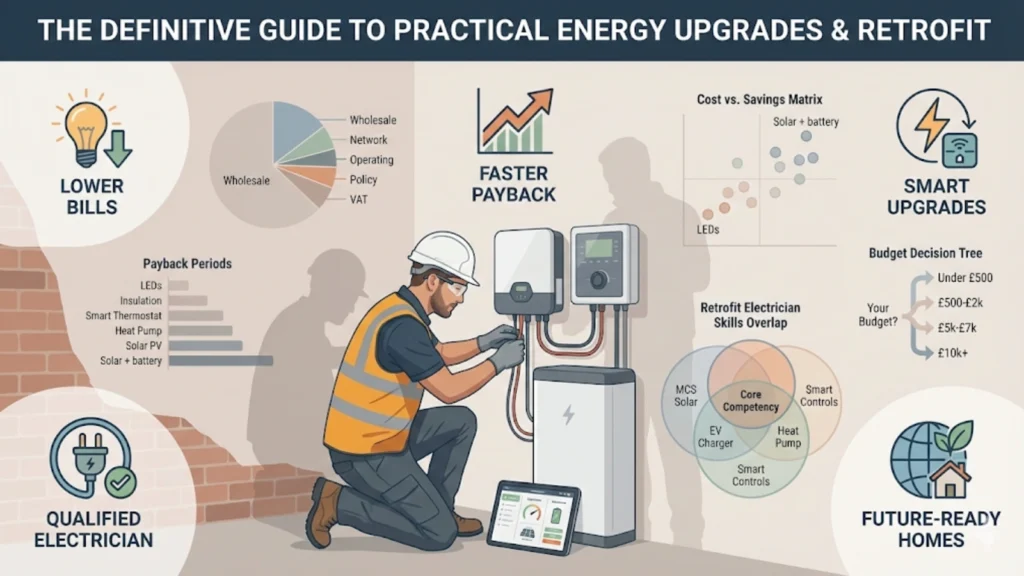
Energy bills are staying high. The January 2026 Ofgem price cap sits at £1,758 annually for a typical household, barely changed from previous quarters despite wholesale gas prices softening since February 2025.The 2022-2023 crisis peaked at £4,279 in January 2023. We've come down from that, but we're not returning to
- Charanjit Mannu
- News
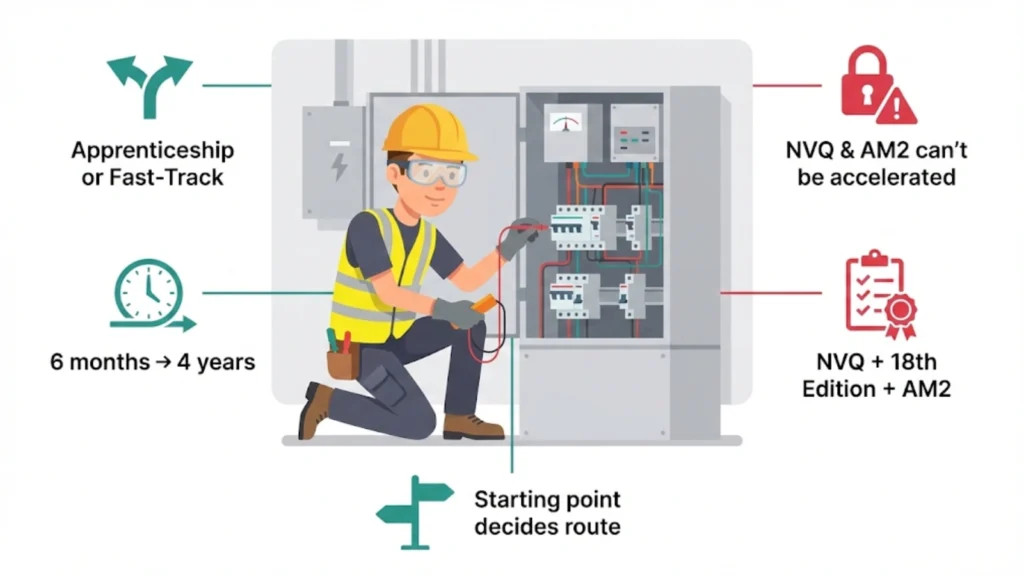
You've seen the ads. They promise fast-track routes to electrical careers, complete with photos of people in hi-vis holding certificates. Some quote impressive salary figures. Most use words like "qualified" and "professional" liberally. Here's what they don't usually clarify: completing a 16-week course gives you knowledge qualifications (City & Guilds
- Charanjit Mannu
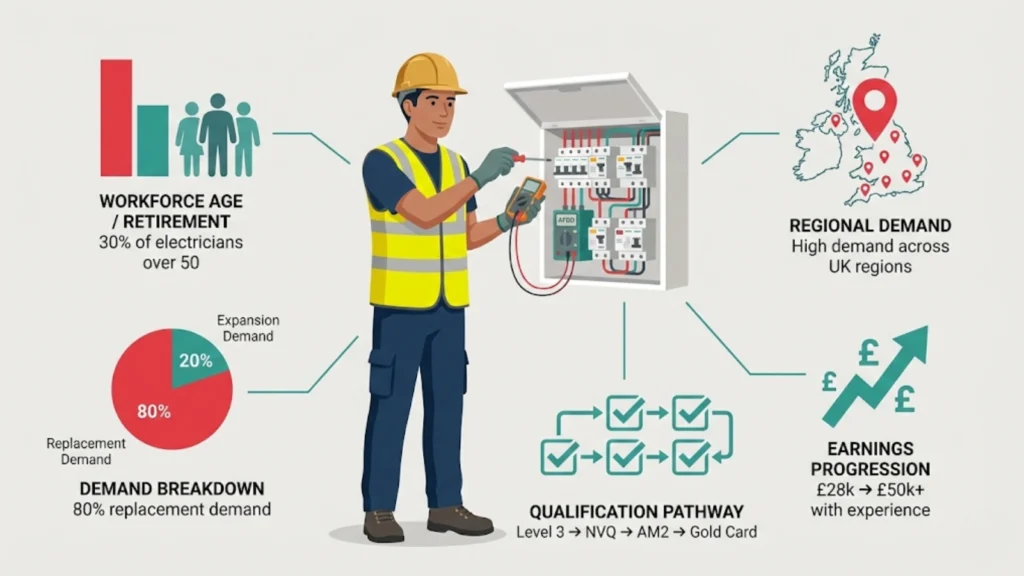
The UK electrical industry needs to recruit approximately 100,000 people over the next decade just to prevent the workforce from shrinking. That's not 100,000 brand-new jobs appearing. It's not 100,000 immediate vacancies waiting to be filled today. It's a recruitment target to address an ageing workforce, modest industry growth, and
- Charanjit Mannu
- News
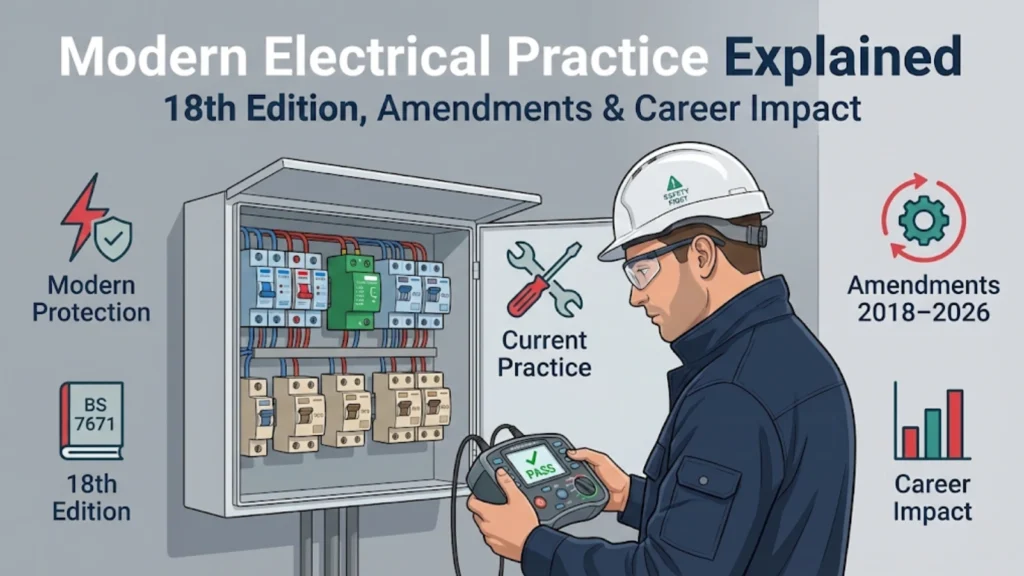
Remember 2018? The panic about the 18th Edition? The wholesalers scrambling to stock AFDDs? The forums full of electricians asking if their 17th Edition certificates were suddenly worthless?. Fast forward to January 2026. We're eight years into the 18th Edition. It's not "new" anymore. It's not even particularly noteworthy. It's
- Charanjit Mannu
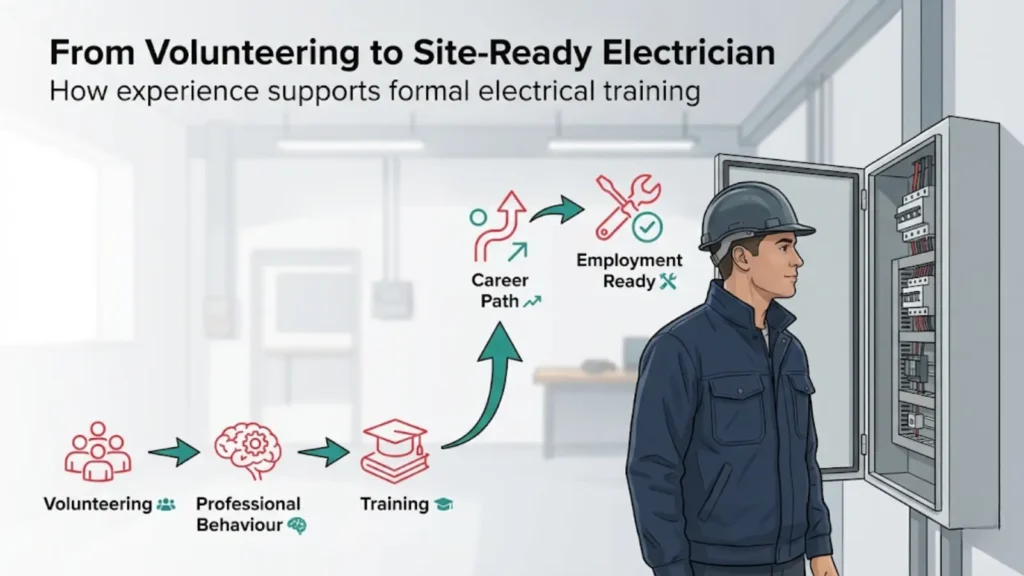
Here's a question that comes up regularly: does volunteering actually help you become an electrician? The short answer is no. Volunteering at a food bank won't teach you how to wire a consumer unit or interpret Zs readings. It won't get you a JIB Gold Card. It won't replace your
- Charanjit Mannu
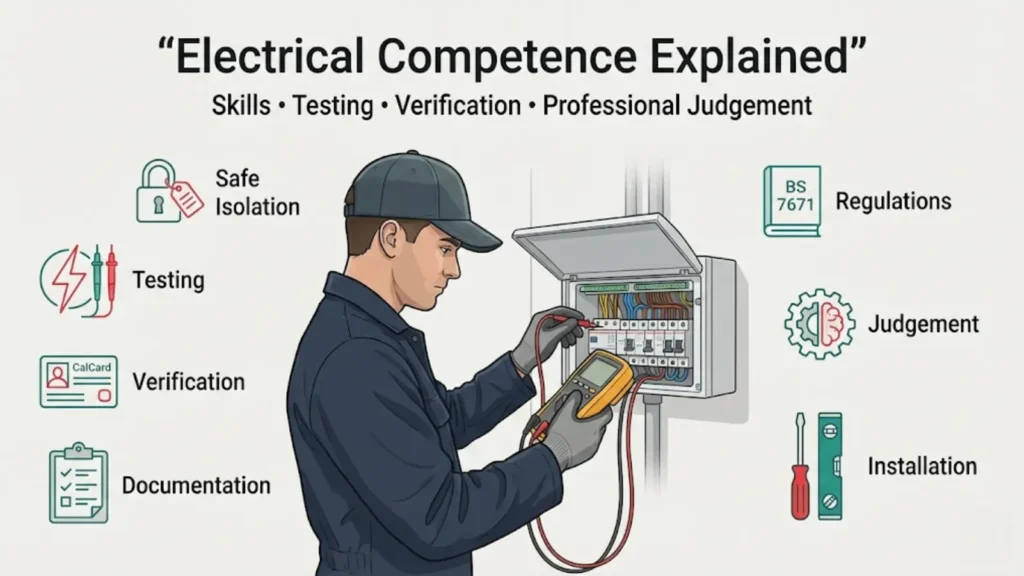
Walk into any electrical wholesaler and you'll see them hanging near the till. Credit card sized. Gold contacts. Around twenty quid. The CalCard. Some sparks swear by them. Keep one in their wallet, test their MFT monthly, log the results religiously. Others reckon they're pointless if you're getting annual calibration
- Charanjit Mannu
Ask ten electricians what skills matter most and you'll get eleven different answers. One will tell you it's all about speed. Another insists it's tool handling. Someone else swears it's knowing the regs backwards. Here's the thing: they're all missing the point. Essential skills sounds like a nice tidy checklist
- Charanjit Mannu
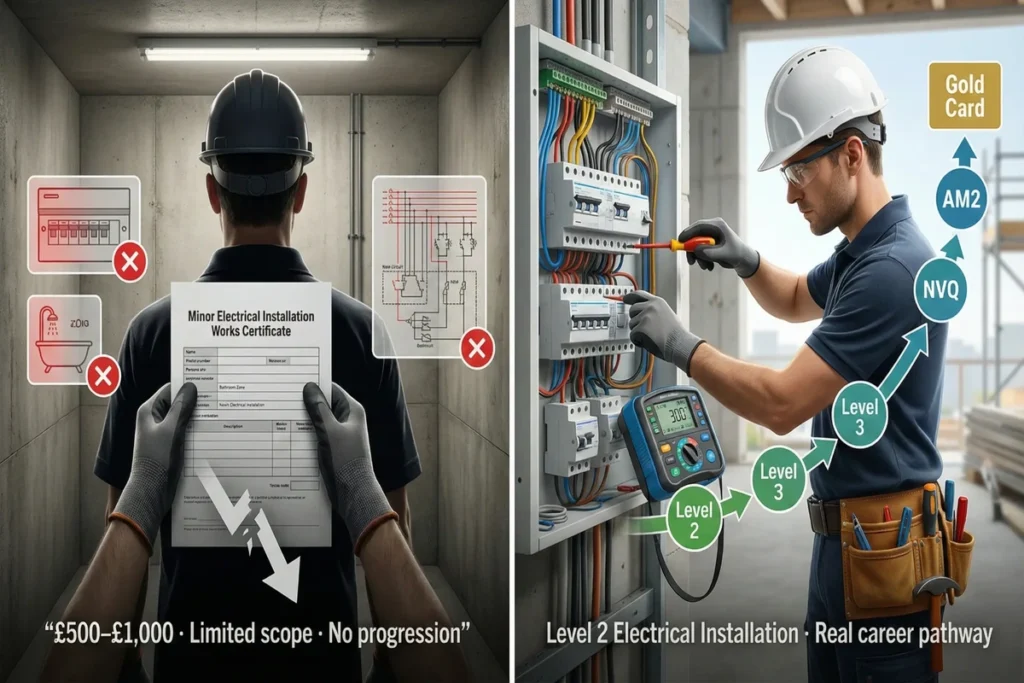
The adverts make it sound simple. Five days, £500-£1,000, walk out calling yourself an electrician. Minor Electrical Installation Works Course. Part P trained. Job done. Here's what actually happens: you spend the money, you get the certificate, and then you discover you can replace light switches and add sockets to
- Charanjit Mannu

Fast-track domestic installer courses are everywhere. Scroll through Facebook ads or Google search results and you'll see claims like "become a qualified electrician in 4 weeks" or "start earning as an electrician this month." The reality is considerably more complicated. The difference between a Domestic Installer and a Fully Qualified
- Charanjit Mannu

Since June 15, 2022, every new-build home in England with associated parking has been legally required to include an electric vehicle (EV) charging point. Not proposed. Not optional. Mandatory. Part S of the Building Regulations made the UK one of the first countries to legislate EV infrastructure at the point
- Charanjit Mannu

The headline numbers look brilliant. Median electrician pay jumped from £32,745 in 2019 to an estimated £40,800 in 2025. That's roughly 25% nominal growth over six years. Pack up your tools, we're all rich, right? Not quite. Here's what the salary surveys and press releases won't tell you: most of
- Charanjit Mannu
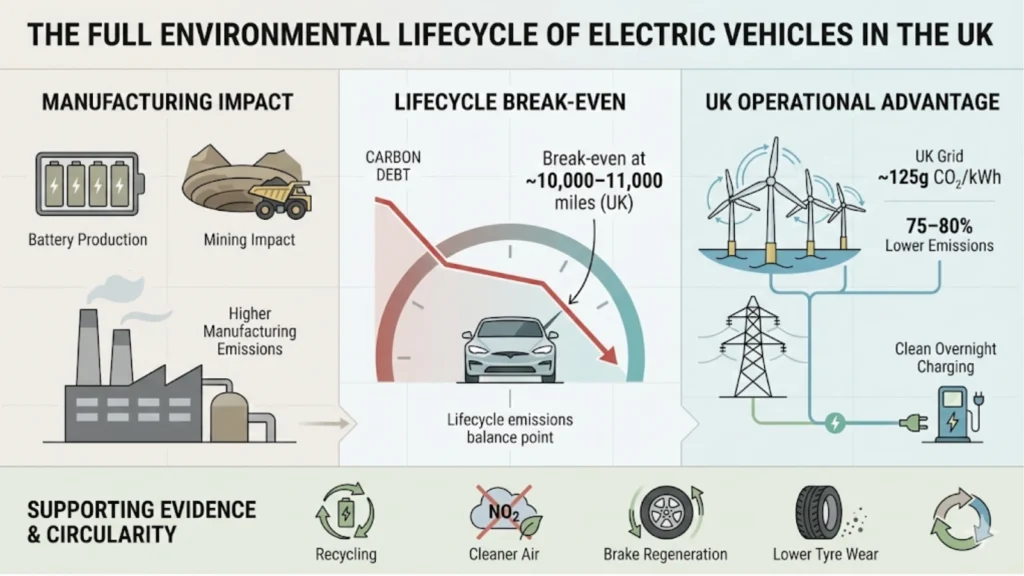
The environmental debate around electric vehicles has become absurdly polarized. One side claims EVs are zero-emission saviors that will single-handedly solve climate change. The other insists they're toxic mining disasters worse than diesel. Neither extreme reflects reality. Here's what actually happens when you look at the evidence rather than the
- Charanjit Mannu
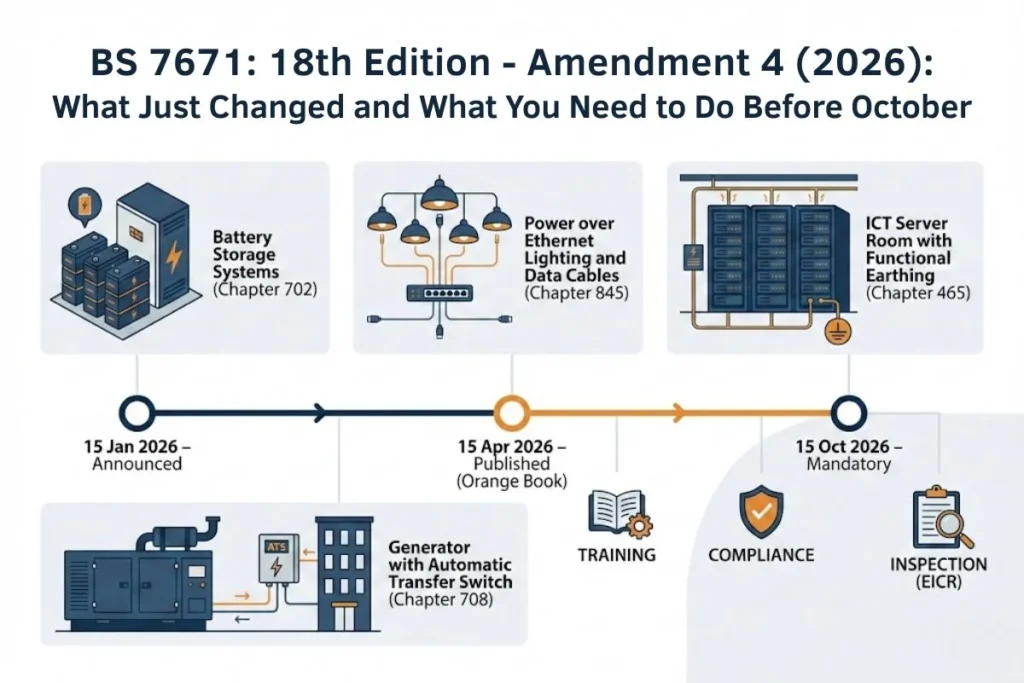
Amendment 4 is not the 19th Edition. It's not live today. And you don't need to panic about immediate compliance. But you do need to understand what's changed and what you must do before 15 October 2026 when the current regulations get withdrawn and A4 becomes mandatory for all new
- Charanjit Mannu
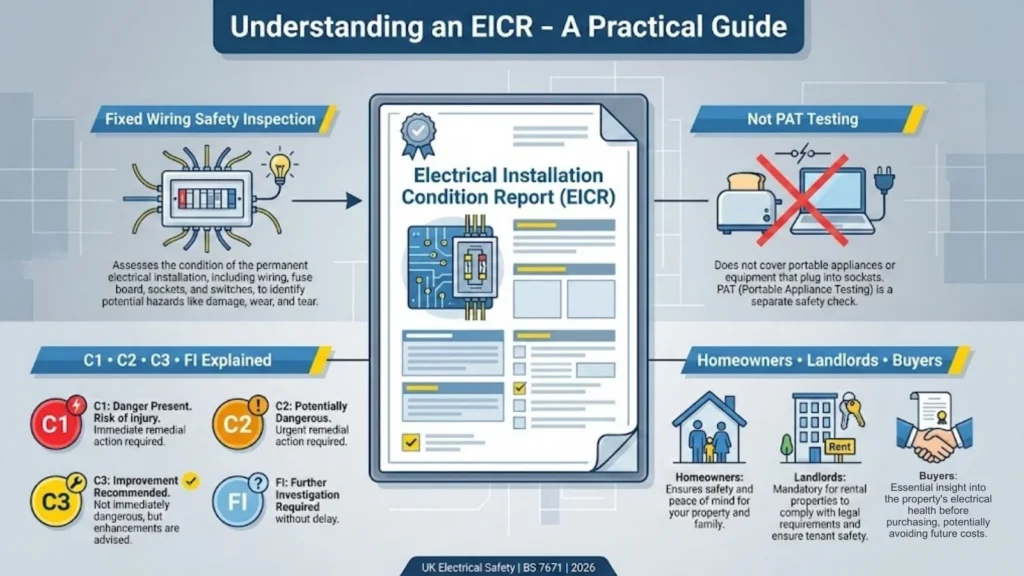
An Electrical Installation Condition Report, or EICR for short, sounds straightforward enough. You hire an electrician, they test your wiring, you get a report. Simple. Except it's not. Because the EICR industry in the UK is littered with cowboys charging £80 for inspections that take 45 minutes, landlords panicking over
- Charanjit Mannu

In 2015, if you told a self-employed electrician they'd be running their entire business from a smartphone within a decade, they'd have laughed you out of the van. Apps were for spirit levels and torch features, not serious business administration. Invoices got written on carbon-copy pads. Quotes went out as
- Charanjit Mannu

The "degree premium" has been gospel in UK education policy for decades. Go to university, earn more over your lifetime, retire comfortably. Simple. Except the data from 2015 to 2025 tells a different story, particularly if you're comparing median graduate earnings to skilled construction trades like electricians, plumbers, and carpenters.
- Charanjit Mannu
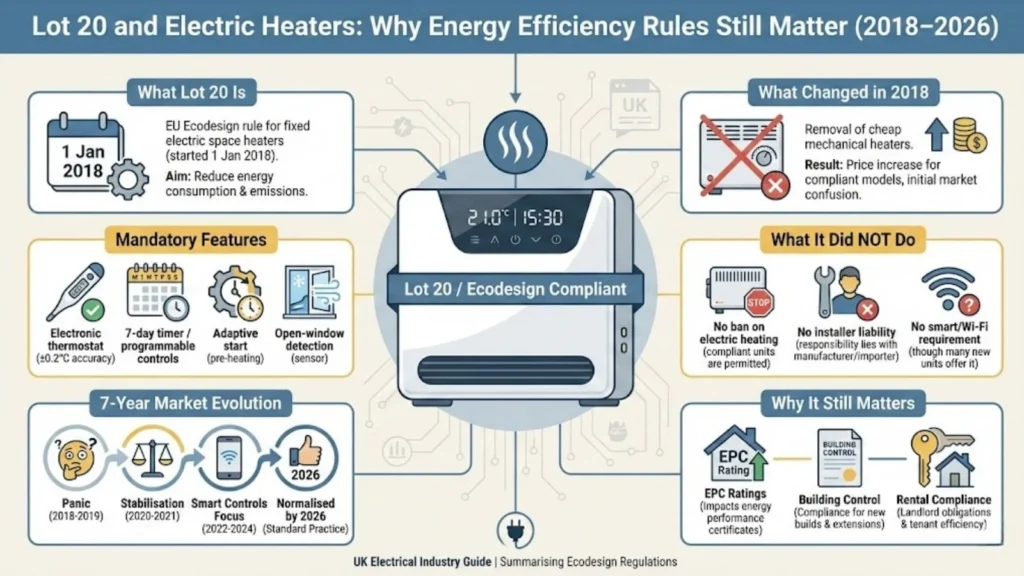
In January 2018, a regulation called Lot 20 came into force across the EU and UK, setting minimum energy efficiency standards for electric heaters. Electricians panicked. Landlords received scare-tactic sales calls. Forums filled with theories about Trading Standards raiding van stocks for non-compliant heaters. Seven years later, in 2026, Lot
- Charanjit Mannu
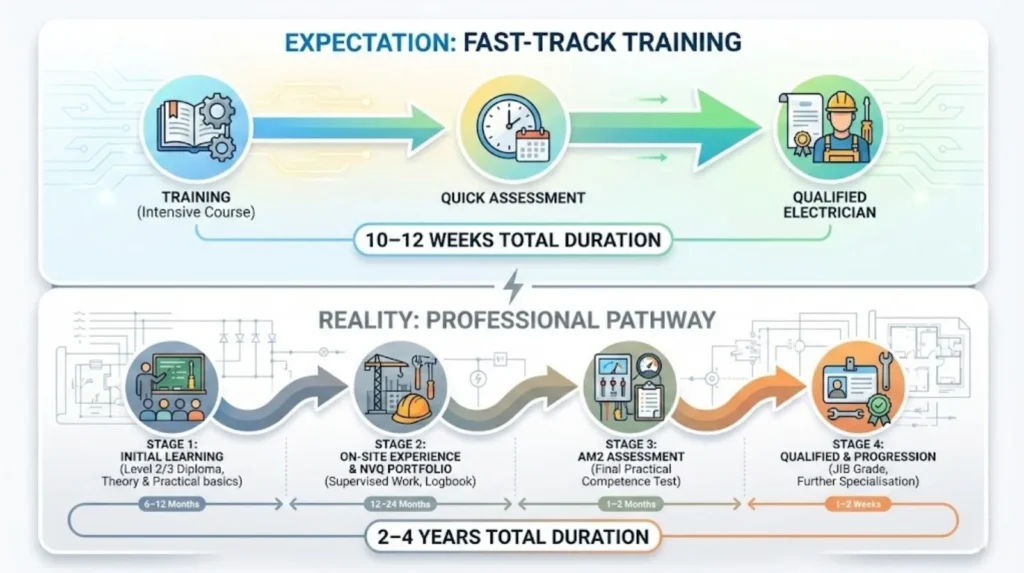
Birmingham training providers advertise "Become a Qualified Electrician in 10 Weeks" alongside photographs of learners receiving certificates. Google searches for "fast track electrician courses Birmingham" return dozens of intensive programmes promising rapid qualification. You pay £5,000 to £8,000 for condensed classroom delivery. Ten weeks later, certificate in hand, you apply
- Charanjit Mannu
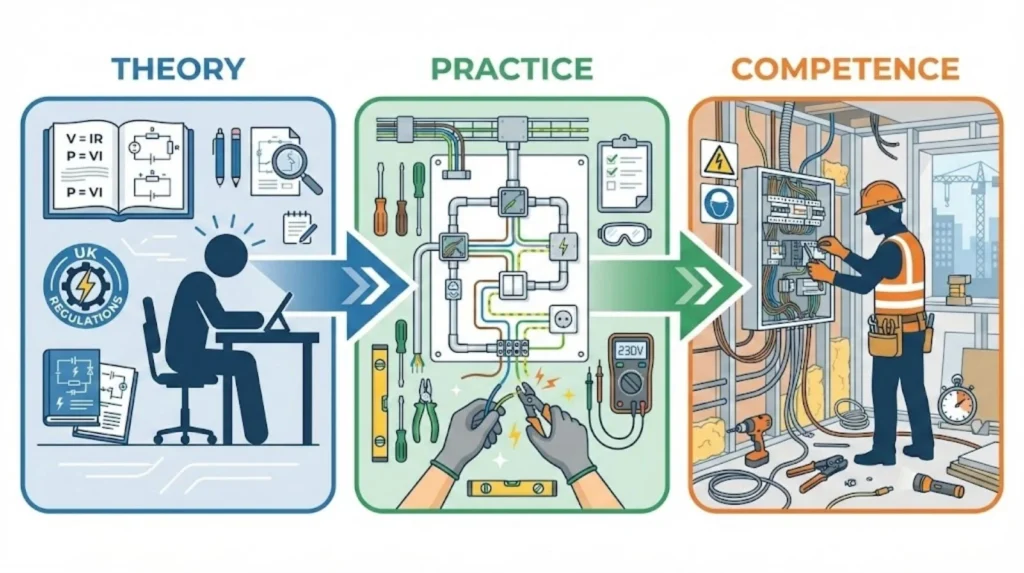
If you're researching electrical training in Wolverhampton, you've probably seen course descriptions emphasizing "hands-on practical learning" or "workshop-based training" or "real-world experience." Every provider claims their approach is the most practical, the most job-focused, the most employer-ready. But what does "practical" actually mean in electrical training? And why do some
- Charanjit Mannu
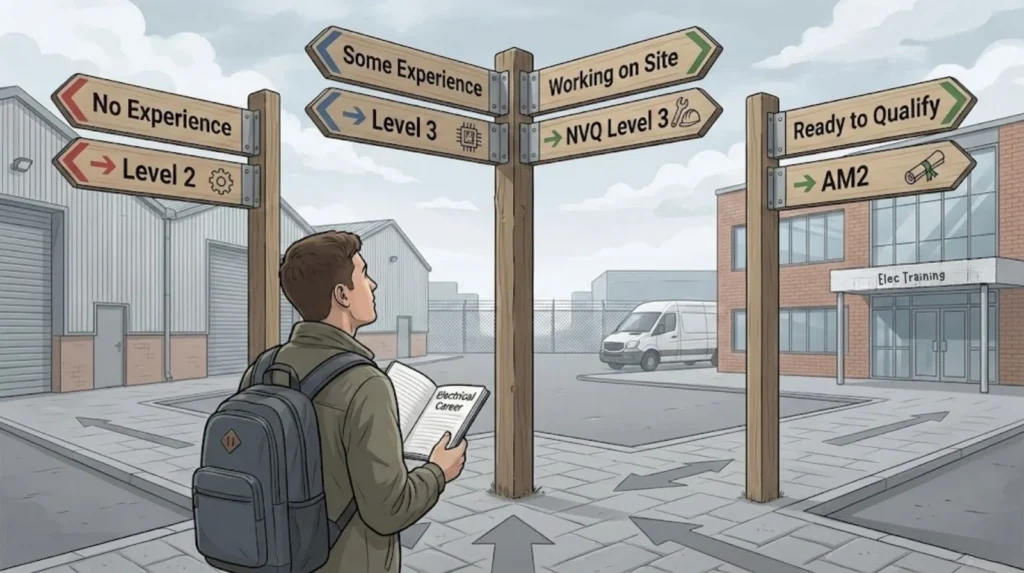
If you're researching electrical training in Wolverhampton, you've probably seen course names like "Level 2 Diploma," "Level 3 Certificate," "NVQ Level 3," and "18th Edition" scattered across provider websites. Some are bundled together in packages. Others are sold separately. The pricing varies wildly. And nowhere does anyone clearly explain what
- Charanjit Mannu
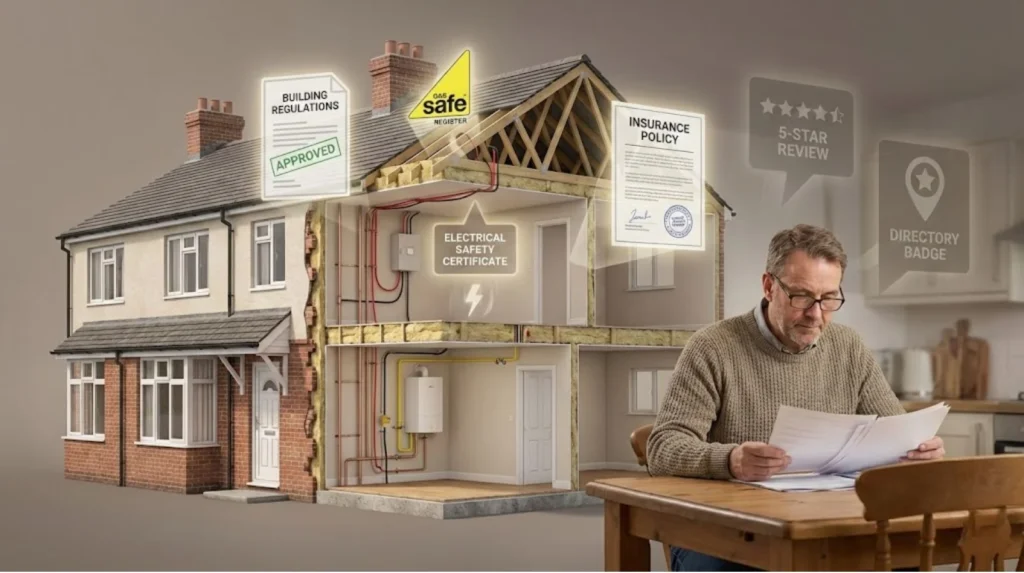
You're standing in your kitchen looking at a quote for £8,000 to rewire your house. The electrician has a Checkatrade badge, 147 five-star reviews, and a profile that says "fully vetted and approved." You feel reassured. You shouldn't. UK homeowners lose approximately £4 billion annually to rogue traders and substandard
- Charanjit Mannu
- News
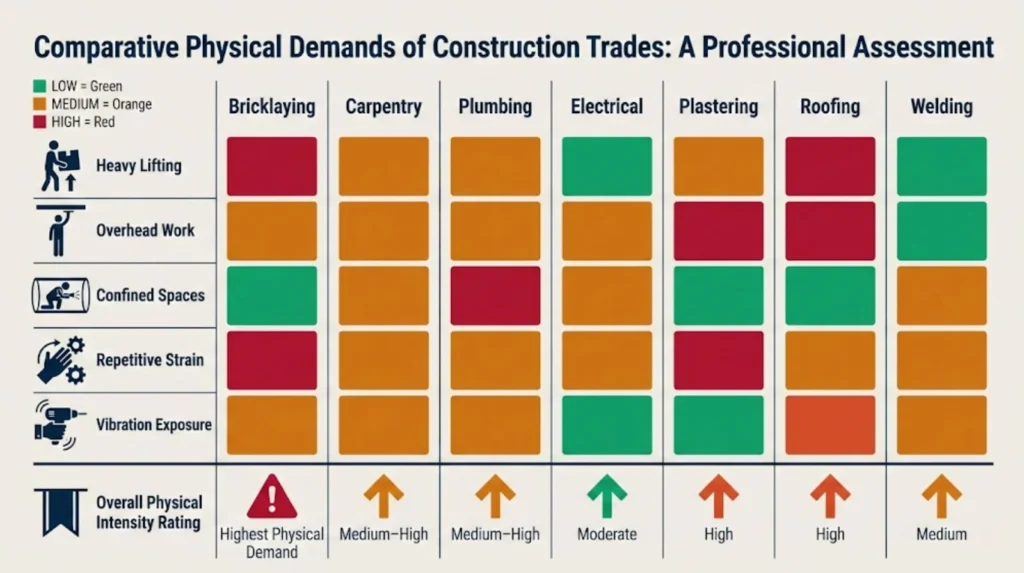
You're 38, sat in another pointless Teams meeting, and you've just realised you've spent the last hour discussing a spreadsheet about a presentation about a strategy document. Again. The office heating's too high, the coffee's terrible, and you're staring at the same four walls you've been staring at for a
- Charanjit Mannu
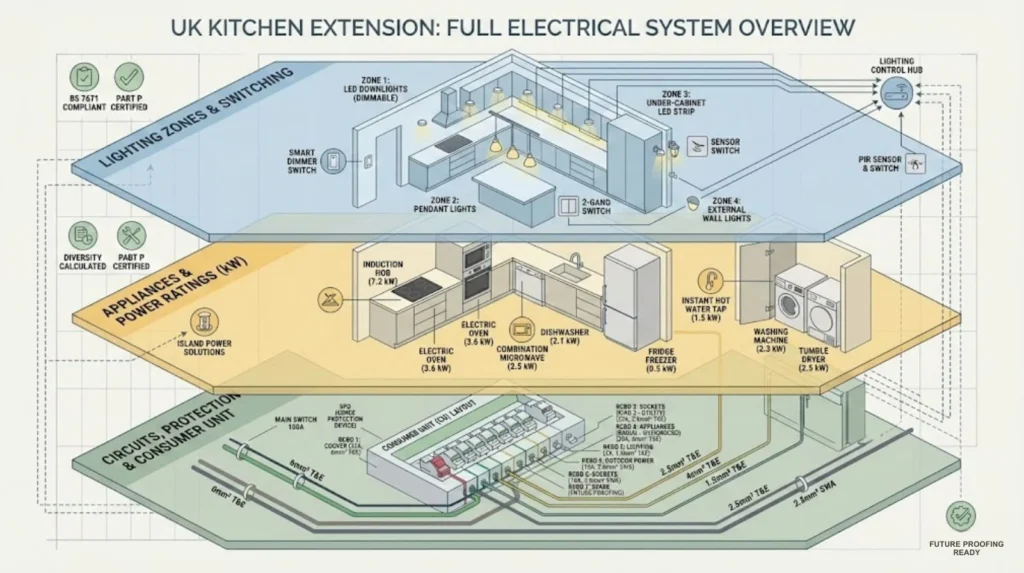
Kitchen extensions represent the most profitable segment of domestic electrical work available to qualified electricians in 2026. With over 50% of UK homeowners undertaking renovation projects and kitchen extensions dominating the £11.2 billion home improvement market, the work is there. The question is whether you're positioned to win it, price
- Charanjit Mannu
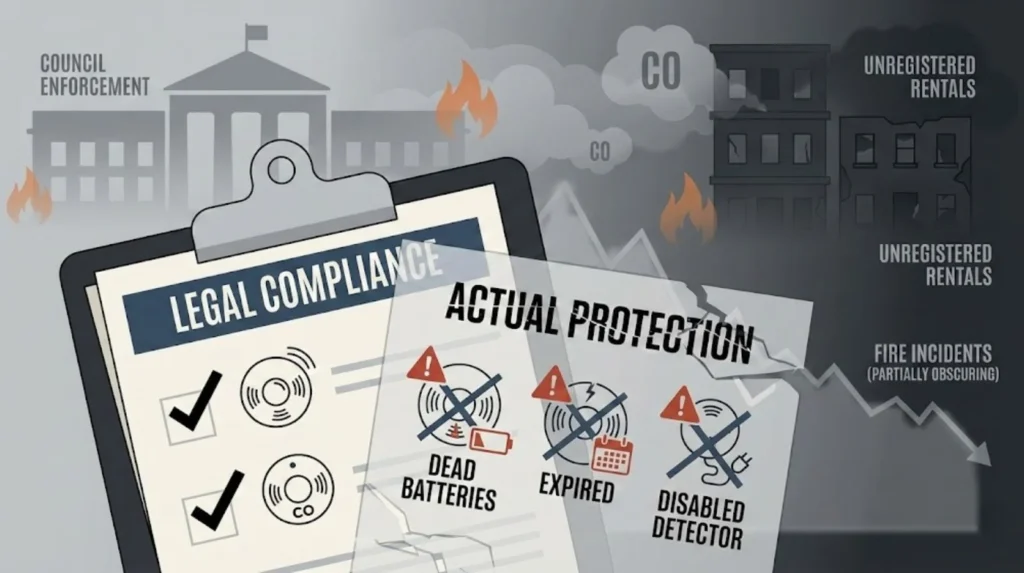
X-twitter Linkedin Technical review: Thomas Jevons (Head of Training, 20+ years) Employability review: Joshua Jarvis (Placement Manager) Editorial review: Jessica Gilbert (Marketing Editorial Team) Legal compliance does not always equal real protection – faulty or inactive alarms still leave occupants at risk. On 1 October 2015, something shifted in England’s
- Charanjit Mannu
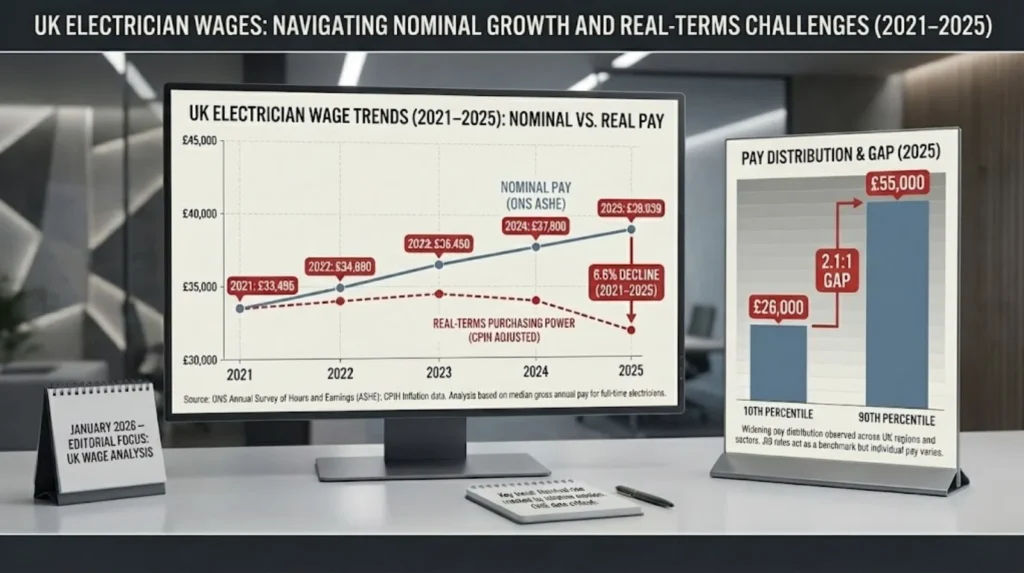
Electrician salary uk data from ONS Annual Survey of Hours and Earnings shows UK electrician median gross annual pay rising from £33,495 in 2021 to £39,039 in 2025—a 16.5% nominal increase that appears substantial until inflation adjustment reveals the reality. Using Consumer Prices Index including owner occupiers' housing costs (CPIH)
- Charanjit Mannu
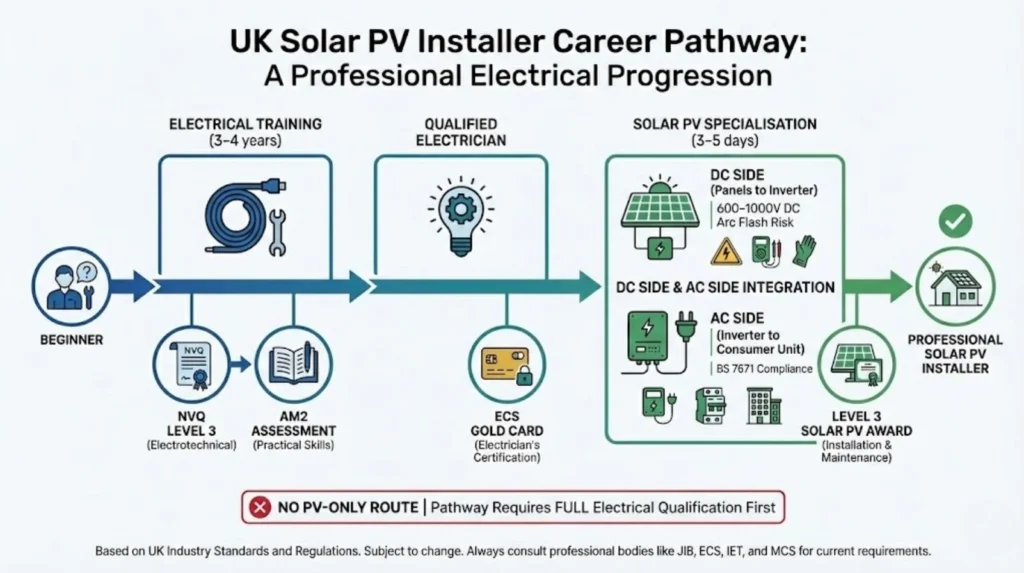
You cannot legally or safely become a Solar Photovoltaic (PV) installer without first qualifying as an electrician. There is no legitimate "PV-only installer" pathway bypassing electrical competence requirements. Solar PV systems comprise DC (Direct Current) arrays on rooftops generating electricity, feeding inverters converting DC to AC (Alternating Current), then integrating
- Charanjit Mannu
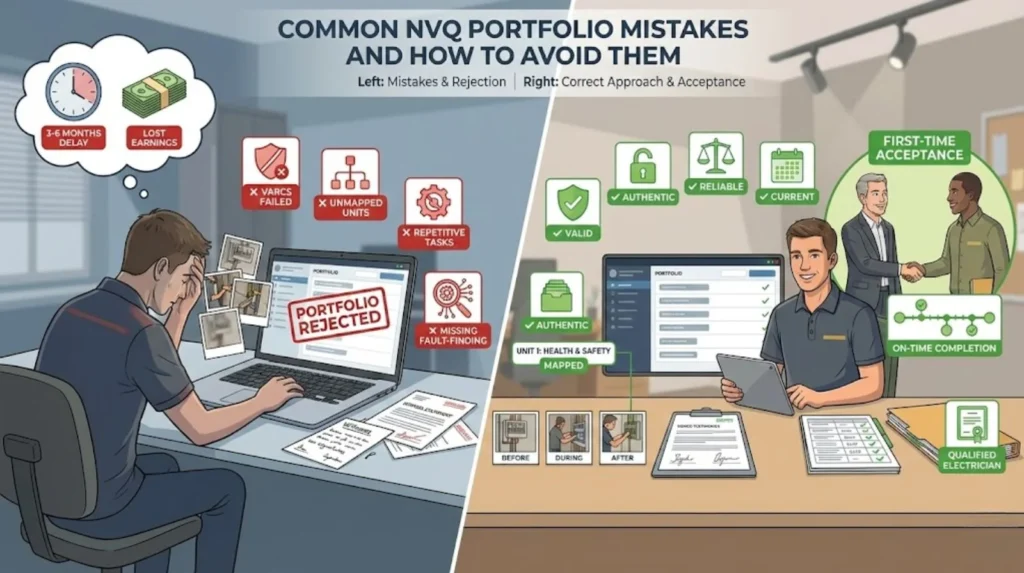
You've worked 15 months on electrical sites documenting installations across domestic rewires, commercial fit-outs, and industrial maintenance. Your portfolio contains 150 photos showing consumer unit installations, containment work, testing procedures, and circuit commissioning. Witness statements from qualified supervisors confirm you completed documented work. Testing certificates prove installations met BS 7671
- Charanjit Mannu

If you're researching electrical training in your 30s, 40s, or 50s, you've probably noticed fast-track courses dominate the search results whilst apprenticeships seem aimed at teenagers. That's not an accident. Fast-track providers specifically target adult career changers because they understand something traditional colleges don't: adults face completely different pressures than
- Charanjit Mannu

Self-employment's impact on electrician income requires examining the comprehensive analysis of electrician earnings across employment models distinguishing between gross turnover (total invoiced), business profit (after overheads), and net take-home pay (after tax/NI), because the common perception that "self-employed electricians earn significantly more" conflates gross day rates or hourly charges with
- Charanjit Mannu
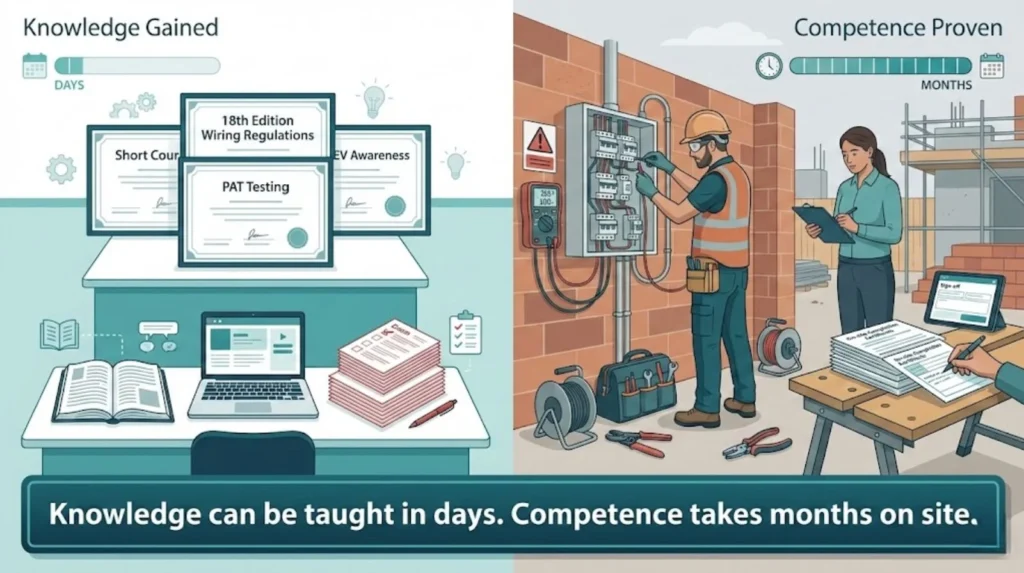
Short electrical courses lasting one to five days dominate online training advertising, aggressive social media marketing, and career change promotional content targeting working adults seeking rapid entry into electrical trades without abandoning current employment or investing years in qualification pathways, with providers marketing intensive weekend workshops, evening intensive blocks, and
- Charanjit Mannu
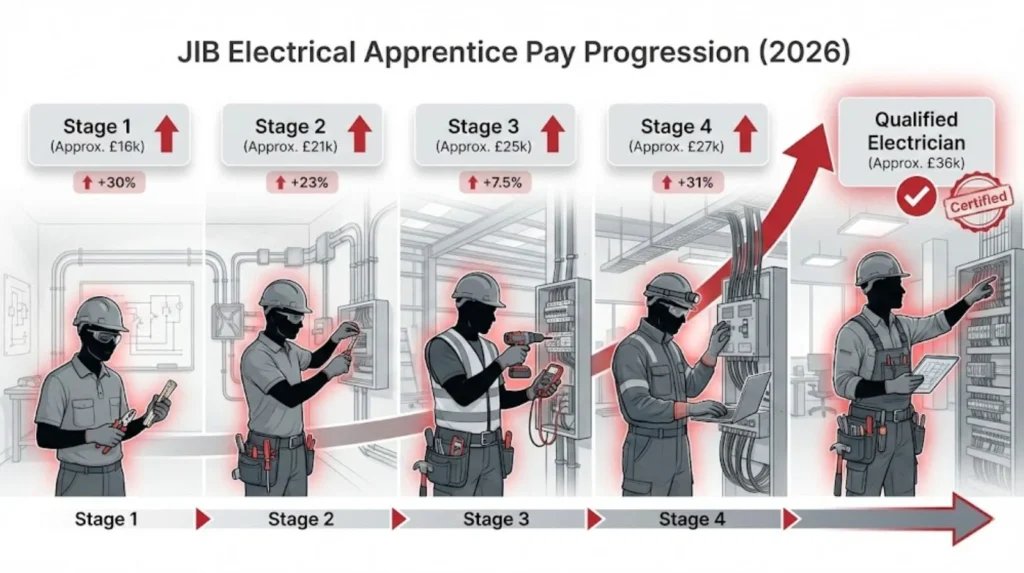
The jib apprentice rates for 2026 establish four-stage progression structure defining minimum wages for electrical apprentices employed by Joint Industry Board member firms across England, Wales, and Northern Ireland, with rates ranging from Stage 1 at £8.16/hour (£15,912 annually at standard 37.5-hour weeks, entry-level first year apprentices beginning electrical training
- Charanjit Mannu
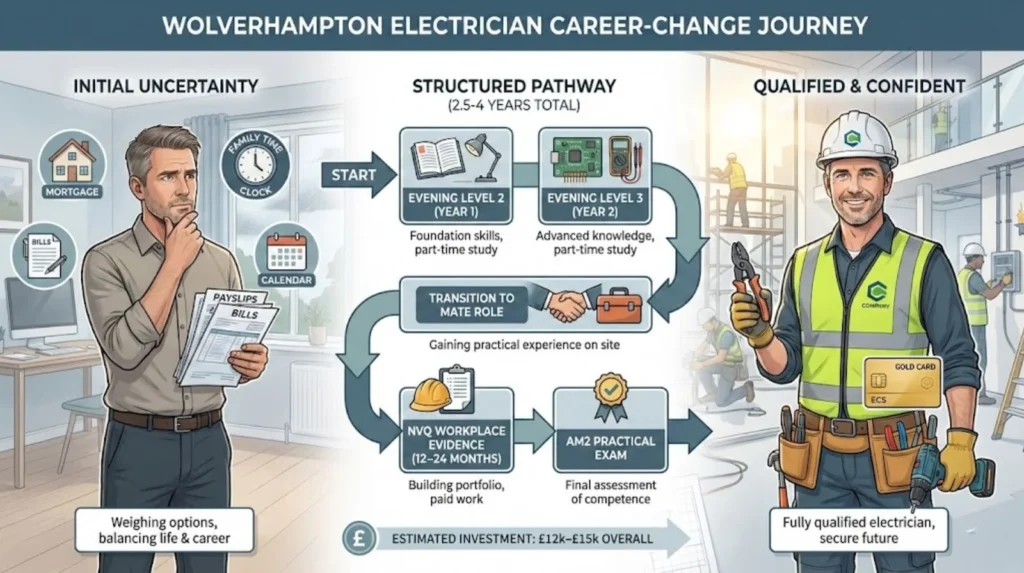
If you're 28, 35, 42, or older and you're looking at retraining as an electrician in Wolverhampton, you're probably asking yourself whether it's realistic. You've got a mortgage, maybe kids, definitely bills. You can't just quit your job and hope for the best. You need a pathway that actually works
- Charanjit Mannu
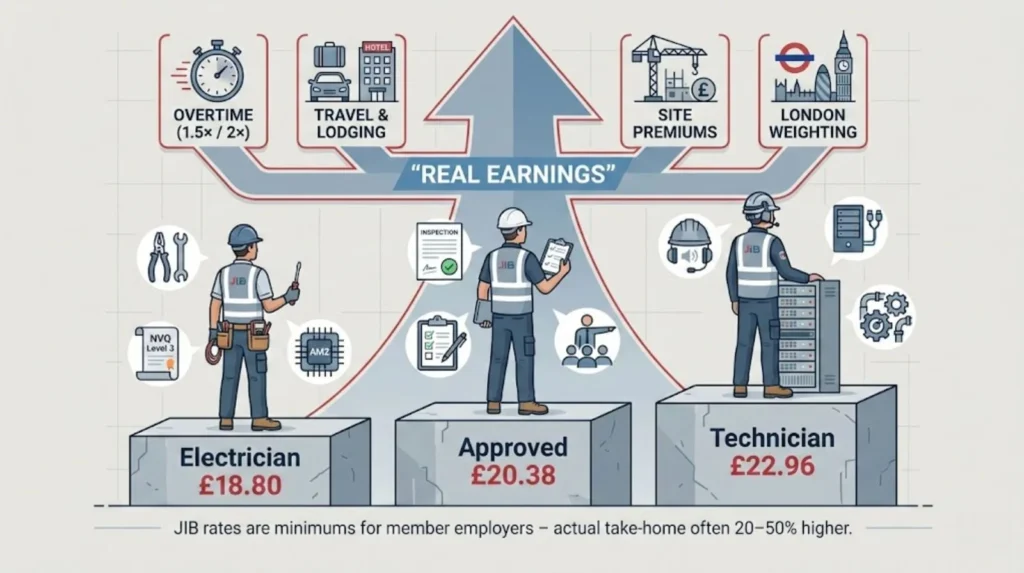
JIB electrician rates represent the minimum hourly wages for qualified electrical operatives working under Joint Industry Board collective agreements in England, Wales, and Northern Ireland, but understanding what these rates actually mean requires distinguishing between the headline hourly figure (the "floor" that participating employers cannot legally pay below), the employment
- Charanjit Mannu
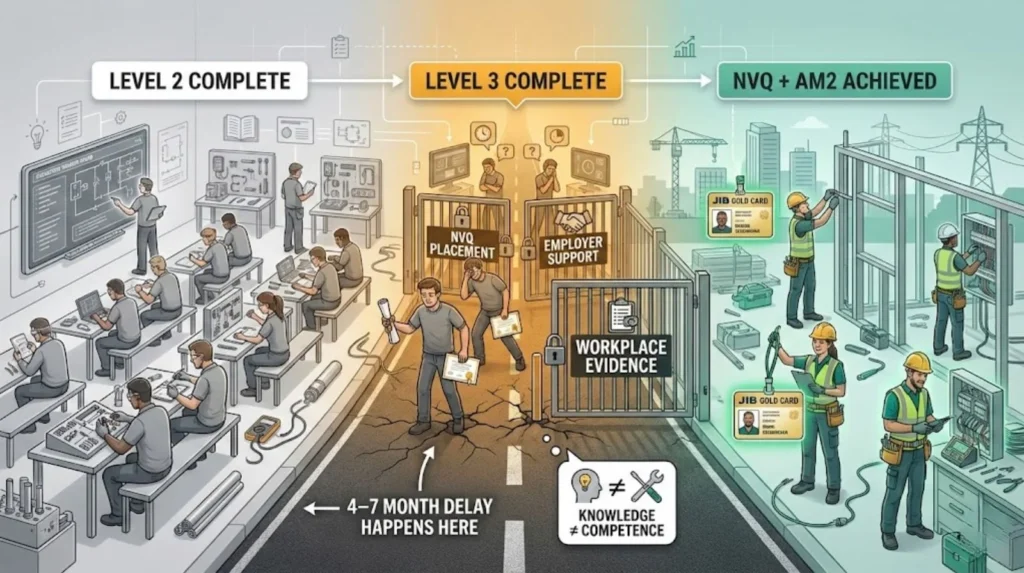
You've just paid £3,800 for what Birmingham training centre advertisements called a "Level 3 Professional Electrician Course." The certificate arrives. City & Guilds 2365-03 Diploma in Electrical Installations. You apply for electrician positions on Indeed and Reed. Every rejection email says the same thing: "We require NVQ Level 3 and
- Charanjit Mannu
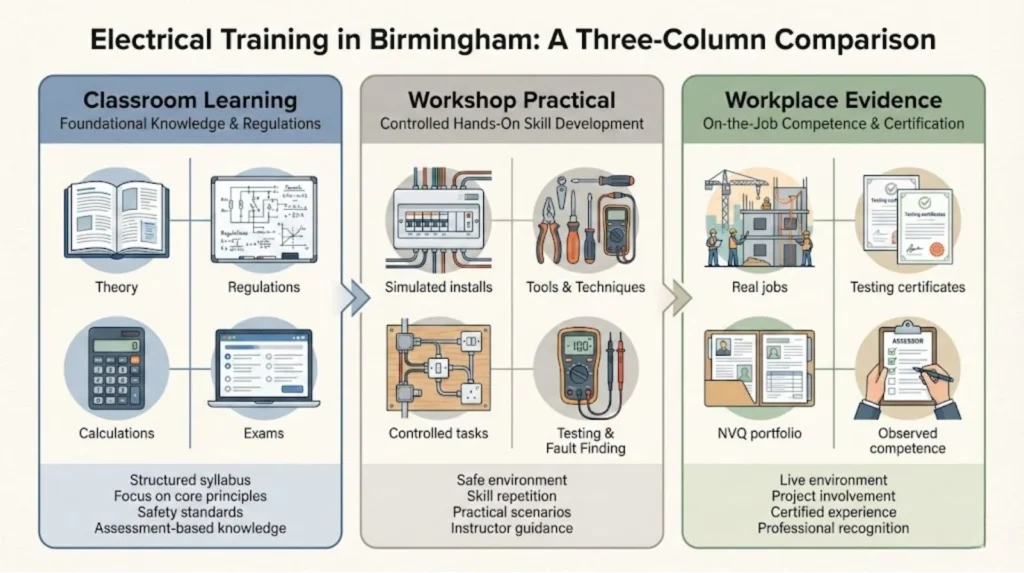
Birmingham training providers advertise "90% Practical Electrical Course" alongside photographs of learners wiring consumer units in workshop booths. You enrol, expecting hands-on site experience. Week one arrives. You're in a classroom learning Ohm's law. Week two puts you in a plywood booth wiring practice boards. Week twelve finishes with a
- Charanjit Mannu
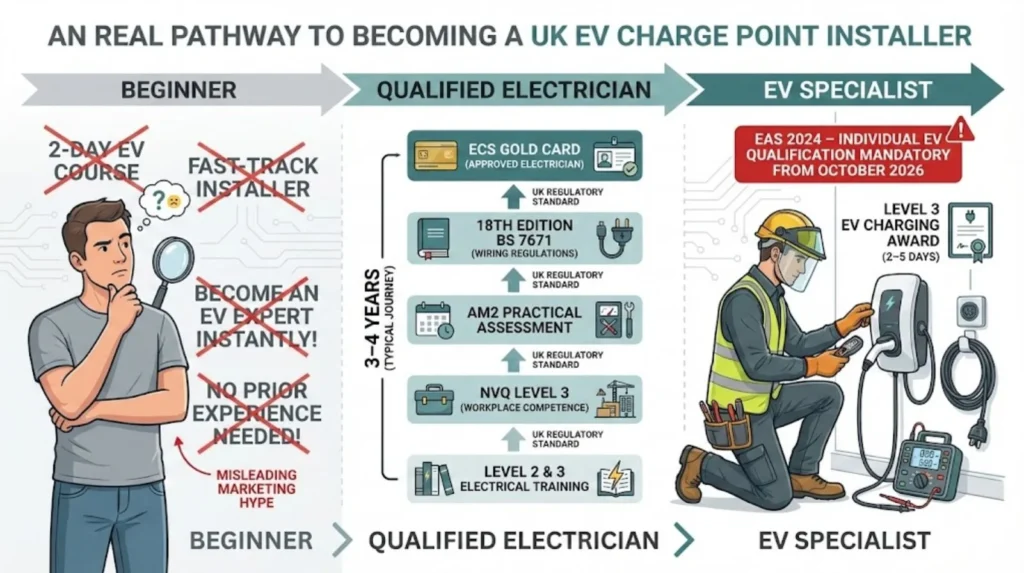
You cannot legally or safely become an Electric Vehicle (EV) charge point installer without first qualifying as an electrician. There is no shortcut "EV-only installer" pathway in the UK. EV charging equipment connects to 230V single-phase or 400V three-phase electrical supplies requiring circuit design, protective device selection, earthing system verification,
- Charanjit Mannu
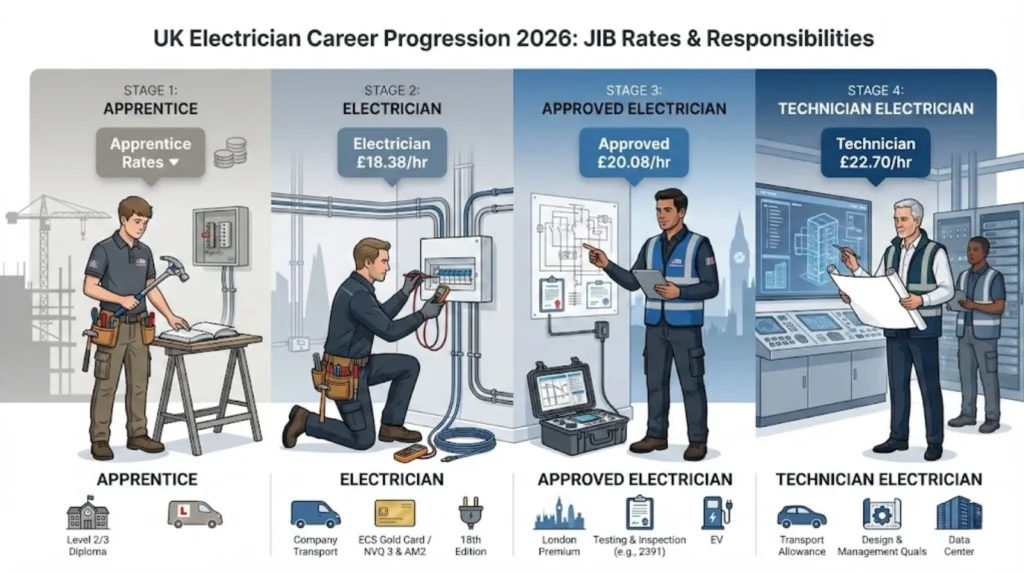
The jib rates 2026 effective Monday 5 January 2026 establish minimum hourly wages for qualified electrical operatives working under Joint Industry Board collective agreements across England, Wales, and Northern Ireland, with three core graded rates defining compensation structure: Electrician at £18.38/hour (£35,841 annual at standard 37.5-hour weeks) representing newly qualified
- Charanjit Mannu
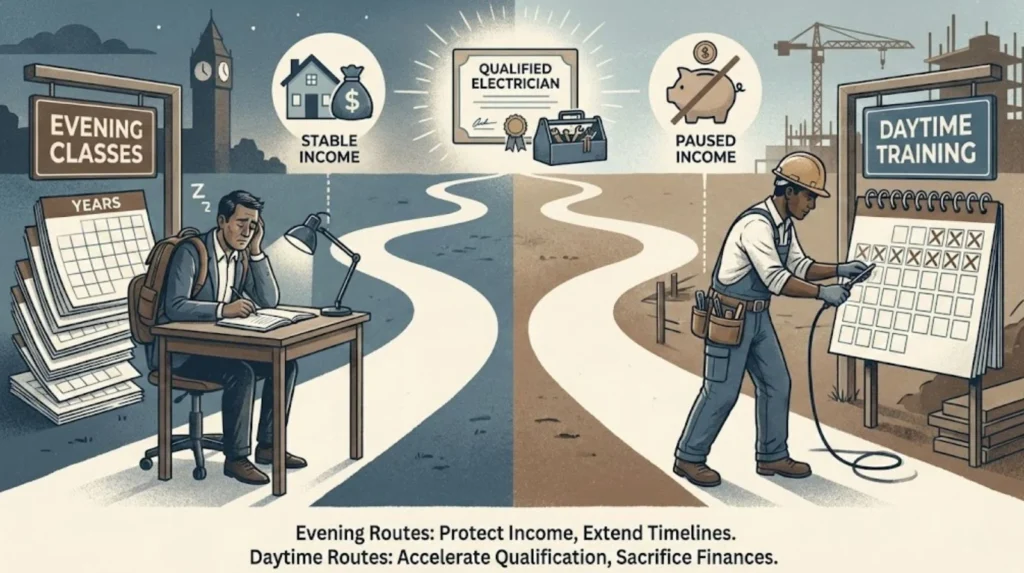
Evening and weekend electrical courses attract working adults seeking electrician qualifications whilst maintaining day jobs, with part-time study appearing to offer compatibility between career change ambitions and financial stability requirements that full-time training pathways cannot provide for learners with mortgages, family responsibilities, or established careers generating substantial income they cannot
- Charanjit Mannu
Predicting how much do electricians make over the 2026-2030 period requires examining historical wage trends (ONS ASHE showing 3-4% nominal annual growth 2016-2024), macroeconomic forecasts (OBR projecting 3% UK average earnings growth with 2% inflation baseline), sector-specific demand drivers (grid upgrades, data centres, electrification creating acute shortages), and supply constraints
- Charanjit Mannu
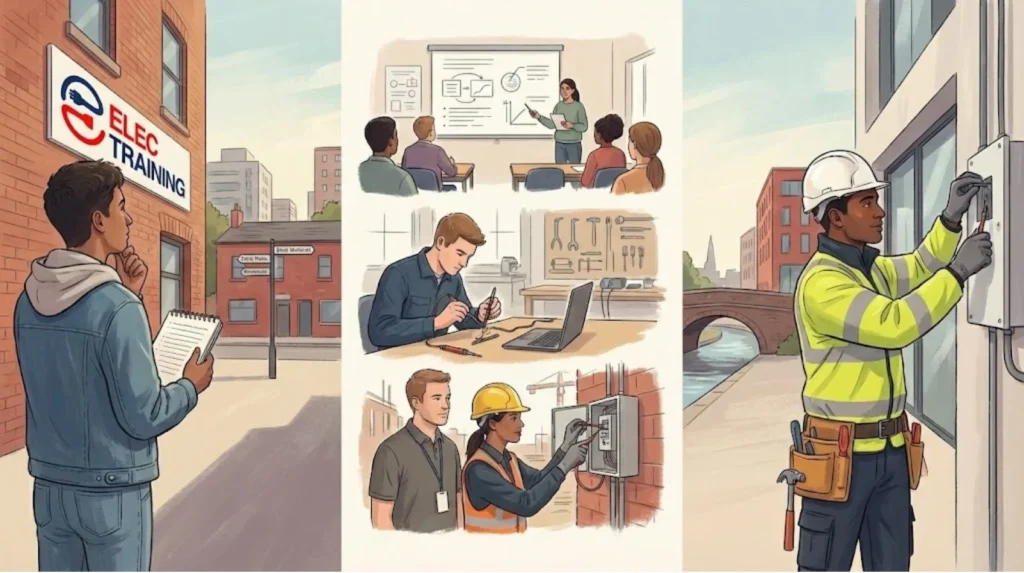
If you're looking at electrician training in Wolverhampton and you've got no prior experience, you're probably seeing course names like "Level 2 Diploma," "18th Edition," "Domestic Installer Package," and "Fast-Track Electrician" scattered across college websites and private provider ads. Some claim you can be qualified in 5 weeks. Others mention
- Charanjit Mannu

The question "how much does an electrician make" in their first 12 months post-qualification requires honest answer that contradicts training provider marketing: most newly qualified electricians earn £24,000-£28,000 gross annually on PAYE during their first year, not the £38,000-£45,000 figures often cited when recruitment materials reference "qualified electrician salaries." This
- Charanjit Mannu
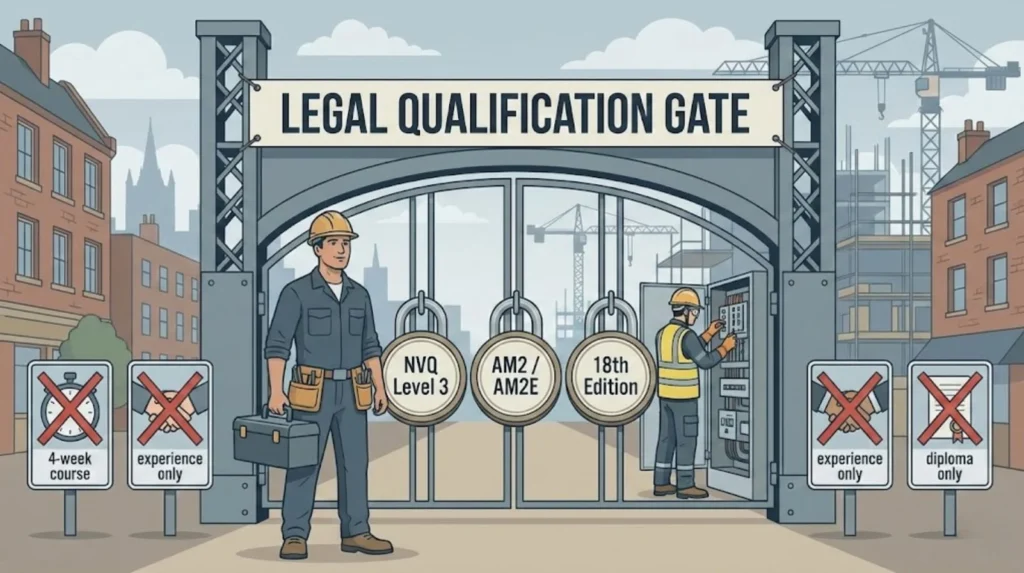
If you're researching how to become an electrician quickly, you've probably seen claims ranging from "qualified in 4 weeks" to "3-4 years minimum." So what's the actual fastest legal timeline? Here's the uncomfortable truth: the fastest legal route depends entirely on where you're starting from, and it's almost certainly longer
- Charanjit Mannu
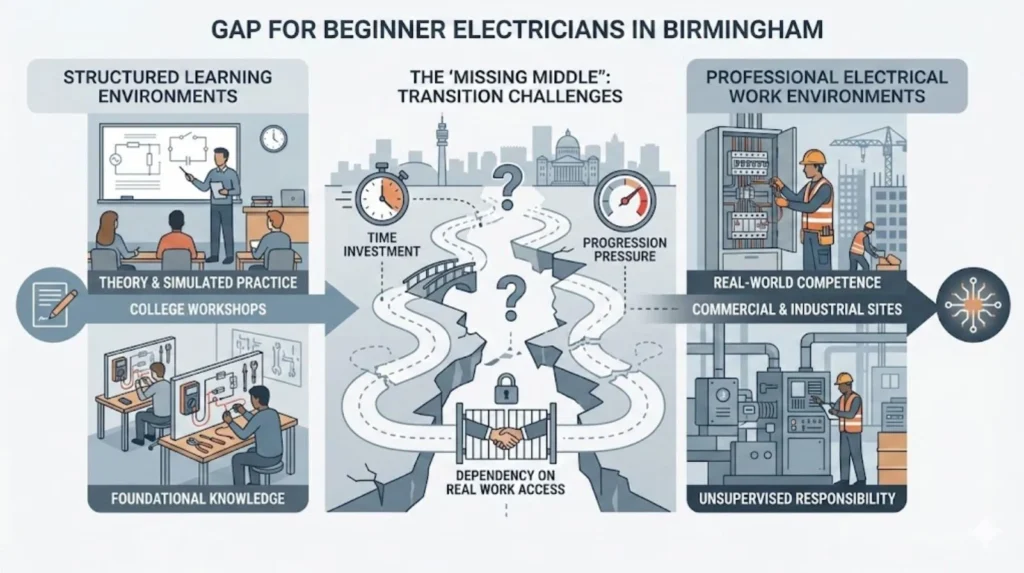
If you type "electrician courses Birmingham" into Google, you'll get roughly 40 different results claiming to turn you into a qualified spark. University College Birmingham offers Level 2 diplomas. BMet runs apprenticeships. Private centres promise "fast-track" routes. And somewhere in the middle, someone's selling a 4-week course that sounds too
- Charanjit Mannu
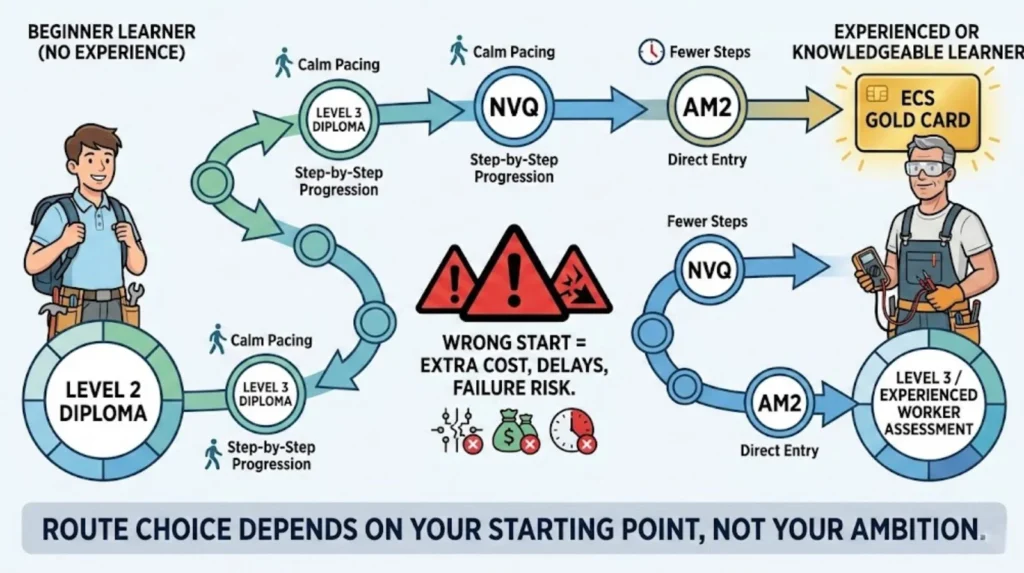
UK electrical training presents learners with fundamental choice between beginner courses (typically Level 2 Diplomas establishing foundational knowledge) and advanced courses (Level 3 qualifications building on existing knowledge or experience), with route selection carrying significant financial consequences when chosen inappropriately for learner starting points.
- Charanjit Mannu
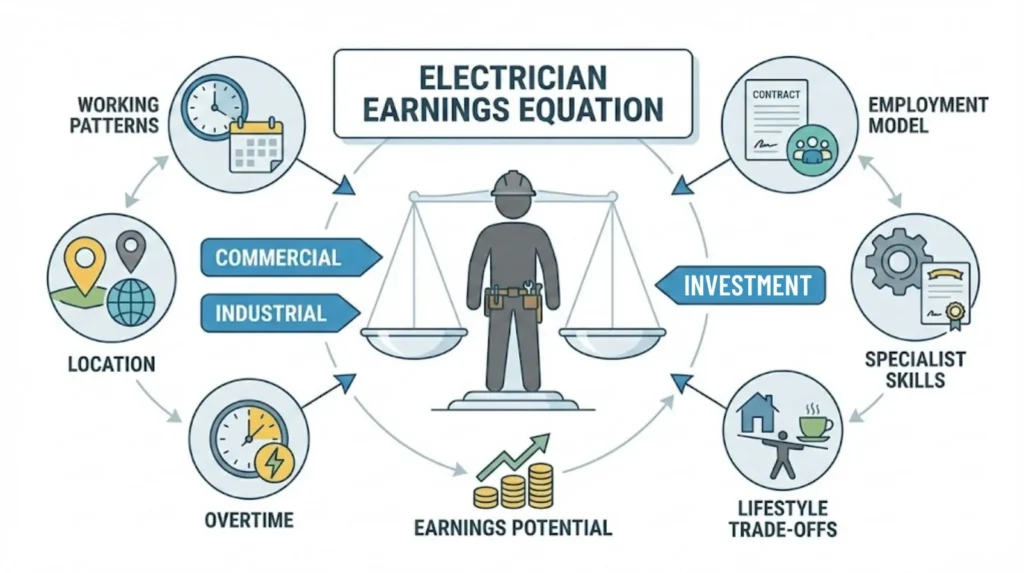
The simple question "do commercial or industrial electricians earn more" requires conditional answer: industrial electricians typically earn £46,000 median versus commercial electricians' £41,000 median PAYE annually, representing 12% premium, but this advantage depends entirely on working patterns, not sector alone. Industrial base hourly rates (£20-£22/hour) sit only £1-£2/hour above commercial
- Charanjit Mannu
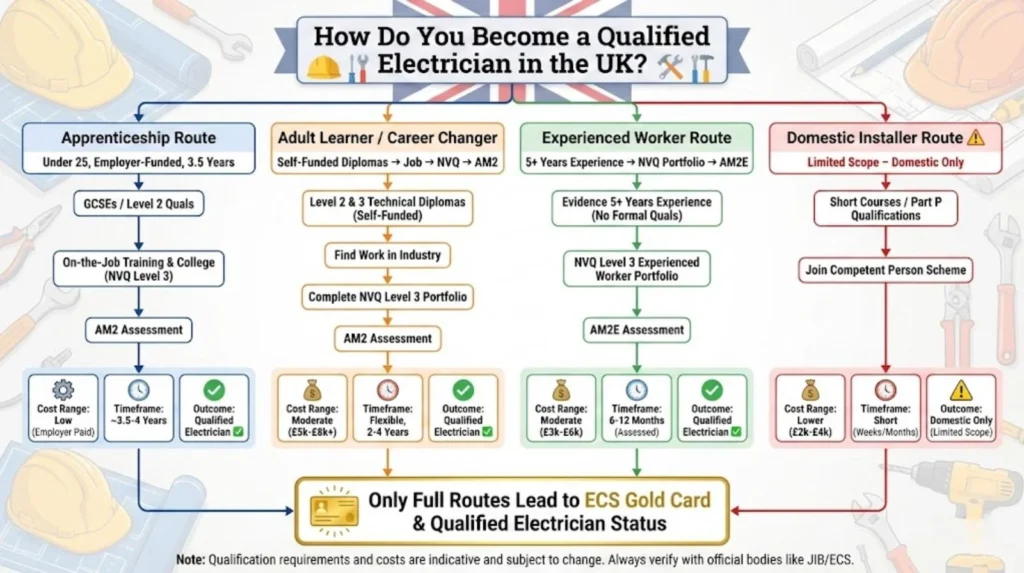
UK electrician qualifications create persistent confusion among career changers, school leavers, and experienced workers attempting to formalize their skills, with misconceptions about qualification requirements causing expensive mistakes, career delays, and employment difficulties when individuals complete partial qualifications believing they're fully qualified electricians.
- Charanjit Mannu
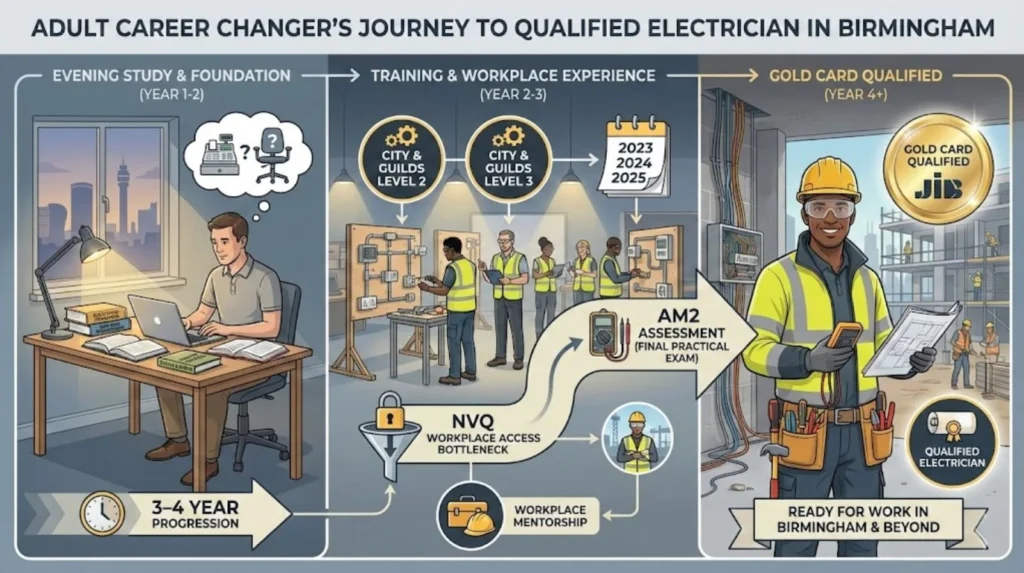
Adult learners in Birmingham typically spend 3 to 4 years going from zero experience to JIB Gold Card qualified electrician. That's not marketing pessimism, that's the reality of balancing evening study, finding mate work, logging portfolio evidence, and passing AM2 assessment. Shorter timelines exist if you can study full-time and
- Charanjit Mannu
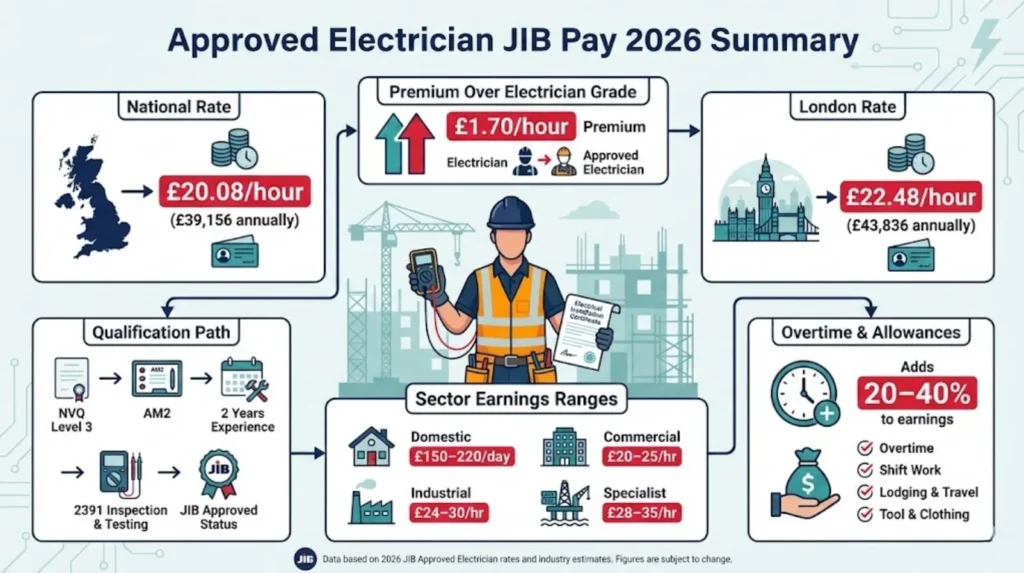
Approved Electrician status under the jib 2026 rates establishes minimum hourly wage of £20.08 for National Transport Provided employment (£39,156 annually at standard 37.5-hour weeks) representing £1.70/hour premium over baseline Electrician grade (£3,315 annually, roughly 9.3% increase) and positioning Approved operatives as mid-career professionals competent in inspection, testing, and independent
- Charanjit Mannu
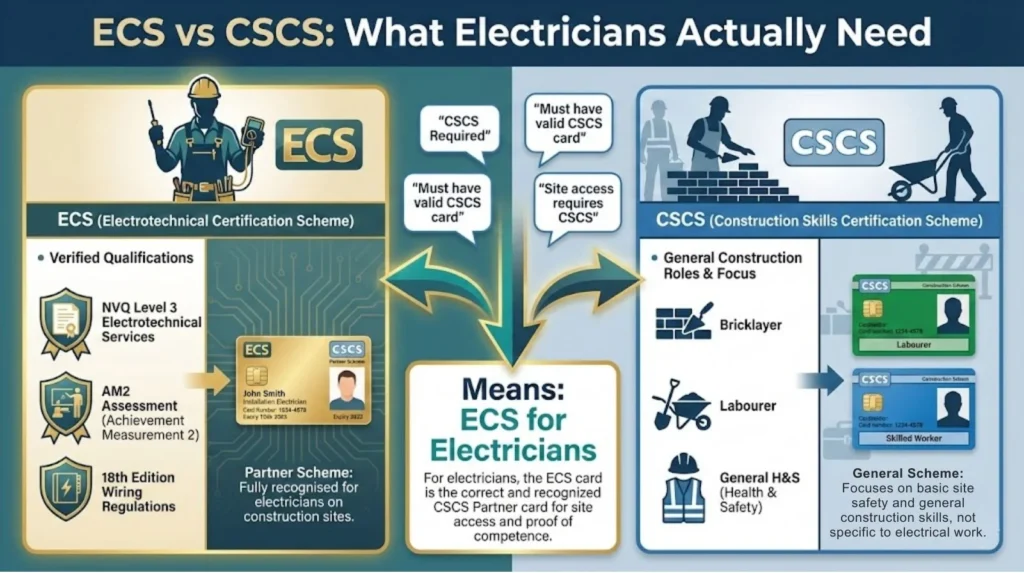
UK electricians encounter persistent confusion distinguishing between ECS (Electrotechnical Certification Scheme) and CSCS (Construction Skills Certification Scheme) cards, often resulting from contradictory information in job advertisements, inconsistent site access policies, and recruitment agents using terminology interchangeably despite fundamental differences between schemes.
- Charanjit Mannu
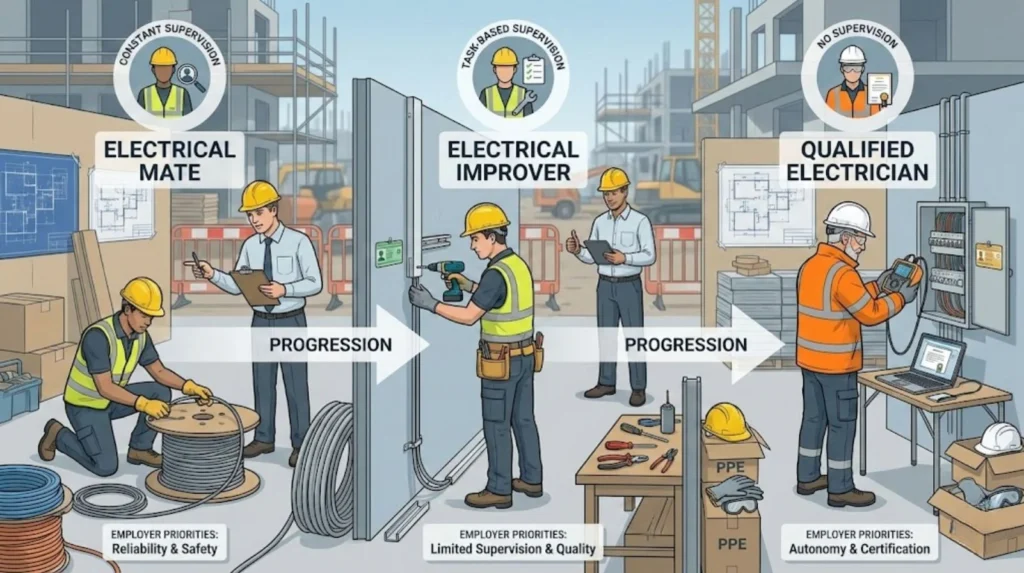
Electrical contractors hiring mates and improvers operate under different decision framework than training providers issuing qualifications. Understanding this distinction prevents costly misunderstandings about employability versus certification. Employers minimize two primary risks: safety liability under Health and Safety Executive Electricity at Work Regulations requiring workers possess adequate competence or supervision, and
- Charanjit Mannu
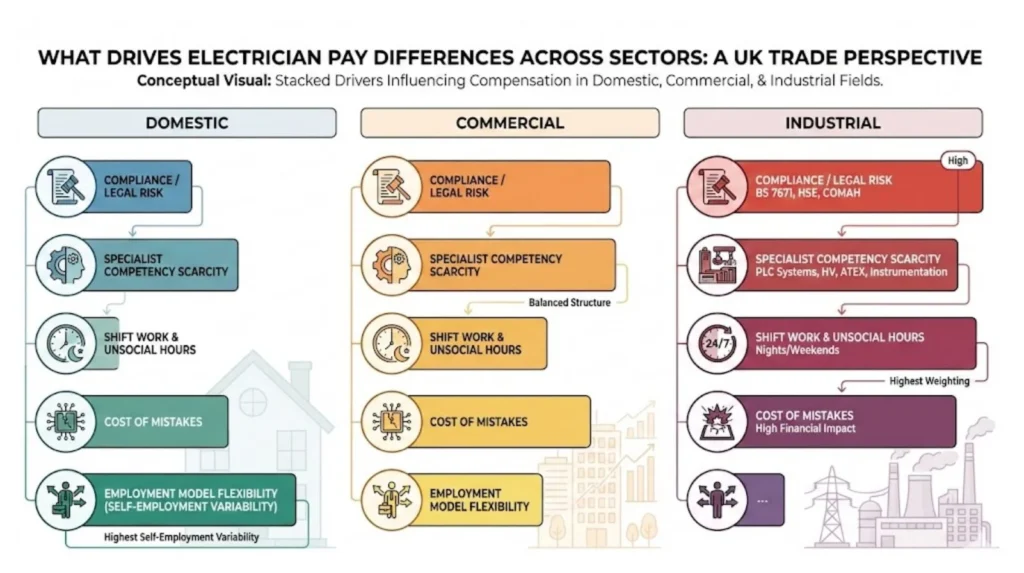
Electrician salary varies more by sector than many electricians realise when starting their careers. Domestic electricians working in residential properties, commercial electricians in offices and retail spaces, and industrial electricians in factories and manufacturing plants face fundamentally different working patterns, compliance requirements, technical demands, and pay structures. The assumption that
- Charanjit Mannu
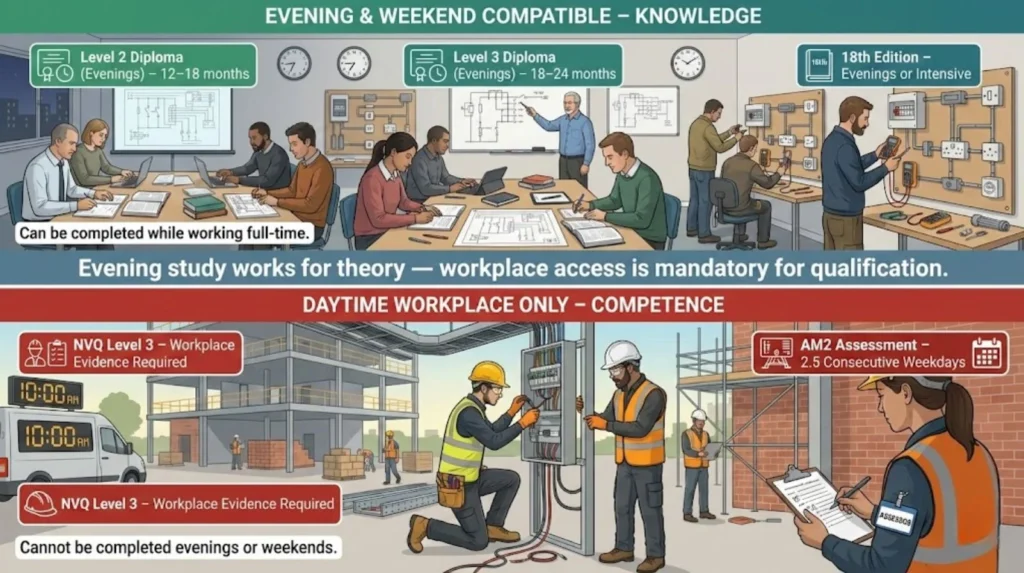
Yes, you can complete knowledge-based electrical qualifications (Level 2 and Level 3 diplomas, 18th Edition Wiring Regulations) via evening or weekend classes while working full-time. These theory and workshop practical components are genuinely compatible with flexible delivery timetables offered by Further Education colleges and some private training providers.
- Charanjit Mannu
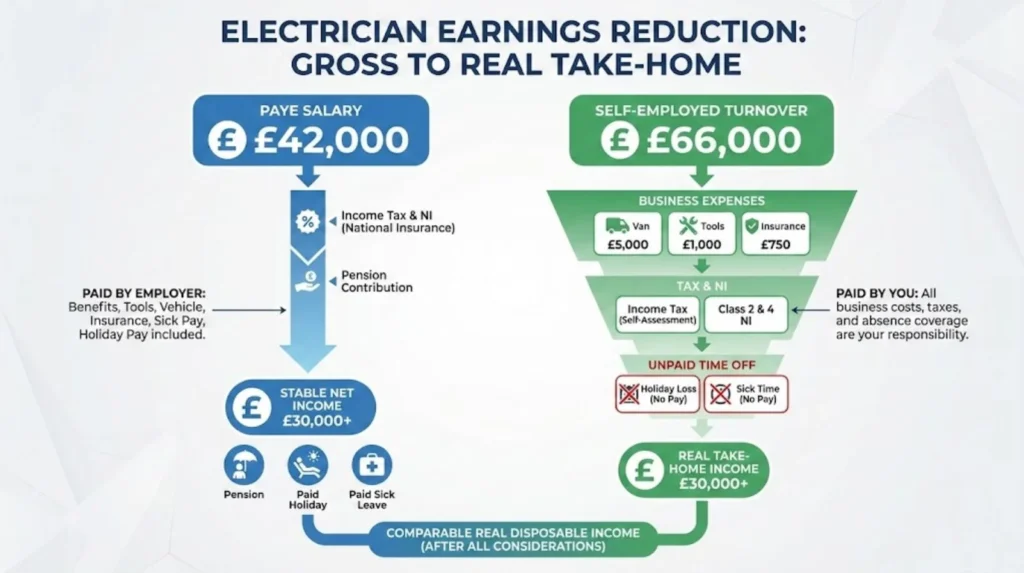
The conversation about electrician salary in the UK splits into two camps almost immediately. PAYE electricians quote annual salaries of £35,000-£45,000 and talk about stability, paid holidays, and employer pensions. Self-employed electricians mention day rates of £250-£350 and calculate annual earnings north of £60,000. On paper, self-employment appears to offer
- Charanjit Mannu

Questions like "how much do electricians make compared to plumbers?" or "do gas engineers earn more than carpenters?" assume simple answers. They don't exist. ONS data for 2025 shows median full-time earnings of approximately £38,760 for electricians, £35,000-£38,000 for plumbers, £40,000-£45,000 for gas engineers (often bundled with plumbers in official
- Charanjit Mannu
